Category / God
Relationship with the Holy Spirit by Kathryn Kuhlman – YouTube

Watch “Training In Favour As A Lifestyle ~ Graham Cooke” on YouTube
Watch “How To Recognize God’s Voice Speaking to You” ~ Graham Cooke” on YouTube

from Filming God by Darren Wilson
Darren Wilson
God has called us to go out and make disciples of all nations, not converts. A disciple implies a personal relationship, and all good relationships start with the core understanding that the other person does, in fact, love us and is looking out for our best interests.
It is my contention that maybe, just maybe, we need to lay our agendas down, both as individual Christians and as a Church as a whole, and simply begin loving those around us, those in need, with no strings attached. What would this world look like if we simply let the force of His grace and mercy and character win them over?

Wilson, Darren (2012-06-11). Filming God: A Journey From Skepticism to Faith (Kindle Locations 1445-1449). Destiny Image. Kindle Edition.
Watch “Jesus Among Other gods – Ravi Zacharias” on YouTube
C. S. Lewis, George MacDonald, and Sadhu Sundar Singh
John Mark Ministries | C. S. Lewis, George MacDonald, and Sadhu Sundar Singh.
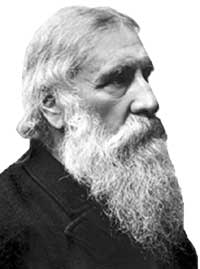
George MacDonald
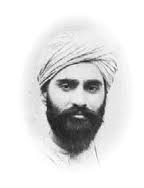
Sadu Sundar Singh
by Kathryn Lindskoog

C.S. Lewis
Who Is My Neighbour? (Luke 10:25-37)—William Barclay
Who Is My Neighbour? (Luke 10:25-37)
10:25-37 —an expert in the law stood up and asked Jesus a test question. “Teacher,” he said, “What is it I am to do to become the possessor of eternal life?” He said to him, “What stands written in the law? How do you read?” He answered, “You must love the Lord your God with your whole heart, and with your whole mind, and your neighbour as yourself.” “Your answer is correct,” said Jesus. But he, wishing to put himself in the right, said to Jesus, “And who is my neighbour?” Jesus answered, “There was a man who went down from Jerusalem to Jericho. He fell amongst brigands who stripped him and laid blows upon him, and went away and left him half-dead. Now, by chance, a priest came down by that road. He looked at him and passed by on the other side. In the same way when a Levite came to the place he looked at him and passed by on the other side. A Samaritan who was on the road came to where he was. He looked at him and was moved to the depths of his being with pity. So he came up to him and bound up his wounds, pouring in wine and oil; and he put him on his own beast and brought him to an inn and cared for him. On the next day he put down 10p and gave it to the innkeeper. ‘Look after him,’ he said, ‘and whatever more you are out of pocket, when I come back this way, I’ll square up with you in full.’ Which of these three, do you think, was neighbour to the man who fell into the hands of brigands?” He said, “He who showed mercy on him.” “Go,” said Jesus to him, “and do likewise.”

William Barclay 1907-1978
First, let us look at the scene of this story. The road from Jerusalem to Jericho was a notoriously dangerous road. Jerusalem is 2,300 feet above sea-level; the Dead Sea, near which Jericho stood, is 1,300 feet below sea-level. So then, in somewhat less than 20 miles, this road dropped 3,600 feet. It was a road of narrow, rocky deifies, and of sudden turnings which made it the happy hunting-ground of brigands. In the fifth century Jerome tells us that it was still called “The Red, or Bloody Way.” In the 19th century it was still necessary to pay safety money to the local Sheiks before one could travel on it. As late as the early 1930’s, H. V. Morton tells us that he was warned to get home before dark, if he intended to use the road, because a certain Abu Jildah was an adept at holding up cars and robbing travellers and tourists, and escaping to the hills before the police could arrive. When Jesus told this story, he was telling about the kind of thing that was constantly happening on the Jerusalem to Jericho road.
Second, let us look at the characters.
(a) There was the traveller. He was obviously a reckless and foolhardy character. People seldom attempted the Jerusalem to Jericho road alone if they were carrying goods or valuables. Seeking safety in numbers, they travelled in convoys or caravans. This man had no one but himself to blame for the plight in which he found himself.
(b) There was the priest. He hastened past. No doubt he was remembering that he who touched a dead man was unclean for seven days (Num 19:11). He could not be sure but he feared that the man was dead; to touch him would mean losing his turn of duty in the Temple; and he refused to risk that. He set the claims of ceremonial above those of charity. The Temple and its liturgy meant more to him than the pain of man.
(c) There was the Levite. He seems to have gone nearer to the man before he passed on. The bandits were in the habit of using decoys. One of their number would act the part of a wounded man; and when some unsuspecting traveller stopped over him, the others would rush upon him and overpower him. The Levite was a man whose motto was, “Safety first.” He would take no risks to help anyone else.
(d) There was the Samaritan. The listeners would obviously expect that with his arrival the villain had arrived. He may not have been racially a Samaritan at all. The Jews had no dealings with the Samaritans and yet this man seems to have been a kind of commercial traveller who was a regular visitor to the inn. In Jn 8:48 the Jews call Jesus a Samaritan. The name was sometimes used to describe a man who was a heretic and a breaker of the ceremonial law. Perhaps this man was a Samaritan in the sense of being one whom all orthodox good people despised.
We note two things about him.
(i) His credit was good! Clearly the innkeeper was prepared to trust him. He may have been theologically unsound, but he was an honest man.
(ii) He alone was prepared to help. A heretic he may have been, but the love of God was in his heart. It is no new experience to find the orthodox more interested in dogmas than in help and to find the man the orthodox despise to be the one who loves his fellow-men. In the end we will be judged not by the creed we hold but by the life we live.
Third, let us look at the teaching of the parable. The scribe who asked this question was in earnest. Jesus asked him what was written in the law, and then said, “How do you read?” Strict orthodox Jews wore round their wrists little leather boxes called phylacteries, which contained certain passages of scripture—Ex 13:1-10; Exo 13:11-16; Deut 6:4-9; Deut 11:13-20. “You will love the Lord your God” is from Deut 6:4 and Deut 11:13. So Jesus said to the scribe, “Look at the phylactery on your own wrist and it will answer your question.” To that the scribes added Lev 19:18, which bids a man love his neighbour as himself; but with their passion for definition the Rabbis sought to define who a man’s neighbour was; and at their worst and their narrowest they confined the word neighbour to their fellow Jews. For instance, some of them said that it was illegal to help a gentile woman in her sorest time, the time of childbirth, for that would only have been to bring another gentile into the world. So then the scribe’s question, “Who is my neighbour?” was genuine.
Jesus’ answer involves three things.
(i) We must help a man even when he has brought his trouble on himself, as the traveller had done.
(ii) Any man of any nation who is in need is our neighbour. Our help must be as wide as the love of God.
(iii) The help must be practical and not consist merely in feeling sorry. No doubt the priest and the Levite felt a pang of pity for the wounded man, but they did nothing. Compassion, to be real, must issue in deeds.
What Jesus said to the scribe, he says to us—”Go you and do the same.”
Watch “Did Jesus Really Rise from the Dead? Dr. N.T. Wright” (begins at 8:45)
“And now abideth faith, hope, love, these three; but the greatest of these is love”— by William Graham Scroggie
“And now abideth faith, hope, love, these three; but the greatest of these is love”
(1 Cor. 13:13).
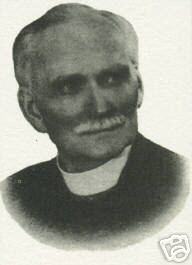
William Graham Scroggie
The Corinthians had thought that the Gifts were the abiding things, but Paul says these must pass away “Now,” therefore, does not mean now in time, for then these three would not differ from the Gifts in any wise….Here we have the anomaly of three nouns governed by a singular verb, “and now abideth Faith, Hope, Love.” The great truth preserved in this piece of apparent grammatical irregularity is that Faith, Hope, and Love are one in essence, that they are a trinity in unity and they are therefore coextensive with one another. We shall never be able to dispense with Faith and Hope, both shall go on forever. We must all carefully distinguish between Eternal and Final; Eternity does not mean Finality, but to reach finality would be to fall short of Eternity. And we must distinguish also between Perfection and Finality. In Heaven there will be perfection, but there will be differences of attainment even as one star differs from another star in glory. There will be progress from stage to stage. “In My Father’s house are many mansions,” means “many resting-places,” a figure which refers to those stations on the great roads where travelers can get rest and refreshment before proceeding on their journey. The notions both of repose and progress are in the words. Every further acquisition of God will make fuller acquisition possible; every new height of glory scaled will reveal yet more glorious heights beyond…
 St. John One: One