
[NOTE: The following is an excerpt from the soon-to-be-published book Jesus Unforsaken: Substituting Wrath With Divine Love To Satisfy God’s Atoning […]
Source: Why Is Jesus Left Out Of The Atonement Discussion? | Keith Giles
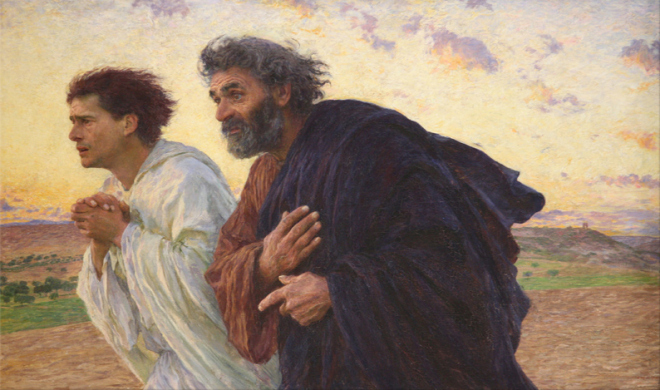
[NOTE: The following is an excerpt from the soon-to-be-published book Jesus Unforsaken: Substituting Wrath With Divine Love To Satisfy God’s Atoning […]
Source: Why Is Jesus Left Out Of The Atonement Discussion? | Keith Giles
Union or Separation? It is an important question. Many of us, maybe most of us, started with separation from God because the Western Church has preached separation for so long we didn’t even realize there was an alternative way of looking at things. But, once you take off the glasses of separation and put on the glasses of Union, Oh My! How everything changes. Dr. C. Baxter Kruger has been making this point for over 30 years. His new essay “The Mediation of Jesus Christ” is the result of a life-time of study, preaching, discussion and living life from the vantage point of union. Union of the Father, Son and Spirit, union of Jesus with all humanity, indeed, union with all creation. You may download it and send it to friends or provide them with the link to read it for themselves.
The establishment people think they have a pretty advanced civilization here. Well, technically maybe they’ve done a lot, although we know civilizations that have gone much further in the same direction. In most respects this is a pretty backwards civilization. The establishment seems completely incapable of learning some basic truths. The most basic principle of all is that of not harming others, and that includes all people and all life and all things. It means not controlling or manipulating others, not trying to manage their affairs. It means not going off and killing people over there – not for religion, politics or military exercises or any other excuse. No being has the right to harm or control any other being. No individual or government has the right to force others to join or participate in any group or system or force others to go to school, to church or war. Every being has the right to live his own life in his own way. Every being has an identity and a purpose. To live up to his purpose, every being has the power of self-control, and that’s where spiritual power begins. When some of these fundamental things are learned, the time will be right for more to be revealed and spiritual power will come again to this land.
Rolling Thunder spiritual advisor to the Grateful Dead–Source: searching for spiritual power: a quote from Rolling Thunder – The Sunshine Is Ours
My choice to have Lewis open my chapters as I explored the impacts of this cosmology on Christian faith was more reflective of my personal journey than any other rationale. Clive Staples Lewis is an old friend, my first place of entry into the world of fantasy fiction. My mom was a linguist by training, and had me reading at an absurdly early age. I was five (five!) when I read The Lion, The Witch, and the Wardrobe alone in my room in Nairobi, and it was a peculiar experience. Perhaps it’s a factor of a child’s imagination, but my memory of it isn’t so much of sitting and reading, but of physically being in Narnia. Snow underfoot, the warmth of the fire in a beaver’s den, the hard terrible cold of a stone slab. Multiverse theology is certainly implied by storytelling that engages with both faith and the possibility of other realms of being, but it goes far deeper than the green fields of Narnia.
Source: Christ in the Multiverse: An Interview with David Williams | James McGrath
 A growing body of scholarly research reveals a convoluted pattern of religious failure in which atheism and the nonreligious played little role.
Source: The Great Scandal: Christianity’s Role in the Rise of the Nazis

Kelly’s stories are tough, real, honest, and always true. Unadorned by gimmick or artifice, the pieces in this collection—all framed between the imagined voices of that most primal couple, Adam and Eve—carry us deep into the heart of a wild American world that in many ways (and most definitely for a lot of younger people) sadly no longer exists. The human settings of these stories—bars, strip clubs, dingy apartments, goldmines, ranches, logging crews, homesteads, highways—are rich with details and textures that linger long after the closing sentences. Beyond those, however, there’s always a sense of something even larger and older surrounding the often small, sometimes strange, yet always compelling events his narrators are recounting. Sometimes this larger thing is the natural world—the oceans and forests, the plants and animals—always placing the events into their proper context. At other times, it’s the human interactions themselves that somehow seem to take on this greater, at times even mythic, weight and power. Reading these pieces, we recognize how the hungers and desires, the fears and hopes, the regrets and epiphanies of his people have all somehow entered our cultural DNA, and how—like them–it’s up to each of us to come to terms with all the beauty and terror that comes with being alive.
Dave Sims
“This book is good company. And I appreciate the opportunity to associate with intriguing folks out there where I rarely venture.”
“The remarkable thing about this collection—how often it touched my heart. These stories have a soul.”
 A DOZEN OR MORE three-hundred-year-old black oaks spread over the top of the south side hill of our farm with a two-acre pasture on top and our house sat on the edge and overlooked a small twenty-acre valley bottom with Reese Creek and across it at the far side and then there was a similar hill of Ponderosa pine and Douglas fir to complete the farms north edge as a cross section of a small valley running from our house south to north.
Source: “Caught Up in the Air” by James Ross Kelly – True Chili
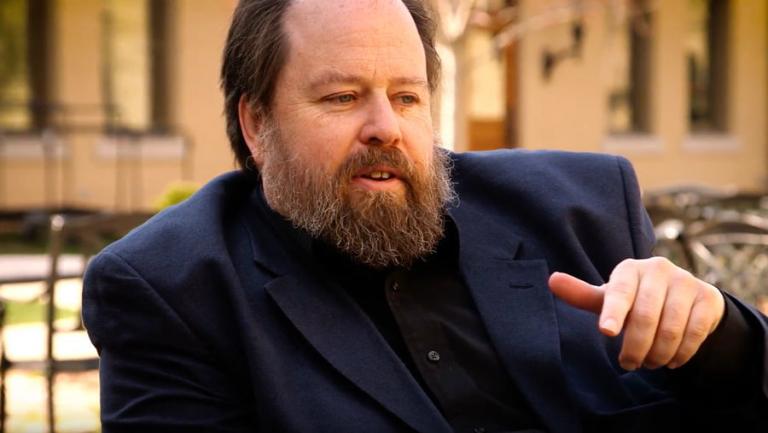
It may be that the most crucial task incumbent upon theology today is that of finally overcoming the overcoming of metaphysics. For roughly five centuries now, theological reasoning has found itself assailed by the same tedious but persistent refrain: the ringing imperative that it strip itself of philosophical tradition’s glitteringly gorgeous but cumbersome panoply of categories and concepts, so that it might again rush with youthful lightness of limb—chastened, humbled, naked, but finally free—into the embrace of the God who reveals himself only to the eyes of faith.
Remarks Made to Jean-Luc
Marion regarding
Revelation and Givenness
Hart, David Bentley Theological Territories . University of Notre Dame Press. Kindle Edition.
Remarks Made to Jean-Luc
Marion regarding
Revelation and Givenness
Hart, David Bentley (2020-04-14T23:58:59). Theological Territories . University of Notre Dame Press. Kindle Edition. Hart, David Bentley (2020-04-14T23:58:59). Theological Territories . University of Notre Dame Press. Kindle Edition.

