10 minutes of Truth.
John Lennox Vs. Richard Dawkins (Christianity Vs. Atheism) – YouTube
10 minutes of Truth.
10 minutes of Truth.
Translations and Commentaries
The King James Version in 1 Cor 3.9 reads, “we are labourers together with God…” This unambiguously suggests that Paul and Apollos were considered in some sense on the same level with God. Of course, ‘in some sense’ covers a multitude of possibilities, but there nevertheless seems to be an underlying tone of synergism and mutual credit. (A similar translation is in the French Nouvelle Version2: “nous sommes ouvriers avec Dieu,” and in La Sacra Bibbia: “Noi siamo infatti collaboratori di Dio.”)
Most modern translations take a more neutral stance, translating 1 Cor 3.9a as “we are God’s fellow workers” (ASV [‘fellow-workers’], RSV, NASB and NASB 1995, NKJV, ESV, NIV), “we are God’s coworkers (HCSB, TNIV, and NAB2 [‘co-workers’; 2010]), “we do share in God’s work” (NJB), “wir sind Gottes Mitarbeiter” (Luther 1985), or “nosotros somos colaboradores de Dios” (Reina Valera2).
But…
View original post 2,289 more words
“And now abideth faith, hope, love, these three; but the greatest of these is love”
(1 Cor. 13:13).
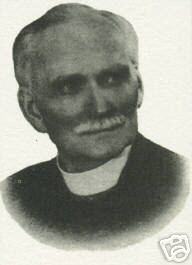
William Graham Scroggie
The Corinthians had thought that the Gifts were the abiding things, but Paul says these must pass away “Now,” therefore, does not mean now in time, for then these three would not differ from the Gifts in any wise….Here we have the anomaly of three nouns governed by a singular verb, “and now abideth Faith, Hope, Love.” The great truth preserved in this piece of apparent grammatical irregularity is that Faith, Hope, and Love are one in essence, that they are a trinity in unity and they are therefore coextensive with one another. We shall never be able to dispense with Faith and Hope, both shall go on forever. We must all carefully distinguish between Eternal and Final; Eternity does not mean Finality, but to reach finality would be to fall short of Eternity. And we must distinguish also between Perfection and Finality. In Heaven there will be perfection, but there will be differences of attainment even as one star differs from another star in glory. There will be progress from stage to stage. “In My Father’s house are many mansions,” means “many resting-places,” a figure which refers to those stations on the great roads where travelers can get rest and refreshment before proceeding on their journey. The notions both of repose and progress are in the words. Every further acquisition of God will make fuller acquisition possible; every new height of glory scaled will reveal yet more glorious heights beyond…
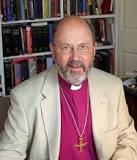 N. T. Wright recently spoke at the Heriot-Watt University Chaplaincy Annual Public Lecture. Listen to his talk, “Speaking of God in a Confused World”