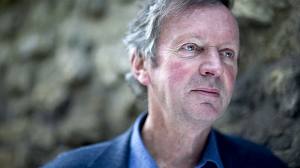
The New Atlantis » Do Elephants Have Souls? by Caitrin Nicol


The New Atlantis » Do Elephants Have Souls?. This seminal piece in The New Atlantis:A Journal of Technology & Society is an exhortation to rethink determinism and the notion of our consciousness as it relates to life and creation. In the last two centuries elephant populations have declined by 98%.

Caitrin Nicol is Managing Editor at The New Atlantis in Washington after starting there as an intern in June of 2006.  She also does research and writing for the Witherspoon Council on Ethics and the Integrity of Science.

Caitrin Nicol is Managing Editor at The New Atlantis in Washington after starting there as an intern in June of 2006. She also does research and writing for the Witherspoon Council on Ethics and the Integrity of Science.

Staff members at the Elephant Sanctuary told me of an incident with one of their “girls,” who spotted a fallen bird outside her barn and ran right over to it, utterly distraught. She crooned and stroked it and did not settle down till it had been properly laid to rest. What did this mean to her, exactly? We don’t know. But she was clearly very moved by a fellow creature’s woe and had no trouble seeing it for what it was, different life forms though they were. How sad when we, “higher” animals who share this gift, convince ourselves to dull it.

“Are not two sparrows sold for a penny? And not one of them will fall to the ground apart from your Father. But even the hairs of your head are all numbered. Fear not, therefore; you are of more value than many sparrows” (Matthew 10:29-31). If a single little bird is worth the all-consuming grief of Dulary the Elephant and the cosmos-animating mind of the Father of Creation, and human worth surpasses that, then what is there to lose in holistically appreciating the life of this one bird, even insofar as it resembles ours? And how much more than the bird an elephant, which by its own extraordinary nature shows that all species are not equal — but is a portal to the world of non-human life, and the possibilities therein.

Reasons To Believe : Is Old-Earth Creationism Biblical? Paul Copan Interview, part 1


Reasons To Believe : Is Old-Earth Creationism Biblical? Paul Copan Interview, part 1.

Reasons To Believe : Genesis Creation Days: An Interview with Dr. T. David Gordon


Reasons To Believe : Genesis Creation Days: An Interview with Dr. T. David Gordon.

from Darwin’s Black Box, by Michael Behe


A VERY BRIEF HISTORY OF BIOLOGY

When things are going smoothly in our lives most of us tend to think that the society we live in is “natural,” and that our ideas about the world are self-evidently true. It’s hard to imagine how other people in other times and places lived as they did or why they believed the things they did. During periods of upheaval, however, when apparently solid verities are questioned, it can seem as if nothing in the world makes sense. During those times history can remind us that the search for reliable knowledge is a long, difficult process that has not yet reached an end. In order to develop a perspective from which we can view the idea of Darwinian evolution, over the next few pages I will very briefly outline the history of biology. In a way, this history has been a chain of black boxes; as one is opened, another is revealed. Black box is a whimsical term for a device that does something, but whose inner workings are mysterious—sometimes because the workings can’t be seen, and sometimes because they just aren’t comprehensible. Computers are a good example of a black box. Most of us use these marvelous machines without the vaguest idea of how they work, processing words or plotting graphs or playing games in contented ignorance of what is going on underneath the outer case. Even if we were to remove the cover, though, few of us could make heads or tails of the jumble of pieces inside. There is no simple, observable connection between the parts of the computer and the things that it does. Imagine that a computer with a long-lasting battery was transported back in time a thousand years to King Arthur’s court. How would people of that era react to a computer in action? Most would be in awe, but with luck someone might want to understand the thing. Someone might notice that letters appeared on the screen as he or she touched the keys. Some combinations of letters—corresponding to computer commands—might make the screen change; after a while, many commands would be figured out. Our medieval Englishmen might believe they had unlocked the secrets of the computer. But eventually somebody would remove the cover and gaze on the computer’s inner workings. Suddenly the theory of “how a computer works” would be revealed as profoundly naive. The black box that had been slowly decoded would have exposed another black box. In ancient times allof biology was a black box, because no one understood on even the broadest level how living things worked. The ancients who gaped at a plant or animal and wondered just how the thing worked were in the presence of unfathomable technology. They were truly in the dark. The earliest biological investigations began in the only way they could—with the naked eye.2 A number of books from about 400 B.C. (attributed to Hippocrates, the “father of medicine”) describe the symptoms of some common diseases and attribute sickness to diet and other physical causes, rather than to the work of the gods. Although the writings were a beginning, the ancients were still lost when it came to the composition of living things. They believed that all matter was made up of four elements: earth, air, fire, and water. Living bodies were thought to be made of four “humors”—blood, yellow bile, black bile, and phlegm—and all disease supposedly arose from an excess of one of the humors. The greatest biologist of the Greeks was also their greatest philosopher, Aristotle. Born when Hippocrates was still alive, Aristotle realized (unlike almost everyone before him) that knowledge of nature requires systematic observation. Through careful examination he recognized an astounding amount of order within the living world, a crucial first step. Aristotle grouped animals into two general categories—those with blood, and those without—that correspond closely to the modern classifications of vertebrate and invertebrate. Within the vertebrates he recognized the categories of mammals, birds, and fish. He put most amphibians and reptiles in a single group, and snakes in a separate class. Even though his observations were unaided by instruments, much of Aristotle’s reasoning remains sound despite the knowledge gained in the thousands of years since he died. Only a few significant biological investigators lived during the millennium following Aristotle. One of them was Galen, a second-century A.D. physician in Rome. Galen’s work shows that careful observation of the outside and (with dissection) the inside of plants and animals, although necessary, is not sufficient to comprehend biology. For example, Galen tried to understand the function of animal organs. Although he knew that the heart pumped blood, he could not tell just from looking that the blood circulated and returned to the heart. Galen mistakenly thought that blood was pumped out to “irrigate” the tissues, and that new blood was made continuously to resupply the heart. His idea was taught for nearly fifteen hundred years. It was not until the seventeenth century that an Englishman, William Harvey, introduced the theory that blood flows continuously in one direction, making a complete circuit and returning to the heart. Harvey calculated that if the heart pumps out just two ounces of blood per beat, at 72 beats per minute, in one hour it would have pumped 540 pounds of blood—triple the weight of a man! Since making that much blood in so short a time is clearly impossible, the blood had to be reused. Harvey’s logical reasoning (aided by the still-new Arabic numerals, which made calculating easy) in support of an unobservable activity was unprecedented; it set the stage for modern biological thought. In the Middle Ages the pace of scientific investigation quickened. The example set by Aristotle had been followed by increasing numbers of naturalists. Many plants were described by the early botanists Brunfels, Bock, Fuchs, and Valerius Cordus. Scientific illustration developed as Rondelet drew animal life in detail. The encyclopedists, such as Conrad Gesner, published large volumes summarizing all of biological knowledge. Linnaeus greatly extended Aristotle’s work of classification, inventing the categories of class, order, genus, and species. Studies of comparative biology showed many similarities between diverse branches of life, and the idea of common descent began to be discussed. Biology advanced rapidly in the seventeenth and eighteenth centuries as scientists combined Aristotle’s and Harvey’s examples of attentive observation and clever reasoning. Yet even the strictest attention and cleverest reasoning will take you only so far if important parts of a system aren’t visible. Although the human eye can resolve objects as small as one-tenth of a millimeter, a lot of the action in life occurs on a micro level, a Lilliputian scale. So biology reached a plateau: One black box, the gross structure of organisms, was opened only to reveal the black box of the finer levels of life. In order to proceed further biology needed a series of technological breakthroughs. The first was the microscope.

Behe, Michael J. (2001-04-04). Darwin’s Black Box (Kindle Locations 142-194). Simon & Schuster, Inc.. Kindle Edition.

Dr. Rupert Sheldrake talks about his banned TED talk on Skeptiko with Alex Tsakiris 02/04/2013 – YouTube


Dr. Rupert Sheldrake talks about his banned TED talk on Skeptiko with Alex Tsakiris 02/04/2013 – YouTube.

Reasons To Believe : Today’s New Reason to Believe – “Universe Designed to Produce Carbon and Oxygen”


Reasons To Believe : Today’s New Reason to Believe – “Universe Designed to Produce Carbon and Oxygen”.

Reasons To Believe : Dark Matter Ropes Confirm Big Bang Cosmology


Reasons To Believe : Dark Matter Ropes Confirm Big Bang Cosmology.

800px-Lambda-Cold_Dark_Matter,_Accelerated_Expansion_of_the_Universe,_Big_Bang-Inflation

Science, Religion and Power by Rupert Sheldrake,


sheldrake

from Science Set Free: 10 Paths to New Discovery; Prologue: Science, Religion and Power

[Published in UK as The Science Delusion]
fbacon

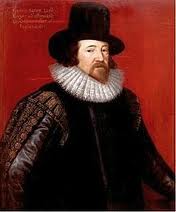
The scientific priesthood Francis Bacon (1561– 1626), a politician and lawyer who became Lord Chancellor of England, foresaw the power of organized science more than anyone else. To clear the way, he needed to show that there was nothing sinister about acquiring power over nature. When he was writing, there was a widespread fear of witchcraft and black magic, which he tried to counteract by claiming that knowledge of nature was God-given, not inspired by the devil. Science was a return to the innocence of the first man, Adam, in the Garden of Eden before the Fall.

Bacon argued that the first book of the Bible, Genesis, justified scientific knowledge. He equated man’s knowledge of nature with Adam’s naming of the animals. God “brought them unto Adam to see what he would call them, and what Adam called every living creature, that was the name thereof” (Genesis 2: 19– 20). This was literally man’s knowledge, because Eve was not created until two verses later. Bacon argued that man’s technological mastery of nature was the recovery of a God-given power, rather than something new. He confidently assumed that people would use their new knowledge wisely and well: “Only let the human race recover that right over nature which belongs to it by divine bequest; the exercise thereof will be governed by sound reason and true religion.” [1]

The key to this new power over nature was organized institutional research. In New Atlantis (1624), Bacon described a technocratic Utopia in which a scientific priesthood made decisions for the good of the state as a whole. The Fellows of this scientific “Order or Society” wore long robes and were treated with a respect that their power and dignity required. The head of the order traveled in a rich chariot, under a radiant golden image of the sun. As he rode in procession, “he held up his bare hand, as he went, as blessing the people.”

The general purpose of this foundation was “the knowledge of causes and secret motions of things; and the enlarging of human empire, to the effecting of all things possible.” The Society was equipped with machinery and facilities for testing explosives and armaments, experimental furnaces, gardens for plant breeding, and dispensaries. [2]

This visionary scientific institution foreshadowed many features of institutional research, and was a direct inspiration for the founding of the Royal Society in London in 1660, and for many other national academies of science. But although the members of these academies were often held in high esteem, none achieved the grandeur and political power of Bacon’s imaginary prototypes. Their glory was continued even after their deaths in a gallery, like a Hall of Fame, where their images were preserved. “For upon every invention of value we erect a statue to the inventor, and give him a liberal and honourable reward.” [3]

In England in Bacon’s time (and still today) the Church of England was linked to the state as the established church. Bacon envisaged that the scientific priesthood would also be linked to the state through state patronage, forming a kind of established church of science. And here again he was prophetic. In nations both capitalist and Communist, the official academies of science remain the centers of power of the scientific establishment. There is no separation of science and state. Scientists play the role of an established priesthood, influencing government policies on the arts of warfare, industry, agriculture, medicine, education and research.

Bacon coined the ideal slogan for soliciting financial support from governments and investors: “Knowledge is power.”[4] But the success of scientists in eliciting funding from governments varied from country to country. The systematic state funding of science began much earlier in France and Germany than in Britain and the United States where, until the latter half of the nineteenth century, most research was privately funded or carried out by wealthy amateurs like Charles Darwin. [5]

In France, Louis Pasteur (1822– 95) was an influential proponent of science as a truth-finding religion, with laboratories like temples through which mankind would be elevated to its highest potential:

Take interest, I beseech you, in those sacred institutions which we designate under the expressive name of laboratories. Demand that they be multiplied and adorned; they are the temples of wealth and of the future. There it is that humanity grows, becomes stronger and better. [6]

By the beginning of the twentieth century, science was almost entirely institutionalized and professionalized, and after the Second World War expanded enormously under government patronage, as well as through corporate investment. [7] The highest level of funding is in the United States, where in 2008 the total expenditure on research and development was $ 398 billion, of which $ 104 billion came from the government. [8] But governments and corporations do not usually pay scientists to do research because they want innocent knowledge, like that of Adam before the Fall. Naming animals, as in classifying endangered species of beetles in tropical rain forests, is a low priority. Most funding is a response to Bacon’s persuasive slogan “knowledge is power.”

By the 1950s, when institutional science had reached an unprecedented level of power and prestige, the historian of science George Sarton approvingly described the situation in a way that sounds like the Roman Catholic Church before the Reformation:

Truth can be determined only by the judgment of experts. Everything is decided by very small groups of men, in fact, by single experts whose results are carefully checked, however, by a few others. The people have nothing to say but simply to accept the decisions handed out to them. Scientific activities are controlled by universities, academies and scientific societies, but such control is as far removed from popular control as it possibly could be. [9]

Bacon’s vision of a scientific priesthood has now been realized on a global scale. But his confidence that man’s power over nature would be guided by “sound reason and true religion” was misplaced.

Sheldrake, Rupert (2012-09-04). Science Set Free: 10 Paths to New Discovery (p. 13-16). Random House, Inc.. Kindle Edition.


[1] Collins, in Carr (ed.) (2007), pp. 50.

[2] Bacon (1951), pp. 290– 91.

[3] Ibid., p. 298..

[4] Fara (2009), p. 132.

[5] Kealey (1996).

[6] Dubos (1960), p. 146.

[7] Kealey.

[8] National Science Board (2010), Chapter 4.

[9] Sarton (1955), p. 12.
Rupert Sheldrake at EU 2013—”Science Set Free” (Part 2) – YouTube


Rupert Sheldrake at EU 2013—”Science Set Free” (Part 2) – YouTube.