Archbishop of Canterbury wants to ‘compete’ Wonga out of existence | Money | theguardian.com.
Tag / Christianity
Watch “Did Jesus Really Rise from the Dead? Dr. N.T. Wright” (begins at 8:45)
Watch “Image of God: Ruined and Restored – N. T. Wright” on YouTube
Watch “Dr. Jonathan Wells’s Centriole Hypothesis” on YouTube
“And now abideth faith, hope, love, these three; but the greatest of these is love”— by William Graham Scroggie
“And now abideth faith, hope, love, these three; but the greatest of these is love”
(1 Cor. 13:13).
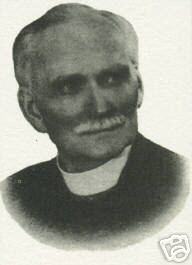
William Graham Scroggie
The Corinthians had thought that the Gifts were the abiding things, but Paul says these must pass away “Now,” therefore, does not mean now in time, for then these three would not differ from the Gifts in any wise….Here we have the anomaly of three nouns governed by a singular verb, “and now abideth Faith, Hope, Love.” The great truth preserved in this piece of apparent grammatical irregularity is that Faith, Hope, and Love are one in essence, that they are a trinity in unity and they are therefore coextensive with one another. We shall never be able to dispense with Faith and Hope, both shall go on forever. We must all carefully distinguish between Eternal and Final; Eternity does not mean Finality, but to reach finality would be to fall short of Eternity. And we must distinguish also between Perfection and Finality. In Heaven there will be perfection, but there will be differences of attainment even as one star differs from another star in glory. There will be progress from stage to stage. “In My Father’s house are many mansions,” means “many resting-places,” a figure which refers to those stations on the great roads where travelers can get rest and refreshment before proceeding on their journey. The notions both of repose and progress are in the words. Every further acquisition of God will make fuller acquisition possible; every new height of glory scaled will reveal yet more glorious heights beyond…
N. T. Wright — “Speaking of God in a Confused World”
 N. T. Wright recently spoke at the Heriot-Watt University Chaplaincy Annual Public Lecture. Listen to his talk, “Speaking of God in a Confused World”
That our glassy sea be mingled with fire— by William Graham Scroggie
“A sea of glass mingled with fire” (Rev. 15:2).
William Graham Scroggie
Peace and energy do not always go together, though they should. Energy need be none the less energetic if it be peaceful, nor peace the less peaceful if it be energetic. Peace without energy may be only stagnation; and energy without peace may be but a form of panic. What we need is that our glassy sea be mingled with fire, and that our fire shall have for its home a glassy sea. Too often the water puts out the fire, or the fire dries up the water; but in every true life these dwell helpfully together. Why should peace exclude passion, and why should passion destroy peace? Why should one moral quality triumph at the expense of another? Yet, too often it is so. Sometimes our sea is not glassy, but tempest tossed; and sometimes our fire burns low. Sometimes it is all calm, and no energy, and sometimes it is all energy and no calm. But what is possible and right is, that the glassy sea be mingled with fire! That our outward energy be regulated by inward peace, and that our inward peace find expression in outward energy. Then shall there be equipoise of power.
Persecution Blog: The Real Story of St. Patrick

Watch “About Global Legacy 2014” on YouTube
The Farewell Command–by William Barclay
The Farewell Command (John 13:33-35)

William Barclay 1907-1978
13:33-35 “Little children, I am still going to be with you for a little while. You will search for me; and, as I said to the Jews, so now I say to you too: ‘You cannot go where I am going.’ I give you a new commandment, that you love one another; that you too love one another, as I have loved you; it is by this that all will know that you are my disciples—if you have love amongst each other.”
Jesus was laying down his farewell commandment to his disciples. The time was short; if they were ever to hear his voice they must hear it now. He was going on a journey on which none might accompany him; he was taking a road that he had to walk alone; and before he went, he gave them the commandment that they must love one another as he had loved them. What does this mean for us, and for our relationships with our fellow-men? How did Jesus love his disciples?
(i) He loved his disciples selflessly. Even in the noblest human love there remains some element of self. We so often think—maybe unconsciously—of what we are to get. We think of the happiness we will receive, or of the loneliness we will suffer if love fails or is denied. So often we are thinking: What will this love do for me? So often at the back of things it is our happiness that we are seeking. But Jesus never thought of himself. His one desire was to give himself and all he had for those he loved.
(ii) Jesus loved his disciples sacrificially. There was no limit to what his love would give or to where it would go. No demand that could be made upon it was too much. If love meant the Cross, Jesus was prepared to go there. Sometimes we make the mistake of thinking that love is meant to give us happiness. So in the end it does, but love may well bring pain and demand a cross.
(iii) Jesus loved his disciples understandingly. He knew his disciples through and through. We never really know people until we have lived with them. When we are meeting them only occasionally, we see them at their best. It is when we live with them that we find out their moods and their irritabilities and their weaknesses. Jesus had lived with his disciples day in and day out for many months and knew all that was to be known about them—and he still loved them. Sometimes we say that love is blind. That is not so, for the love that is blind can end in nothing but bleak and utter disillusionment. Real love is open-eyed. It loves, not what it imagines a man to be, but what he is. The heart of Jesus is big enough to love us as we are.
(iv) Jesus loved his disciples forgivingly. Their leader was to deny him. They were all to forsake him in his hour of need. They never, in the days of his flesh, really understood him. They were blind and insensitive, slow to learn, and lacking in understanding. In the end they were craven cowards. But Jesus held nothing against them; there was no failure which he could not forgive. The love which has not learned to forgive cannot do anything else but shrivel and die. We are poor creatures, and there is a kind of fate in things which makes us hurt most of all those who love us best. For that very reason all enduring love must be built on forgiveness, for without forgiveness it is bound to die.
Barclay’s Daily Study Bible (NT)..
 St. John One: One