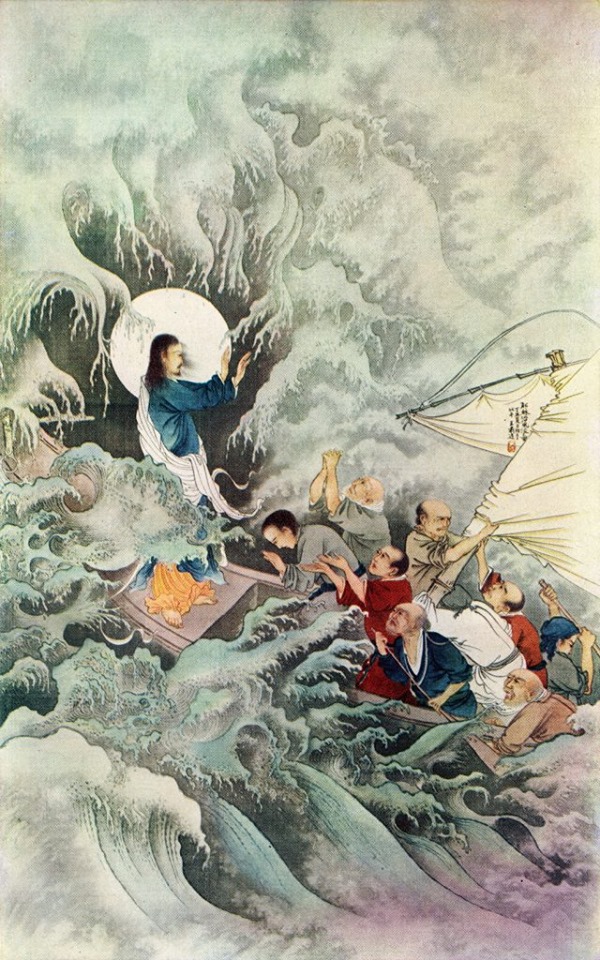
JBPWAVE:Aesthetic | Jordan Peterson & Akira The Don | Full Album – YouTube
The Messiness of Deconstruction | Matthew Distefano
Deconstruction Deconstructed
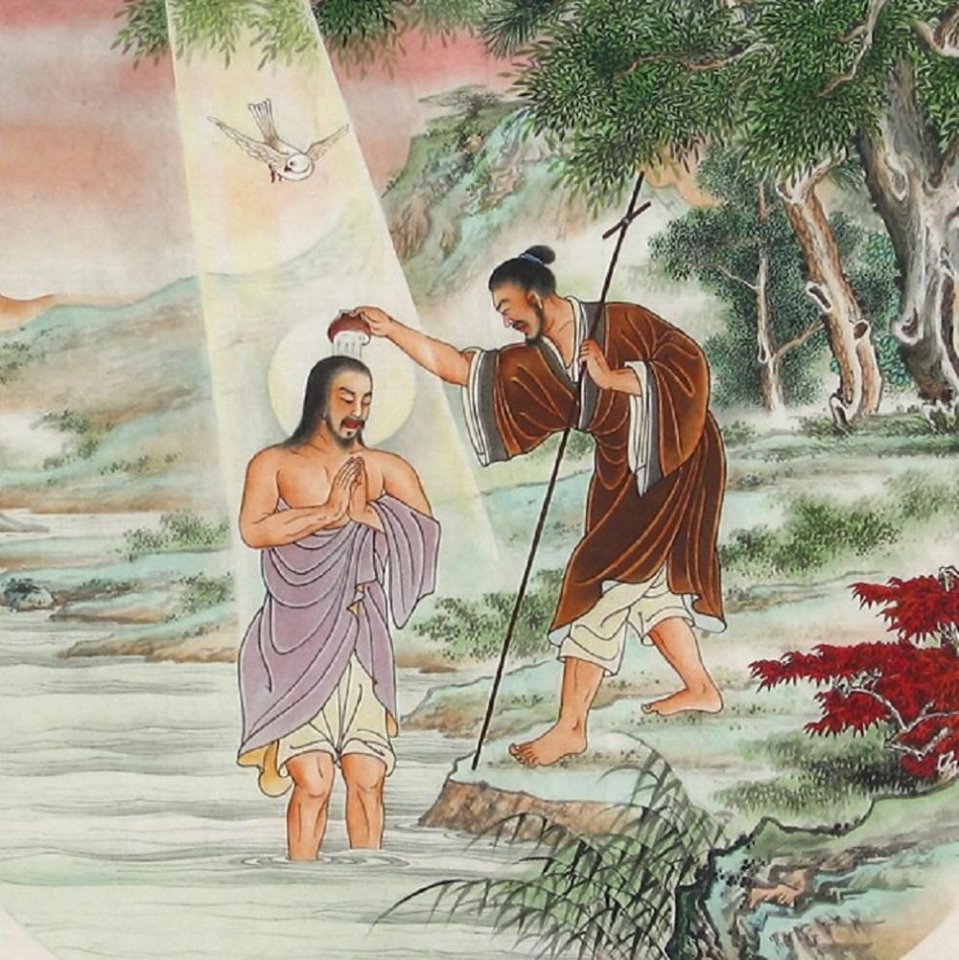
…the term and its usage has come to mean something a bit different. For many, it is a process that involves a rigorous questioning of one’s faith-based presuppositions. It involves a careful critique of one’s handed-down worldview. It is often painful for it is a process that leads to an epistemological reevaluation (how do we know what we know?) and then from there, some pretty heavy-handed existential crises. Deconstruction is nothing to take lightly, nor is it something that should be explained away. Further, it is not a process with a linear timeline where a person of faith goes from point A to point Z. Deconstruction can be messy. It can be confusing. And often, it leaves you with more questions than answers.
Open Letter | Against the New Nationalism | Commonweal Magazine
A protester near a border wall in El Paso, Texas, writes on a large U.S. flag June 6, 2019, as part of a demonstration called “United States of Immigrants.” (CNS photo/Jose Luis Gonzalez, Reuters)
Source: Open Letter | Against the New Nationalism | Commonweal Magazine
Each day more signs point to a tremendous shift in American conservatism away from the prior consensus and toward the new nationalism of Donald Trump. This is evident not only in the recent National Conservatism Conference held in July in Washington, D.C., but also in the manifesto signed by a number of Christians who appear eager to embrace nationalism as compatible with Christian faith. Without impugning specific individuals, as fellow Christian intellectuals, theologians, pastors, and educators, we respond to this rapprochement with sadness, but also with a clear and firm No. We are Orthodox, Catholic, and Protestant; Republicans, Democrats, and independents. Despite our denominational…
View original post 1,091 more words
On Christians voting for Donald Trump–David Bentley Hart

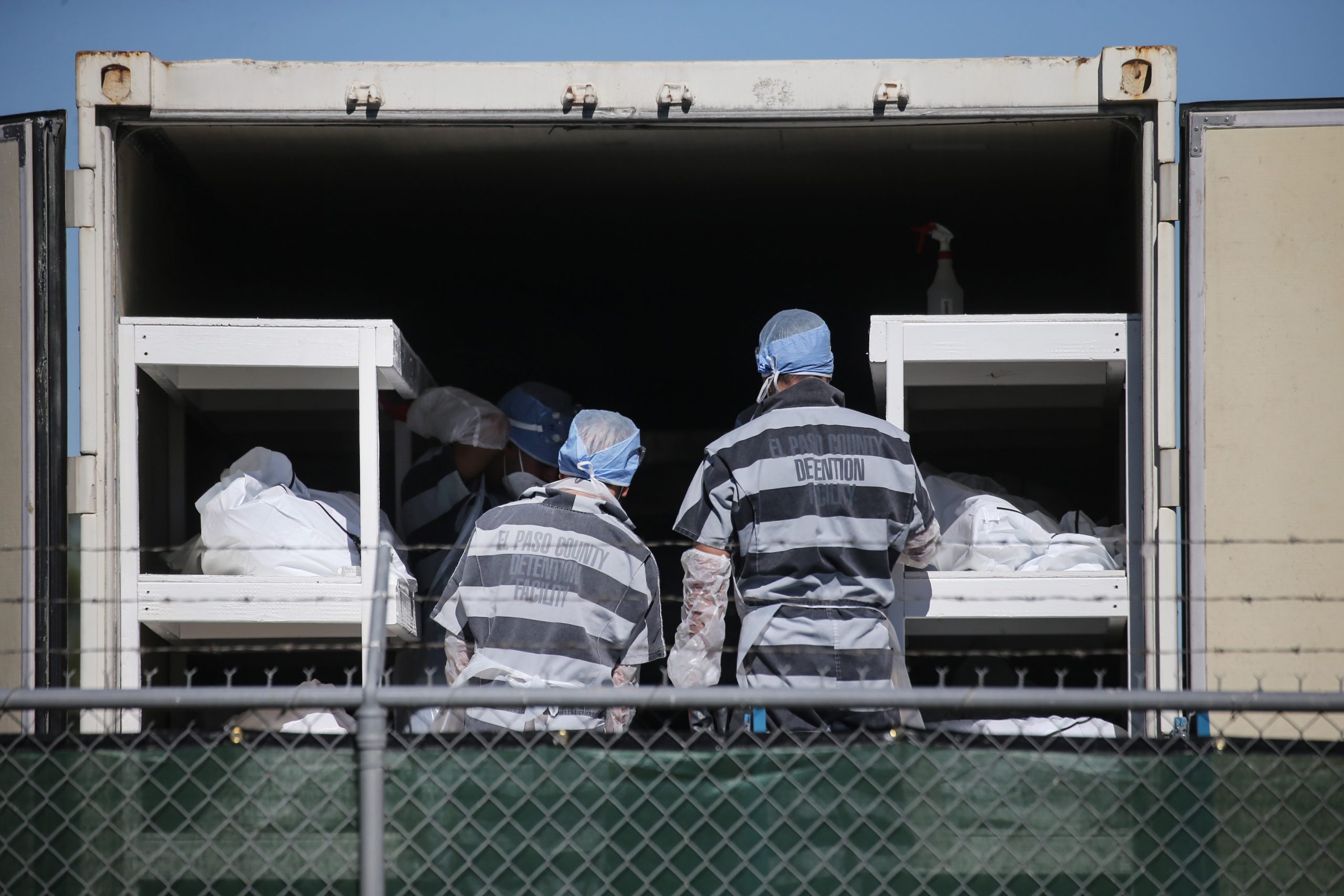
The failure to see the face of Christ in the poor and infirm and refugees and prisoners is the soul’s condemnation. For instance if impoverished and terrified refugees say should arrive by the thousands and our southern borders bearing their children with them driven from their homes in El Salvador, Guatemala, and Honduras by monstrous violence and hopeless poverty, much of it the long unfolding consequence of our own barbaric policies in Central America. And then our degenerate dropsical orange goblin of a president and the little hoard of oleaginous fascists who slid out of the spiritual sewer by his side, react by imprisoning the adult asylum seekers and abducting and caging their children, subjecting all of them to the most abominable psychological torture degradation and despair, in order to terrify other refugees who might also come seeking shelter; here we need not doubt for a moment that according to the words of Christ these persons have revealed themselves as damned at this moment. Of course the exact number of refugees still imprisoned at inadequate facilities near the southern border right now is impossible to determine, but they number still in the thousands. Worse the number of children stolen by the current administration from their parents many of whom will never be reunited with their families, not only also numbers in the thousands, but is apparently still growing despite false reports to the contrary. Which would seem to mean that we as a nation, we Christians, in America at least, but all of us more generally, are living in a moment of absolute immediate judgment as a people almost perfectly corresponding to the scene laid out for us by Jesus in Matthew 25. And yet curiously enough, there are a good number of American Christians who have already chosen and will choose once again, to associate themselves with the oppressors rather than the oppressed. A good number of us Christian citizens, many quite aware of these atrocities will continue to lend our support to these men even at the ballot box. Christ has assured us that to do so is to become children of the devil.
BOOK PUBLISHED: “BLACK ICE AND FIRE” by James Ross Kelly – The Raw Art Review: A Journal of Storm and Urge
David Bentley Hart – A Different Class of the Imprisoned – YouTube
Supreme Court tells Santa Clara County it can’t bar in-person worship – Los Angeles Times
The Supreme Court is telling California’s Santa Clara County that it can’t enforce a ban on indoor religious worship services put in place because of the coronavirus pandemic.
Source: Supreme Court tells Santa Clara County it can’t bar in-person worship – Los Angeles Times
Not safe–C.S. Lewis
“Aslan is a lion–the Lion, the great Lion.”
“Ooh” said Susan. “I’d thought he was a man. Is he-quite safe? I shall feel rather nervous about meeting a lion”
…”Safe?” said Mr Beaver …”Who said anything about safe? ‘
Course he isn’t safe.
But he’s good.
He’s the King, I tell you.
Chronicles of Narnia, C.S. Lewis
THE FATE OF THE UNPREPARED (Matthew 25:1-13)–William Barclay
Gospel of Matthew Chapter 25
If we look at this parable with western eyes, it may seem an unnatural and a “made-up” story. But, in point of fact, it tells a story which could have happened at any time in a Palestinian village and which could still happen today.
25:1-13 “What will happen in the Kingdom of Heaven is like the situation which arose when ten virgins took their lamps and went out to meet the bridegroom. Five of them were foolish and five were wise. The foolish took their lamps, but did not take oil with them; but the wise took oil in their vessels together with their lamps. When the bridegroom was long in coming, all of them settled down to rest and slept. In the middle of the night the cry went up, ‘Look you, the bridegroom! Go out to meet him!’ Then all these virgins awoke, and they prepared their lamps. The foolish ones said to the wise ones. ‘Give us some of your oil, for our lamps have gone out.’ But the wise answered, ‘No; we cannot do that in case there is not enough for us and for you. Go rather to those who sell oil, and buy it for yourselves.’ While they went away to buy oil, the bridegroom came; and those who were ready entered with him into the marriage celebrations, and the door was shut. Later the rest of the virgins came too. ‘Sir, sir,’ they said, ‘open the door to us.’ But he answered, ‘This is the truth I tell you–I do not know you.’ Be on the watch then, for you do not know the day and the hour.”
A wedding was a great occasion. The whole village turned out to accompany the couple to their new home, and they went by the longest possible road, in order that they might receive the glad good wishes of as many as possible. “Everyone,” runs the Jewish saying, “from six to sixty will follow the marriage drum.” The Rabbis agreed that a man might even abandon the study of the law to share in the joy of a wedding feast.
The point of this story lies in a Jewish custom which is very different from anything we know. When a couple married, they did not go away for a honeymoon; they stayed at home; for a week they kept open house; they were treated, and even addressed, as prince and princess; it was the gladdest week in all their lives. To the festivities of that week their chosen friends were admitted; and it was not only the marriage ceremony, it was also that joyous week that the foolish virgins missed, because they were unprepared.
The story of how they missed it all is perfectly true to life. Dr. J. Alexander Findlay tells of what he himself saw in Palestine. “When we were approaching the gates of a Galilaean town,” he writes, “I caught a sight of ten maidens gaily clad and playing some kind of musical instrument, as they danced along the road in front of our car; when I asked what they were doing, the dragoman told me that they were going to keep the bride company till her bridegroom arrived. I asked him if there was any chance of seeing the wedding, but he shook his head, saying in effect: ‘It might be tonight, or tomorrow night, or in a fortnight’s time; nobody ever knows for certain.’ Then he went on to explain that one of the great things to do, if you could, at a middle-class wedding in Palestine was to catch the bridal party napping. So the bridegroom comes unexpectedly, and sometimes in the middle of the night; it is true that he is required by public opinion to send a man along the street to shout: ‘Behold! the bridegroom is coming!’ but that may happen at any time; so the bridal party have to be ready to go out into the street at any time to meet him, whenever he chooses to come. … Other important points are that no one is allowed on the streets after dark without a lighted lamp, and also that, when the bridegroom has once arrived, and the door has been shut, late-comers to the ceremony are not admitted.” There the whole drama of Jesus’ parable is re-enacted in the twentieth century. Here is no synthetic story but a slice of life from a village in Palestine.
Like so many of Jesus’ parables, this one has an immediate and local meaning, and also a wider and universal meaning.
In its immediate significance it was directed against the Jews. they were the chosen people; their whole history should have been a preparation for the coming of the Son of God; they ought to have been prepared for him when he came. Instead they were quite unprepared and therefore were shut out. Here in dramatic form is the tragedy of the unpreparedness of the Jews.
But the parable has at least two universal warnings.
(i) It warns us that there are certain things which cannot be obtained at the last minute. It is far too late for a student to be preparing when the day of the examination has come. It is too late for a man to acquire a skill, or a character, if he does not already possess it, when some task offers itself to him. Similarly, it is easy to leave things so late that we can no longer prepare ourselves to meet with God. When Mary of Orange was dying, her chaplain sought to tell her of the way of salvation. Her answer was: “I have not left this matter to this hour.” To be too late is always tragedy.
(ii) It warns us that there are certain things which cannot be borrowed. The foolish virgins found it impossible to borrow oil, when they discovered they needed it. A man cannot borrow a relationship with God; he must possess it for himself. A man cannot borrow a character; he must be clothed with it. We cannot always be living on the spiritual capital which others have amassed. There are certain things we must win or acquire for ourselves, for we cannot borrow them from others.
Tennyson took this parable and turned it into verse in the song the little novice sang to Guinevere the queen, when Guinevere had too late discovered the cost of sin:
“Late, late so late! and dark the night and chill!
Late, late so late! but we can enter still.
Too late, too late! ye cannot enter now.
No light had we; for that we do repent;
And learning this, the bridegroom will relent.
Too late, too late! ye cannot enter now.
No light: so late! and dark and chill the night!
O let us in, that we may find the light!
Too late, too late: ye cannot enter now.
Have we not heard the bridegroom is so sweet?
O let us in, tho’ late, to kiss his feet!
No, no, too late! ye cannot enter now.”
There is no knell so laden with regret as the sound of the words too late.
Daily Bible Study by William Barclay: Matthew Vol. 2