Caught Up in the Air


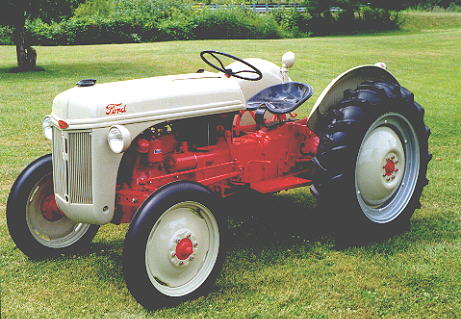
Ford 8 N

Ford 8 N

A dozen or more three hundred year old black oaks spread
over the top of the south side hill of our farm
a two acre pasture on top &
our house sat on the edge and overlooked a small
twenty acre valley bottom with a creek & across it
was a similar hill of Ponderosa pine and Douglas fir
to complete the farms north edge as a cross section
of a small valley running from our house south/north

One afternoon after school when I was 14
I walked out through the oaks to find my Grandfather
a man in his early eighties, he had turned the
place into a farm in only about four years

It was his son’s farm who owned a business
in town and twenty miles away, my grandfather had
used his own money, to build a lambing shed, then
chicken coops, then a substantial barn, and a half acre
garden down by the creek that was irrigated
by a pump and sprinkler and we all ate
very well and the tractor was an important tool

Every day in his sweat stained straw
cowboy hat he was on his son’s Ford 8N tractor
to the garden, the sheep shed, the creek,
& when I went looking for him my radar
was set for the Ford tractor

The tractor was the 20 team of mules
he used to own when he was
a successful farmer on the Great Plains
& he had started as a cowboy breaking horses for a living
& was at the door of change from horse drawn everything
to tractors, & power from oil
that began to feed the world
shortly before, banks and the great depression
ended all that for him

For our little farm, the tractor plowed, the tractor fertilized, the tractor planted,
the tractor cut hay, the tractor raked hay, and the tractor bailed hay
the tractor hauled hay, the tractor mixed cement,
the tractor toted injured animals,

I found him sitting on a 5 gallon bucket
his hat on his knee & embarrassment on his face
a look I’d never seen before from
the most affable man I’d ever known
“Oh Jimmy,” he sighed, “You have to do something for me,”

He had left the Ford tractor out of gear and did
not set the brake while he got off to do some chore &
the 8N had rolled down the hill…

The hill had about a 70 percent slope
& almost a straight drop got it going at such a high rate of
speed that when it hit the bottom it actually bounced
over a fence at the bottom of the hill and while airborne
hit the pasture & bounded over another small
hill by the apple trees and rolled out but not over
into the fresh green pasture;
beside the still slough where bull frogs were
letting go in their slow & late afternoon jug-a-rums
& I by his narrative, I was now looking down wide eyed overthe hill
& out to where, yes in the green pasture—thered tractor was sitting motionless

“I’d like you to go down there,” he said pointing but looking away, “and if there is nothing
wrong with it, drive the tractor back up here and never-tell-my-son-that-this-ever-happened.”

I went over the top of this steep hill side amazed & imagining again
the trajectory and the perfect angle of descent that kept
the 8N from turning over and fully expected something broken
as his narrative told of a loud noise when it hit
the bottom of the hill, before it leapt the fence

& yes, I was wishing I’d seen it happen, but
when I got to it I could not see anything broken & I touched
the button starter next to the gear shift,
it fired up and I drove it back up the 100 year old
road bed that was at one time the road from Medford
to Prospect, that now let us take a long gentle slope up
and down to our house and farm, &
he was relieved & I never told his son of the driverless 8N’s wild ride

Another afternoon when I was 17, I found him on the
concrete floor of the barn having fallen and broken
his hip while tending an animal, I gently got him
In the carry-all I attached to the back of the tractor
& very slowly got him to the house, before dark where
I called and we waited for an ambulance, to come twenty miles from town
& they operated & pinned his hip
& told him he’d never walk again.

Before he left the hospital he told me that was bullshit
and he’d be walking on a plane to fly to Kansas, as he was determined not
to die in Oregon as he thought they might bury him there,
& he mended, in a hospital bed in our living room, started out on crutches
& progressed to a walker, & then two canes & then to one

That next fall I and a neighbor killed three nice bucks
across the creek where I knew they could be waylaid
& I drove them back draped over the tractor
up the old Prospect road past our house where
my grandfather was standing on the back patio watching
us return & he raised one of his canes
and brandished it in the air, as we drove past.

That next spring I accompanied him to the
airport and saw him walk with one cane up onto a 727
& as he got to the door he turned around
& waved his Stetson hat down at me on the tarmac,
& then slowly turned around in his cowboy boots
& entered the jet to be caught up in the air & I never saw him again.

Thomas Merton— from Theology of Creativity


thomas merton

Excerpted from an essay which first  appeared in 1960 in  The American Benedictine Review. 

The creativity of the Christian person must be seen in relation to the creative vocation of the new Adam, mystical person of the “whole Christ.” The creative will of God has been at work in the cosmos since he said: “Let there be light.”  This creative fiat was not uttered merely at the dawn of time. All time and all history are a continued, uninterrupted creative act, a stupendous, ineffable mystery in which God has signified his will to associate man with himself in his work of creation. The will and power of the Almighty Father were not satisfied simply to make the world and turn it over to man to run it as best he could. The creative love of God was met, at first, by the destructive and self-centered recusal of man: an act of such incalculable consequences that it would have amounted to a destruction of God’s plan, if that were possible. But the creative work of God could not be frustrated by man’s sin. On the contrary, sin itself entered into the plan. If man was first called to share in the creative work of his heavenly Father, he now became involved in the “new creation,” the redemption of his own kind and the restoration of the cosmos, purified and transfigured, into the hands of the Father. God himself became man in order that in this way man could be most perfectly associated with him in this great work, the fullest manifestation of his eternal wisdom and mercy.

The Literary Essays of Thomas Merton,  New Directions

Cover of "The Literary Essays of Thomas M...

Cover via Amazon

A Psalm


I’ve been excited by women
in libraries
followed movements with
my eyes as a sail fills
with wind and felt the jolt
like a prow taking
its cut through a wave

I’ve been excited by women
in libraries
whose slow surreptitious movements,
the turn of an ankle
short measured steps in high heels
a twist of mouth
a glance at a book shelf
or through it

I’ve been excited by women
in libraries
whose silent voices echo chapters
of humility and respect
as peasant dresses
and pigtails flow by with ghosts
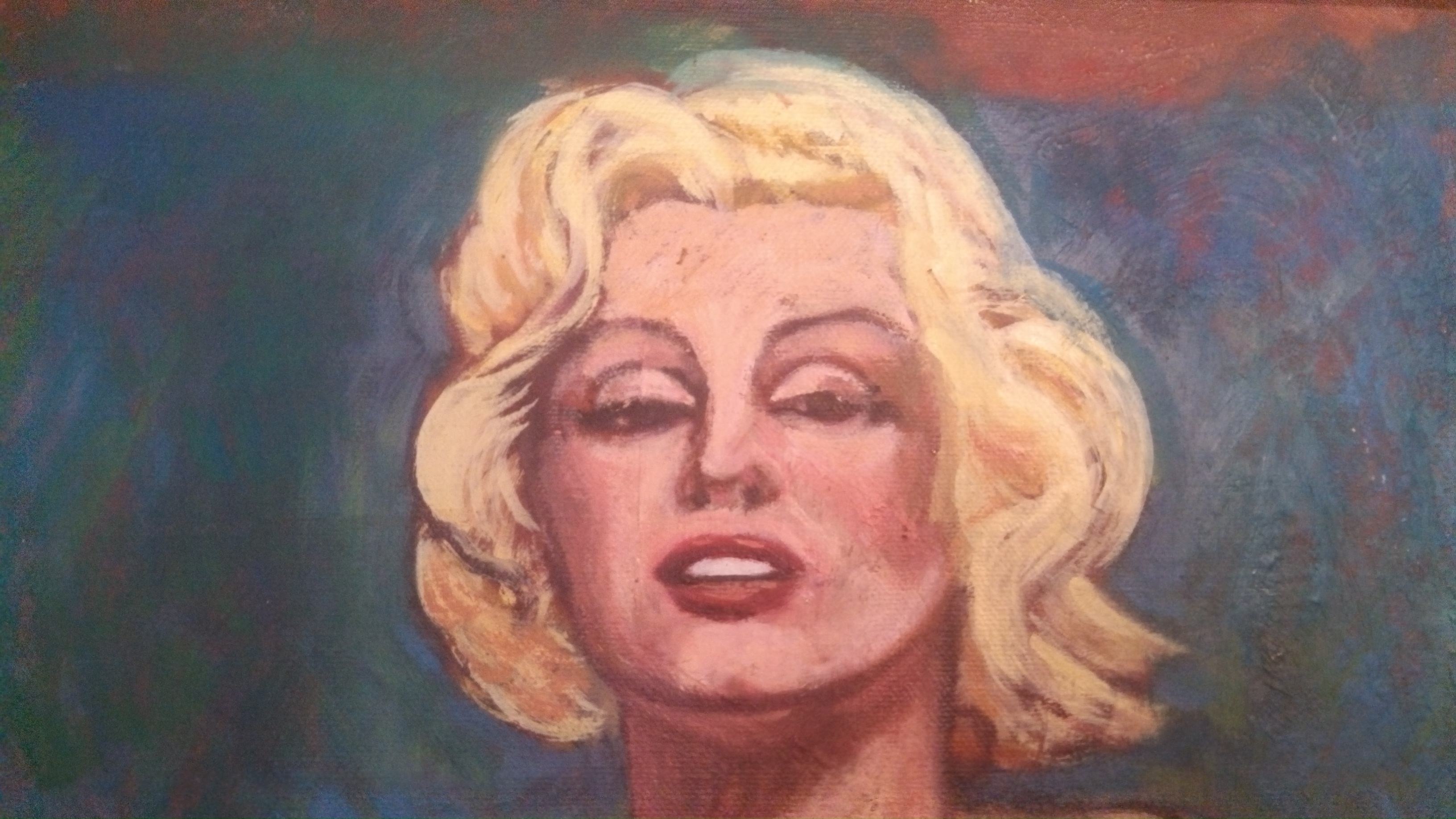
of Marilyn Monroe movie memories
and placid book cover art

"Marilyn at Forty" Oil painting by Ted Barr

“Marilyn at Forty” Oil painting (1986) by Ted Barr
James Kelly Collection

I’ve been excited by women
in libraries
rolling book carts to proper shelves
cataloging history and
time and gossip and art

I’ve been excited by women
in libraries
crossing legs out of terry cloth dresses with
rouged cheeks and
red elevated lips
taking a book inward
with focus and cognition
while red hair
and white thighs exude
auras of creation

I’ve been excited by women
in libraries
as if Sapphos’ lost poems
appeared while I wait for
a tall dark haired woman
to find me here between
stolid wooden shelves
where dreams meet the sea
and hearts have tried
to expose the sky

I’ve been excited by women
in libraries
and have turned pages
of desire toward islands of thought
where there are
rose petaled shores
of sure goodness
and love

Reasons To Believe : Dark Matter Ropes Confirm Big Bang Cosmology


Reasons To Believe : Dark Matter Ropes Confirm Big Bang Cosmology.

800px-Lambda-Cold_Dark_Matter,_Accelerated_Expansion_of_the_Universe,_Big_Bang-Inflation

William Douglas on Church and State


William O. Douglas 1898-1980

William O. Douglas 1898-1980

On April 28, 1952, in the decision of the Supreme Court of   the United States in Zorach v. Clauson, 343 U.S. 306 (1952), in   which school children were allowed to be excused from public   schools for religious observances and education, Justice William   O. Douglas, in writing for the Court stated:

‘The First Amendment, however, does not say that in every and all respects   there shall be a separation of Church and State. Rather, it   studiously defines the manner, the specific ways, in which there   shall be no concern or union or dependency one on the other. That   is the common sense of the matter. Otherwise the State and religion would be aliens to each other – hostile, suspicious, and   even unfriendly. Churches could not be required to pay even   property taxes. Municipalities would not be permitted to render   police or fire protection to religious groups. Policemen who   helped parishioners into their places of worship would violate   the Constitution. Prayers in our legislative halls; the appeals to the Almighty in the messages of the Chief Executive; the   proclamations making Thanksgiving Day a holiday; “so help me God”   in our courtroom oaths – these and all other references to the Almighty that run through our laws, our public rituals, our   ceremonies would be flouting the First Amendment. A fastidious   atheist or agnostic could even object to the supplication with   which the Court opens each session: “God save the United States and this Honorable Court.”

from Living Water by Brother Yun


Cover of "Living Water: Powerful Teaching...

Cover via Amazon

Brother-Yun-Heavenly-ManOn numerous occasions, preachers in China have traveled to a remote mountainous area to visit a group of believers. Although nobody is told that they are coming, when the preachers arrive they often find the believers already gathered together and expecting them, sometimes even in the middle of the night! When asked how they knew the preachers were coming at that time, they reply, “The Lord told us to get ready because you were coming at this time.” In other places, the house churches had problems when undercover agents came along to spy on the believers and see if they could gather information that might be used against them later. The Christians prayed and asked God what they should do. The Lord told them to stop announcing the place and time of their meetings and instead just trust that the Holy Spirit would reveal the details to each person He wanted to come to the meeting. On the day of the next meeting, nobody except the leader knew where the church service would be held, or at what time, but one by one believers began to turn up, all having been told where to go while they were praying earlier that morning. This method is one way of making sure that only those people the Lord wants to fellowship together actually do so. It also put an immediate end to the unwanted visits by the undercover agents. The Bible is full of examples of God’s people hearing and following His voice. Listening is an integral part of having a relationship with someone. Can you imagine what kind of marriage it would be if a husband and wife never heard one another’s voice? So it is for a child of God who has a relationship with the Father. I am convinced that one of the reasons many Christians struggle to hear God’s voice is simply because they don’t take time to be quiet and listen. Their lives are so busy with irrelevant things that they go months at a time without ever stopping and quieting their hearts before the Lord. To hear God’s voice, you have to stop listening to your own heart and mind. You need to stop listening to the news and to people who love to air their worthless opinions. You also need to stop taking heed of the voice of Satan and giving attention to evil thoughts. Jesus told us, “When you pray, go into your room, close the door and pray to your Father, who is unseen. Then your Father, who sees what is done in secret, will reward you. And when you pray, do not keep on babbling like pagans, for they think they will be heard because of their many words. Do not be like them, for your Father knows what you need before you ask him” (Matt. 6:6–8).

Yun, Brother (2008-09-23). Living Water: Powerful Teachings from the International Bestselling Author of The Heavenly Man (pp. 132-133). Zondervan. Kindle Edition.

“… cunning instead of belief.” from The Last Battle by C.S. Lewis


C.S. Lewis
C.S. Lewis

“I hope Tash ate the Dwarfs too,” said Eustace. “Little swine.”

“No, he didn’t,” said Lucy. “And don’t be horrid. They’re still here. In fact you can see them from here. And I’ve tried and tried to make friends with them but it’s no use.”

Friends with them!” cried Eustace. “If you knew how those Dwarfs have been behaving!”

“Oh stop it, Eustace,” said Lucy. “Do come and see them. King Tirian, perhaps you could do something with them.”

“I can feel no great love for Dwarfs today,” said Tirian. “Yet at your asking, Lady, I would do a greater thing than this.”

Lucy led the way and soon they could all see the Dwarfs. They had a very odd look. They weren’t strolling about or enjoying themselves (although the cords with which they had been tied seemed to have vanished) nor were they lying down and having a rest. They were sitting very close together in a little circle facing one another. They never looked round or took any notice of the humans till Lucy and Tirian were almost near enough to touch them. Then the Dwarfs all cocked their heads as if they couldn’t see anyone but were listening hard and trying to guess by the sound what was happening.

“Look out!” said one of them in a surly voice. “Mind where you’re going. Don’t walk into our faces!”

“All right!” said Eustace indignantly. “We’re not blind. We’ve got eyes in our heads.”

“They must be darn good ones if you can see in here,” said the same Dwarf whose name was Diggle.

“In where?” asked Edmund.

“Why you bone-head, in here of course,” said Diggle. “In this pitch-black, poky, smelly little hole of a stable.”

“Are you blind?” said Tirian.

“Ain’t we all blind in the dark!” said Diggle.

“But it isn’t dark, you poor stupid Dwarfs,” said Lucy. “Can’t you see? Look up!

Look round! Can’t you see the sky and the trees and the flowers? Can’t you see me?”

“How in the name of all Humbug can I see what ain’t there? And how can I see you any more than you can see me in this pitch darkness?”

“But I can see you,” said Lucy. “I’ll prove I can see you. You’ve got a pipe in your mouth.”

“Anyone that knows the smell of baccy could tell that,” said Diggle.

“Oh the poor things! This is dreadful,” said Lucy. Then she had an idea. She stooped and picked some wild violets. “Listen, Dwarf,” she said. “Even if your eyes are wrong, perhaps your nose is all right: can you smell that?” She leaned across and held the fresh, damp flowers to Diggle’s ugly nose. But she had to jump back quickly in order to avoid a blow from his hard little fist.

“None of that!” he shouted. “How dare you! What do you mean by shoving a lot of filthy stable-litter in my face? There was a thistle in it too. It’s like your sauce! And who are you, anyway?”

“Earth-man,” said Tirian, “she is the Queen Lucy, sent hither by Aslan out of the deep past. And it is for her sake alone that I, Tirian your lawful King, do not cut all your heads from your shoulders, proved and twice-proved traitors that you are.”

“Well if that doesn’t beat everything!” exclaimed Diggle. “How can you go on talking all that rot? Your wonderful Lion didn’t come and help you, did he? Thought not. And now— even now— when you’ve been beaten and shoved into this black hole, just the same as the rest of us, you’re still at your old game. Starting a new lie! Trying to make us believe we’re none of us shut up, and it ain’t dark, and heaven knows what.”

“There is no black hole, save in your own fancy, fool,” cried Tirian. “Come out of it.” And, leaning forward, he caught Diggle by the belt and the hood and swung him right out of the circle of Dwarfs. But the moment Tirian put him down, Diggle darted back to his place among the others, rubbing his nose and howling:

“Ow! Ow! What d’you do that for! Banging my face against the wall. You’ve nearly broken my nose.” “Oh dear!” said Lucy. “What are we to do for them?”

“Let ‘em alone,” said Eustace: but as he spoke the earth trembled. The sweet air grew suddenly sweeter. A brightness flashed behind them. All turned. Tirian turned last because he was afraid. There stood his heart’s desire, huge and real, the golden Lion, Aslan himself, and already the others were kneeling in a circle round his forepaws and burying their hands and faces in his mane as he stooped his great head to touch them with his tongue. Then he fixed his eyes upon Tirian, and Tirian came near, trembling, and flung himself at the Lion’s feet, and the Lion kissed him and said, “Well done, last of the Kings of Narnia who stood firm at the darkest hour.”

“Aslan,” said Lucy through her tears, “could you— will you— do something for these poor Dwarfs?”

“Dearest,” said Aslan, “I will show you both what I can, and what I cannot, do.” He came close to the Dwarfs and gave a low growl: low, but it set all the air shaking. But the Dwarfs said to one another, “Hear that? That’s the gang at the other end of the stable. Trying to frighten us. They do it with a machine of some kind. Don’t take any notice. They won’t take us in again!”

Aslan raised his head and shook his mane. Instantly a glorious feast appeared on the Dwarfs’ knees: pies and tongues and pigeons and trifles and ices, and each Dwarf had a goblet of good wine in his right hand. But it wasn’t much use. They began eating and drinking greedily enough, but it was clear that they couldn’t taste it properly. They thought they were eating and drinking only the sort of things you might find in a stable. One said he was trying to eat hay and another said he had got a bit of an old turnip and a third said he’d found a raw cabbage leaf. And they raised golden goblets of rich red wine to their lips and said “Ugh! Fancy drinking dirty water out of a trough that a donkey’s been at! Never thought we’d come to this.” But very soon every Dwarf began suspecting that every other Dwarf had found something nicer than he had, and they started grabbing and snatching, and went on to quarreling, till in a few minutes there was a free fight and all the good food was smeared on their faces and clothes or trodden under foot. But when at last they sat down to nurse their black eyes and their bleeding noses, they all said:

“Well, at any rate there’s no Humbug here. We haven’t let anyone take us in. The Dwarfs are for the Dwarfs.”

“You see,” said Aslan. “They will not let us help them. They have chosen cunning instead of belief. Their prison is only in their own minds, yet they are in that prison; and so afraid of being taken in that they cannot be taken out. But come, children. I have other work to do.”

Lewis, C. S. (2008-10-29). The Last Battle: The Chronicles of Narnia (pp. 167-170). HarperCollins. Kindle Edition.

Bear kill on deer hunt


Talk softly to the Bear
in his dying, apologize
profusely–commend him
his courage as he stood
before you–stood! mind you
stood upright as you
before his death,
your own self,
you who pulled the trigger
and sent the bullet
meant for venison
that ripped out his throat,
five yards from your own.

Talk softly to the Bear
in his dying, apologize
remorsefully, commend him
his life as connected
to your own
& from your perspective
in a lasting way,
for he would have killed you
or left many scars.

Talk softly to the Bear
in his dying, apologize
with wry humor
make a fine rug of his brown hide,
commend him his courage of life & spirit,
every time you walk by;
but disparage his intellect,
tell him he should have kept
running from your partner
who stumbled through
the manzanita brush patch
that was his hiding place
with an unloaded gun.

Talk softly to the Bear
in his dying, apologize
sincerely, commend him
his spirit–send it back
to where it came,
as he lays next to
the knic-ki-knick leaves,
know the sound he makes..,
“UHHNNNUUUUUUU!”
Remember this all your life.

“..whatever the world is like, God has not abandoned it.” William Barclay on Matthew 24


The Day Of The Lord (Matt 24:6-8,29-31)

24:6-8,29-31 “You will hear of wars and reports of wars. See that you are not disturbed; for these things must happen; for the end is not yet. For nation shall rise against nation, and kingdom against kingdom, and there will be famines and earthquakes in various places.

“Immediately after the affliction of these days the sun will be darkened, and the moon will not give her light, and the stars will fall from heaven, and the powers of heaven will be shaken. Then there will appear the sign of the Son of Man in heaven. And then all the tribes of the earth will lament, and they will see the Son of Man coming in the clouds of heaven with power and much glory. And he will send his angels with a great trumpet call, and they will gather the elect from the four winds, from one boundary of heaven to the other.” [RSV]

William Barclay 1907-1978

William Barclay 1907-1978

“… an essential part of the Jewish thought of the future was the Day of the Lord that day when God was going to intervene directly in history, and when the present age, with all its incurable evil, would begin to be transformed into the age to come.

Very naturally the New Testament writers to a very great extent identified the Second Coming of Jesus and the Day of the Lord; and they took over all the imagery which had to do with the Day of the Lord and applied them to the Second Coming. None of these pictures is to be taken literally; they are pictures, and they are visions; they are attempts to put the indescribable into human words and to find some kind of picture for happenings for which human language has no picture.

But from all these pictures there emerge certain great truths.

(i) They tell us that God has not abandoned the world; for all its wickedness, the world is still the scene in which God’s purpose is being worked out. It is not abandonment that God contemplates; it is intervention.

(ii) They tell us that even a very crescendo of evil must not discourage us. An essential part of the Jewish picture of the Day of the Lord is that a complete breakdown of all moral standards and an apparent complete disintegration of the world must precede it. But, for all that, this is not the prelude to destruction; it is the prelude to recreation.

(iii) They tell us that both judgment and a new creation are certain. They tell us that God contemplates the world both in justice and in mercy; and that God’s plan is not the obliteration of the world, but the creation of a world which is nearer to his heart’s desire.

The value of these pictures is not in their details, which at best are only symbolic and which use the only pictures which the minds of men could conceive, but in the eternal truth which they conserve; and the basic truth in them is that, whatever the world is like, God has not abandoned it.”

William Barclay, Gospel of Matthew Vol. 2 p. 308-309