All That Is Natural


James Ross Kelly's avatarPoems & Stories by James Ross Kelly--

Even non-indigenous
& maligned as they are,
For having taken over
The American continent,
European Starlings imported
to New York City
in 1890, fly in unison,
& together with Brewers blackbird,
Rusty blackbirds, and yellow-headed
Blackbirds, in great fall & winter flocks,
Yet, they all cranky nest & breed & feed
In small groups, then move off in
Great, great blackbird
Mobial swirl perceptive,
Of all & oneanother but not perceiving, in
An unseen morphic field
Of each other proffering
Themselves as one, moving
North or south on the continent
Thought of as nuisance birds & could it be
That we who have this other perceived nuisance of
All that is natural will
Perhaps one resurrected day, come home
To roost when we see information that
Binds it all, with which we perceive
This perception—has become its own
Notion beyond any
Physical realm & is finally to us
Becoming Supernatural.

View original post

Believing


James Ross Kelly's avatarSt. John One: One

Our love
Our love is all of God’s money
Everyone is a burning sun

-Jeff Tweedy

Belief is the locked up tangible thing,
of law that the dust can be blown off of,
taken from a bookshelf, objectified, crucified
pointed at, solid repository of ideological contusions,
Gnostic misdemeanors, white lies & black ones of unreality
no different from the adulterous
first degree murder of guilty abrasions on your soul & woeful
finger-pointing wrong in legalistic right…

“Liberals and fundamentalists are both humanists,” said the old preacher grinning as he cleaned the carburetor of his Buick with Joy from a yellow plastic bottle & a tooth brush

“One believes there is a better day a coming, all with a strong right arm  of correct politics, & culture change.

“The other believes there is a better day a coming, if you do everything the Bible say; both have made Man’s action the operative & left out God as the agent of…

View original post 219 more words

Voyager has left the solar system


James Ross Kelly's avatarPoems & Stories by James Ross Kelly--

red and blue strobe flashing
cruisers making way
for emergency or small sins
against the state
sedate homes fill windows w/light
& inner movement
as if the city & small towns & large ones
were urban box cars riding the slow surge
of the continents past a somewhere
in the midst of words being laid down
foundations–forming parameters
of love–by a ubiquitous universal knowing
that we are transceivers
for us a long ago thought
for us to perceive ourselves amid background noise
in dark light years of emptiness full of something & unending love
while it is we are startled by new ancient wonders since,
volcanoes in Alaska, Washington, Pagan, Philippines
& then we saw several thousand on Io’s fly-by
& while sliding past
Saturn’s Rings we found
beauty of form reaching unsurpassed
& back again–miracles
like morning light on half-visible
breast w/long hair flowing over pillow
& springsmell jasmine…

View original post 16 more words

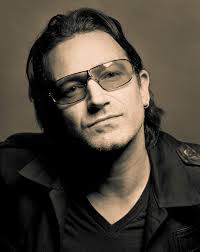
Bono on Jesus, Karma v. Grace


James Ross Kelly's avatarSt. John One: One

bono

(Excerpt from the book Bono: In Conversation with Michka Assayas)

Bono: I really believe we’ve moved out of the realm of Karma into one of Grace.

Assayas: Well, that doesn’t make it clearer for me.

Bono: You see, at the center of all religions is the idea of Karma. You know, what you put out comes back to you: an eye for an eye, a tooth for a tooth, or in physics; in physical laws every action is met by an equal or an opposite one. It’s clear to me that Karma is at the very heart of the universe. I’m absolutely sure of it. And yet, along comes this idea called Grace to upend all that “as you reap, so you will sow” stuff. Grace defies reason and logic. Love interrupts, if you like, the consequences of your actions, which in my case is very good news…

View original post 698 more words

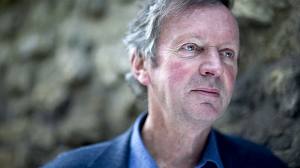
The cosmos as a developing organism–Rupert Sheldrake


sheldrake

The philosopher David Hume (1711– 76) is perhaps best known today for his skepticism about religion. Yet he was equally skeptical about the mechanistic philosophy of nature. There was nothing in the universe to prove that it was more like a machine than an organism; the organization we see in nature was more analogous to plants and animals than to machines. Hume was against the idea of a machine-designing God, and suggested instead that the world could have originated from something like a seed or an egg. In Hume’s words, published posthumously in 1779, “There are other parts of the universe (besides the machines of human invention) which bear still a greater resemblance to the fabric of the world, and which, therefore, afford a better conjecture concerning the universal origin of the system. These parts are animals and plants. The world plainly resembles more an animal or a vegetable, than it does a watch or a knitting-loom … And does not a plant or an animal, which springs from vegetation or generation, bear a stronger resemblance to the world, than does any artificial machine, which arises from reason and design?” 58 Hume’s argument was surprisingly prescient in the light of modern cosmology. Until the 1960s, most scientists still thought of the universe as a machine, and moreover as a machine that was running out of steam, heading for its final heat death. According to the second law of thermodynamics, promulgated in 1855, the universe would gradually lose the capacity to do work. It would eventually freeze in “a state of universal rest and death,” as William Thomson, later Lord Kelvin, put it. 59 It was not until 1927 that Georges Lemaître, a cosmologist and Roman Catholic priest, advanced a scientific hypothesis like Hume’s idea of the origin of the universe in an egg or seed. Lemaître suggested that the universe began with a “creation-like event,” which he described as “the cosmic egg exploding at the moment of creation.” 60 Later called the Big Bang, this new cosmology echoed many archaic stories of origins, like the Orphic creation myth of the Cosmic Egg in ancient Greece, or the Indian myth of Hiranyagarbha, the primal Golden Egg. 61 Significantly, in all these myths the egg is both a primal unity and a primal polarity, since an egg is a unity composed of two parts, the yolk and the white, an apt symbol of the emergence of “many” from “one.” Lemaître’s theory predicted the expansion of the universe, and was supported by the discovery that galaxies outside our own are moving away from us with a speed proportional to their distance. In 1964, the discovery of a faint background glow everywhere in the universe, the cosmic microwave background radiation, revealed what seemed to be fossil light left over from the early universe, soon after the Big Bang. The evidence for an initial “creation-like event” became overwhelming, and by 1966 the Big Bang theory became orthodox. Cosmology now tells a story of a universe that began extremely small, less than the size of a pinhead, and very hot. It has been expanding ever since. As it grows, it cools down, and as it cools, new forms and structures appear within it: atomic nuclei and electrons, stars, galaxies, planets, molecules, crystals and biological life. The machine metaphor has long outlived its usefulness, and holds back scientific thinking in physics, biology and medicine. Our growing, evolving universe is much more like an organism, and so is the earth, and so are oak trees, and so are dogs, and so are you.

58. Hume (2008), Part VII. 59. Thomson (1852). 60. Singh (2004). 61. Long (1983)

Sheldrake, Rupert (2012-09-04). Science Set Free: 10 Paths to New Discovery (p. 52,53). Random House, Inc.. Kindle Edition.

Why Aren’t More Intellectuals Believers? | RELEVANT Magazine


Why Aren’t More Intellectuals Believers? | RELEVANT Magazine.

Western worldview and Christianity–Harold Eberle


from  Christianity Unshackled by Harold Eberle,

Harold R. Eberle

Harold R. Eberle

Many agnostics will reason that if there is a God, then it is His responsibility to reveal Himself. Certainly a person cannot be expected to believe in something that cannot be seen or verified. Certainly if there is a God, He will not hold us accountable to believe in Him, since He is the one who is failing to make Himself known. It is His fault that we do not believe in Him— or so the agnostic reasons.
Yet, it is the western worldview that blinds a person from seeing the reality of God. To see this more clearly, think again of the words we quoted earlier from the famous atheist Richard Dawkins: “Faith is the great cop-out, the great excuse to evade the need to think and evaluate evidence.” Dawkins can only make this statement because he has assumed the worldview of modern Western intellectualism. However, if we hold to a worldview with no wall between the spiritual and natural realms, we could restructure Dawkins’ words to state: “The worldview of modern Western intellectualism is the great cop-out, the great excuse to evade the need to think about God and evaluate evidence for His existence.”

The truth is that any worldview that relegates things like God, religion, and faith to the spiritual world is a worldview built on an indefensible foundation. It may be attractive to people who want to distance themselves from facing reality, but it is tragic when modern-day Christians get pulled into that deceptive way of thinking.

Most Christians think that their worldview has been built on a biblical foundation. In reality, Western Christianity has a mixture of biblical thought and Western thought. It is most accurate to say that Western Christianity is the result of taking biblical truths and laying them upon the spiritual/ natural division developed by the ancient Greek philosophers.

That division became more and more pronounced throughout the later part of the Middle Ages. As I mentioned earlier, theology and philosophy were king and queen in the kingdom of education. Much more than the Bible, Aristotle’s writings were the focus of study. When discussing theology, students and professors spent most of their time dissecting and rehashing the writings of Church giants like Augustine and Thomas Aquinas— leaders who had developed their theology on the ancient Greek foundation.

When the historical Church went through the Scientific Revolution along with the rest of Western society, it was pulled right along and in many ways was at the forefront of change. The separation of the spiritual and natural worlds became even more clearly defined. Then God and faith were compartmentalized in the spiritual world while science and knowledge were compartmentalized in the natural world.

This compartmentalization was most prominent in philosophy. When philosophers such as Descartes, Hume, Kant, and Hegel developed their ideas, they each built on the spiritual/ natural division. Even today Western philosophy is fully locked into the dichotomous world-view laid down by the ancient Greek philosophers.

Unfortunately, Christian theology developed side-by-side and intertwined with Western philosophy. Church leaders like Martin Luther and John Calvin were fully submerged in the Western dichotomy of the spiritual world versus the natural world. Of course, they did not limit God to the spiritual world, but they still were Western people with Western minds. It is disturbing for modern Christians to hear this, but in some ways, Plato and Aristotle have had a more profound impact upon Western Christianity than the apostle Paul (proven by the fact that most university-educated Christians today cannot agree with Paul that God’s existence is undeniable and obvious).

There are many implications of this that we will discuss as we continue. Here we can simply mention how the foundation that divides the spiritual world from the natural world tends to create a lifestyle separated from the spiritual and supernatural. This is most obvious by considering a Western-minded atheist and then relating that to a modern Christian. Let me explain.

If God were to perform a miracle healing before a crowd of Western-minded atheists, they would make every attempt to give a natural explanation for the event. In their minds, natural events must have natural causes. Therefore, if God were to work a miraculous healing in their presence, thoughts would immediately go through their minds that the healing was not a true miracle but perhaps the result of coincidence, psychosomatic phenomenon, or deception. The modern Western mind can’t help but impose such thoughts upon supernatural experiences. Because the framework through which they view life allows for no miracles, they must search for a natural explanation— and they usually find it.

This same process goes through the mind of Christians who have been indoctrinated in the Western worldview. They may want to believe, but their minds will mold the events to fit the split spiritual/ natural framework. Such patterns of thought go beyond our understanding of miracles and permeate all our understanding. They subtly create a lifestyle separated from the spiritual and supernatural. They lead to a form of godliness, but deny the power.
Eberle, Harold (2009-12-28). Christianity Unshackled: Are You A Truth Seeker (pp. 90-94). Destiny Image, Inc.. Kindle Edition.

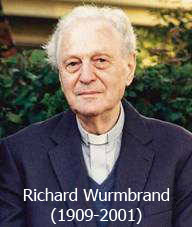
excerpt from In God’s Underground by Richard Wurmbrand


James Ross Kelly's avatarSt. John One: One

richard

excerpt from In God’s Underground  by Richard Wurmbrand
By Richard Wurmbrand
Copyright 1968 The voice of the Martyrs

[Wurmbrand relates this story from his life during World War Two to comfort a fellow prisoner in the Communist gulag they shared; who has betrayed another prisoner out of fear and at the time could not forgive himself]

When Rumania entered the war on Germany’s side, a pogrom began in which many thousands of Jews were killed or deported. At Iasi alone 11,000 were massacred in a day. My wife, who shares my Protestant faith, is also of Jewish origin. We lived in Bucharest, from which the Jews were not deported, but her parents, one of her brothers, three sisters and other relatives who lived in Bocovine were taken to Transmistria, a wild border Province which the Rumanians had captured from Russia. Jews who were not murdered at the end of this…

View original post 1,416 more words

The Trinity can also be compared..


(written ca. 1360–87) from
Piers the Ploughman—by William Langland

Piers_plowman_drolleries

The Trinity can also be compared to a torch or taper, which consist of wax and wick twined together, and a flame that flares from them both. And just as this wax, wick, and flame are used to light a fire, so the Father, the Son, and the Holy Ghost kindle among Christian people a fire of love and of faith which cleanses them from their sins. And as you sometimes see a torch whose flame is suddenly blown out, yet whose wick continues to smolder without setting fire to the matchwood, so the Holy Ghost is a God without mercy, and a Grace without life, to all those so depraved as to wish to quench true love, or destroy the very life which our Lord created.
‘Workmen who stay awake on winter nights are not cheered so much by glowing embers as they are by a blazing torch, or by a candle, or anything that gives out flame. So, the Father, the Son, and the Holy Ghost do not grant men grace or forgiveness of sins till the fire of the Holy Ghost begins to burn and to blaze. For the Holy Ghost glows by as an ember until true love lies down by His fire and blows it into flame; and then He flares out like a living fire, and warms the Father and the Son and melts their power into mercy. So, in winter, you can see icicles on the roofs of house, which once they feel the heat of the sun, melt in a minute into mist and water; and in the same way the grace of the Holy Ghost melts into mercy the great might of the Trinity—but only for those who practice mercy themselves.


Stuff Exists—Harold Eberle


Harold R. Eberle

Harold R. Eberle

Stuff exists; therefore, there had to be a stuff creator. There comes a time when people should quit arguing and just laugh at stupid ideas— and this includes the atheists’ most cherished belief. I don’t want to be rude; I want to make the obvious obvious. The acceptance of God’s existence is not a blind leap. Just the opposite is true— to not believe in a stuff creator is to be blind to the obvious. It is absurd not to believe in a stuff creator. Of course, we have lost the Western atheists in this discussion because the Scientific Revolution (and the Enlightenment that followed) set up in their minds a dichotomy of faith versus reason. Their definitions of faith and reason exclude God from the realm of reason. In reality, those categories are pure assumptions— false assumptions. Indeed, we cannot prove the existence of God to the atheist who refuses to let go of those assumed categories. In like fashion, we cannot prove the existence of bacteria to a person who refuses to look through a microscope and see the bacteria for himself. If, however, a person is willing to look through a microscope, then we can prove to him the existence of bacteria. Similarly, if an atheist is willing to look at the world, outside of his present dichotomous framework, then we can prove the existence of God. Here it is: stuff exists, so a stuff creator exists (or at least existed in the past). Atheistic readers may object and quickly argue that this is no argument for the existence of the Christian God. Indeed, I have not yet stated anything about this creator’s nature, and to argue against the Christian God at this point is to change the subject. It is to dodge the bullet, to hide behind a smoke screen. So long as we define God as the stuff creator, it is absurd not to accept God’s existence.

Eberle, Harold (2009-12-28). Christianity Unshackled: Are You A Truth Seeker (pp. 81-82). Destiny Image, Inc.. Kindle Edition.