Logos — The Eternal Word—William Barclay


From  The Daily Bible Study Series

The Gospel of John Volume 1

by William Barclay

(John 1:1-2)
1:1-2 When the world had its beginning, the word was already there; and the word was with God; and the word was God. This word was in the beginning with God.

William Barclay 1907-1978

William Barclay 1907-1978

The beginning of John’s gospel is of such importance and of such depth of meaning that we must study it almost verse by verse.* It is John’s great thought that Jesus is none other than God’s creative and life-giving and light-giving word, that Jesus is the power of God which created the world and the reason of God which sustains the world come to earth in human and bodily form.
Here at the beginning John says three things about the Word; which is to say that he says three things about Jesus.
(i) The Word was already there at the very beginning things. John’s thought is going back to the first verse of the Bible. “In the beginning God created the heavens and the earth” (Gen 1:1). What John is saying is this—the Word is not one of the created things; the Word was there before creation.The Word is not part of the world which came into being in time; the Word is part of eternity and was there with God before time and the world began. John was thinking of what is known as the preexistence of Christ.
In many ways this idea of preexistence is very difficult, if not altogether impossible, to grasp. But it does mean one very simple, very practical, and very tremendous thing. If the Word was with God before time began, if God’s Word is part of the eternal scheme of things, it means that God was always like Jesus. Sometimes we tend to think of God as stern and avenging; and we tend to think that something Jesus did changed God’s anger into love and altered his attitude to men. The New Testament knows nothing of that idea. The whole New Testament tells us, this passage of John especially, that God has always been like Jesus. What Jesus did was to open a window in time that we might see the eternal and unchanging love of God.
We may well ask, “What then about some of the things that we read in the Old Testament? What about the passages which speak about commandments of God to wipe out whole cities and to destroy men, women and children? What of the anger and the destructiveness and the jealousy of God that we sometimes read of in the older parts of Scripture?” The answer is this—it is not God who has changed; it is men’s knowledge of him that has changed. Men wrote these things because they did not know any better; that was the stage which their knowledge of God had reached.
When a child is learning any subject, he has to learn it stage by stage. He does not begin with full knowledge; he begins with what he can grasp and goes on to more and more. When he begins music appreciation, he does not start with a Bach Prelude and Fugue; he starts with something much more simple; and goes through stage after stage until his knowledge grows. It was that way with men and God. They could only grasp and understand God’s nature and his ways in part. It was only when Jesus came that they saw fully and completely what God has always been like.
It is told that a little girl was once confronted with some of the more bloodthirsty and savage parts of the Old Testament. Her comment was: “But that happened before God became a Christian!” If we may so put it with all reverence, when John says that the Word was always there, he is saying that God was always a Christian. He is telling us that God was and is and ever shall be like Jesus; but men could never know and realize that until Jesus came.
(ii) John goes on to say that the Word was with God. What does he mean by that? He means that always there has been the closest connection between the Word and God. Let us put that in another and a simpler way—there has always been the most intimate connection between Jesus and God. That means no one can tell us what God is like, what God’s will is for us, what God’s love and heart and mind are like, as Jesus can.
Let us take a simple human analogy. If we want to know what someone really thinks and feels about something, and if we are unable to approach the person ourselves, we do not go to someone who is merely an acquaintance of that person, to someone who has known him only a short time; we go to someone whom we know to be an intimate friend of many years’ standing. We know that he will really be able to interpret the mind and the heart of the other person to us.
It is something like that that John is saying about Jesus. He is saying that Jesus has always been with God. Let us use very human language because it is the only language we can use. John is saying that Jesus is so intimate with God that God has no secrets from him; and that, therefore, Jesus is the one person in all the universe who can reveal to us what God is like and how God feels towards us.
(iii) Finally John says that the Word was God. This is a difficult saying for us to understand, and it is difficult because Greek, in which John wrote, had a different way of saying things from the way in which English speaks. When Greek uses a noun it almost always uses the definite article with it. The Greek for God is theos  and the definite article is  ho. When Greek speaks about God it does not simply say theos; it says ho theos. Now when Greek does not use the definite article with a noun that noun becomes much more like an adjective. John did not say that the Word was ho  theos ; that would have been to say that the Word was identical with God. He said that the Word was theos—without the definite article—which means that the Word was, we might say, of the very same character and quality and essence and being as God. When John said the Word was God he was not saying that Jesus was identical with God; he was saying that Jesus was so perfectly the same as God in mind, in heart, in being that in him we perfectly see what God is like.
So right at the beginning of his Gospel John lays it down that in Jesus, and in him alone, there is perfectly revealed to men all that God always was and always will be, and all that he feels towards and desires for men.

[*italics of the 1955 edition restored but not text, which differs slightly]
A.W. Tozer on Fundamentalism


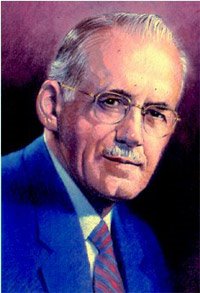
A.W. Tozer  (April 21, 1897 - May 12, 1963)

A.W. Tozer (April 21, 1897 – May 12, 1963)

Fundamentalism has stood aloof from the liberal in self-conscious superiority and has on its own part fallen into error, the error of textualism, which is simply orthodoxy without the Holy Ghost. Everywhere among conservatives we find persons who are Bible-taught but not Spirit-taught. They conceive truth to be something which they can grasp with the mind.

– See more at: http://webcache.googleusercontent.com/search?q=cache:http://www.charismanews.com/opinion/41471-an-open-letter-to-john-macarthur-from-a-w-tozer-he-being-dead-yet-speaketh#sthash.rSBzJ2cz.dpuf

Ravi Zacharias and John Lennox Answer Stephen Hawking


William Dembski Interview | The Best Schools


DembskiWilliam Dembski Interview | The Best Schools.

Physical Evidence of Jesus Christ — Unwrapping The Shroud of Turin. You decide–YouTube


Jesus and the Shroud of Turin [BEST FILM ON SHROUD EVER PRODUCED] The Resurrection of Jesus Christ – YouTube.

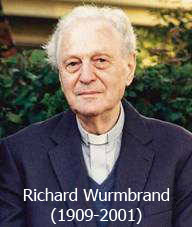
The Mystery of Jesus’ Sacrifice –Richard Wurmbrand


richardSuppose you were living 2,000 years ago in Palestine, that you were sinful, heavy with guilt, and Jesus told you, “Your sin is grave and deserves punishment. ‘The wages of sin are death.’ But tomorrow I will be flogged and crowned with a crown of thorns for you—I invite you to assist them when they drive nails into My hands and feet and fix Me to a cross. I will cry in anguish, and I will share the sorrow of My mother whose heart will be pierced by compassion for Me as if by a sword. You should be there to hear My cries. And when I have died, you shall know that your sins are forgiven forever, that I was your substitute, your scapegoat. This is how a man gets saved. Will you accept My suffering for your offense, or do you prefer to bear the punishment yourself?” What would you have answered?

I believe that this dilemma should be placed before a soul seeking salvation. Fifteen hundred years before the historical birth of Christ the Bible says, “Today I have begotten You” (Psalm 2:7). It also says to the penitent 2,000 years after Golgotha, “Today I die for you.” Jesus’ life and death are outside of time and space.

Would you accept? More than once in Communist prisons I have seen a pastor receive a beating to the blood in place of another prisoner. A name would be called and the pastor would simply say, “It is I.” In Auschwitz, Maximilian Kolbe, a priest, offered to take the place of a Pole sentenced to death by the Nazis. The Pole was the father of many children. The commandant of the camp accepted the substitution and the Pole was spared. Kolbe died by asphyxiation. Had you been that Pole, what would you have decided?

I lived many years in an isolated subterranean prison cell, in timelessness, something akin to the weightlessness experienced by astronauts. Just as they know no difference between heavy and light, I knew no distinction between past, present, and future. In my prison cell Jesus’ presence was immediate. His life did not belong to the past, nor was it a series of successive events. He put before me the problem I have just put to you. He told me, “You are a sinner and are condemned to eternal punishment for your transgressions, but I am ready to save you. Because of your sin, I will endure rejection, flogging, being spat upon, being crowned with a crown of thorns, the pains of crucifixion, and the agony of seeing my mother brokenhearted at the foot of the cross. My blood will cleanse you from all sin.” I had to decide whether or not to accept the sacrifice of the innocent Son of God for my sins. I believed that to accept would be a greater wickedness than all I might ever have done in my life and I flatly refused this proposal. Jesus was glad about my “No.”

Then came the real question, the thing He had had in mind from the beginning. “What if I incorporate your being into Mine, if you become part of My body, if you deny yourself as an independent self, and I will live in you henceforth and you will be ‘crucified with me’ (Galatians 2:20), ‘buried with me’ (Romans 6:4), and share the fellowship of My suffering (Philippians 3:10)? People in churches will sing, ‘safe in arms of Jesus,’ while you will be safe as an arm of Jesus, nailed like His to a cross, but also imparting goodness like His. Do you wish to become My co-worker for the salvation of mankind, alleviating sufferings, filling up ‘what is lacking in the afflictions of Christ’

I have accepted this proposal. Christians are meant to have the same vocation as their King, that of cross-bearers. It is this consciousness of a high calling and of partnership with Jesus which brings gladness in tribulation, which makes Christians enter prisons for their faith with the joy of a bridegroom entering the bridal room.

When George Vins, the general secretary of the Baptist Union of the USSR, was sentenced for his faith, believers in the courtroom covered him with flowers. His little daughter, hoisted on a stool, recited in front of the Communist judges, “Father, with Christ you are free in prison, and freedom without Him is prison.” The believers waiting outside the building received him with a Christian hymn.

The relative of a Christian prisoner in Red China said to someone who sympathized with her, “You should not feel sorry for us, for if he were not in that slave labor camp, how could the others here come to know the gospel of the Lord Jesus?”

In the same spirit we should receive the crosses of poverty, racial discrimination, personal betrayals, unfaithfulness of marriage partners, rebellion of children, and all other sorrows of life.

A man who smugly accepts Christ’s dying for him and shouts Hallelujah about the innocent Son of God receiving punishment he himself deserves should be more severely punished than before. The gospel, the good news, is the privilege of becoming a member of the Body of Christ, of suffering, of dying in pain with Him, and also of being resurrected with Him in glory.

Because sacrifice is implicit in a conversion, the call of an evangelist has the name “altar call.” Every being placed upon the altar in Jerusalem—lambs, rams, and pigeons—died. Someone dies for you. This time it is not an animal, but the Son of God. He has decreed it and nothing you can do will change His mind. You can only ask for the privilege of henceforth being able to sacrifice yourself as well, for the glory of God and for the good of your fellowmen. In return you receive the right to die to sin and to the world and its laws.

The reality of a conversion is in becoming one with Him. It is shameful and abominable to accept His substitutionary death otherwise.

Wurmbrand, Richard (2000-01-01). 100 Prison Meditations: Cries of Truth from Behind the Iron Curtain *(Kindle Locations 93-134). Living Sacrifice Book Company. Kindle Edition.

* Available for $1.00 on Kindle

Watch “Saints and Sceptics. Graham Veale” explains the veracity of the resurection and other points, on YouTube


I AM A CONVINCED UNIVERSALIST — by William Barclay


William Barclay 1907-1978

William Barclay 1907-1978

I am a convinced universalist. I believe that in the end all men will be gathered into the love of God. In the early days Origen was the great name connected with universalism. I would believe with Origen that universalism is no easy thing. Origen believed that after death there were many who would need prolonged instruction, the sternest discipline, even the severest punishment before they were fit for the presence of God. Origen did not eliminate hell; he believed that some people would have to go to heaven via hell. He believed that even at the end of the day there would be some on whom the scars remained. He did not believe in eternal punishment, but he did see the possibility of eternal penalty. And so the choice is whether we accept God’s offer and invitation willingly, or take the long and terrible way round through ages of purification.

Gregory of Nyssa offered three reasons why he believed in universalism. First, he believed in it because of the character of God. “Being good, God entertains pity for fallen man; being wise, he is not ignorant of the means for his recovery.” Second, he believed in it because of the nature of evil. Evil must in the end be moved out of existence, “so that the absolutely non-existent should cease to be at all.” Evil is essentially negative and doomed to non-existence. Third, he believed in it because of the purpose of punishment. The purpose of punishment is always remedial. Its aim is “to get the good separated from the evil and to attract it into the communion of blessedness.” Punishment will hurt, but it is like the fire which separates the alloy from the gold; it is like the surgery which removes the diseased thing; it is like the cautery which burns out that which cannot be removed any other way.

But I want to set down not the arguments of others but the thoughts which have persuaded me personally of universal salvation.

First, there is the fact that there are things in the New Testament which more than justify this belief. Jesus said: “I, when I am lifted up from the earth, will draw all men to myself” (John 12:32). Paul writes to the Romans: “God has consigned all men to disobedience that he may have mercy on all” (Rom. 11:32). He writes to the Corinthians: “As in Adam all die, so also in Christ shall all be made alive” (1 Cor. 15:22); and he looks to the final total triumph when God will be everything to everyone (1 Cor. 15:28). In the First Letter to Timothy we read of God “who desires all men to be saved and to come to the knowledge of the truth,” and of Christ Jesus “who gave himself as a ransom for all” (1 Tim 2:4-6). The New Testament itself is not in the least afraid of the word all.

Second, one of the key passages is Matthew 25:46 where it is said that the rejected go away to eternal punishment, and the righteous to eternal life. The Greek word for punishment is kolasis, which was not originally an ethical word at all. It originally meant the pruning of trees to make them grow better. I think it is true to say that in all Greek secular literature kolasis is never used of anything but remedial punishment. The word for eternal is aionios. It means more than everlasting, for Plato – who may have invented the word – plainly says that a thing may be everlasting and still not be aionios. The simplest way to out it is that aionios cannot be used properly of anyone but God; it is the word uniquely, as Plato saw it, of God. Eternal punishment is then literally that kind of remedial punishment which it befits God to give and which only God can give.

Third, I believe that it is impossible to set limits to the grace of God. I believe that not only in this world, but in any other world there may be, the grace of God is still effective, still operative, still at work. I do not believe that the operation of the grace of God is limited to this world. I believe that the grace of God is as wide as the universe.

Fourth, I believe implicitly in the ultimate and complete triumph of God, the time when all things will be subject to him, and when God will be everything to everyone (1 Cor. 15:24-28). For me this has certain consequences. If one man remains outside the love of God at the end of time, it means that that one man has defeated the love of God – and that is impossible. Further, there is only one way in which we can think of the triumph of God. If God was no more than a King or Judge, then it would be possible to speak of his triumph, if his enemies were agonizing in hell or were totally and completely obliterated and wiped out. But God is not only King and Judge, God is Father – he is indeed Father more than anything else. No father could be happy while there were members of his family for ever in agony. No father would count it a triumph to obliterate the disobedient members of his family. The only triumph a father can know is to have all his family back home. The only victory love can enjoy is the day when its offer of love is answered by the return of love. The only possible final triumph is a universe loved by and in love with God.

[Quoted from William Barclay: A Spiritual Autobiography, pg 65-67, William B Eerdmans Publishing Company, Grand Rapids, 1977.]

Professor of Divinity and Biblical Criticism at Glasgow University and the author of many Biblical commentaries and books, including a translation of the New Testament, Barclay New Testament, and The Daily Study Bible Series.

The Promised Helper (John 14:15-17)—William Barclay


The Promised Helper (John 14:15-17)

14:15-17 “If you love me, keep my commandments; and I will ask the Father and he will give you another helper to be with you for ever, I mean the Spirit of Truth. The world cannot receive him, because it does not see him or know him. But you know him because he remains among you and will be within you.”

William Barclay 1907-1978

William Barclay 1907-1978

To John there is only one test of love and that is obedience. It was by his obedience that Jesus showed his love of God; and it is by our obedience that we must show our love of Jesus. C. K. Barrett says: “John never allowed love to devolve into a sentiment or emotion. Its expression is always moral and is revealed in obedience.” We know all too well how there are those who protest their love in words but who, at the same time, bring pain and heartbreak to those whom they claim to love. There are children and young people who say that they love their parents, and who yet cause them grief and anxiety. There are husbands who say they love their wives and wives who say they love their husbands, and who yet, by their inconsiderateness and their irritability and their thoughtless unkindness bring pain the one to the other. To Jesus real love is not an easy thing. It is shown only in true obedience.
But Jesus does not leave us to struggle with the Christian life alone. He would send us another Helper. The Greek word is the word parakletos which is really untranslatable. The King James Version renders it Comforter, which, although hallowed by time and usage, is not a good translation. Moffatt translates it Helper. It is only when we examine this word parakletos  in detail that we catch something of the riches of the doctrine of the Holy Spirit. It really means someone who is called in; but it is the reason why the person is called in which gives the word its distinctive associations. The Greeks used the word in a wide variety of ways. A parakletos (might be a person called in to give witness in a law court in someone’s favour; he might be an advocate called in to plead the cause of someone under a charge which would issue in serious penalty; he might be an expert called in to give advice in some difficult situation; he might be a person called in when, for example, a company of soldiers were depressed and dispirited to put new courage into their minds and hearts. Always a parakletos is someone called in to help in time of trouble or need. Comforter was once a perfectly good translation. It actually goes back to Wicliffe, the first person to use it. But in his day it meant much more than it means now. The word comes from the Latin fortis which means brave; and a comforter was someone who enabled some dispirited creature to be brave. Nowadays comfort has to do almost solely with sorrow; and a comforter is someone who sympathizes with us when we are sad. Beyond a doubt the Holy Spirit does that, but to limit his work to that function is sadly to belittle him. We often talk of being able to cope with things. That is precisely the work of the Holy Spirit. He takes away our inadequacies and enables us to cope with life. The Holy Spirit substitutes victorious for defeated living.
So what Jesus is saying is: “I am setting you a hard task, and I am sending you out on a very difficult engagement. But I am going to send you someone, the parakletos , who will guide you as to what to do and enable you to do it.”
Jesus went on to say that the world cannot recognize the Spirit. By the world is meant that section of men who live as if there was no God. The point of Jesus’ saying is: we can see only what we are fitted to see. An astronomer will see far more in the sky than an ordinary man. A botanist will see far more in a hedgerow than someone who knows no botany. Someone who knows about art will see far more in a picture than someone who is quite ignorant of art. Someone who understands a little about music will get far more out of a symphony than someone who understands nothing. Always what we see and experience depends on what we bring to the sight and the experience. A person who has eliminated God never listens for him; and we cannot receive the Holy Spirit unless we wait in expectation and in prayer for him to come to us.
The Holy Spirit gate-crashes no man’s heart; He waits to be received. So when we think of the wonderful things which the Holy Spirit can do, surely we will set apart some time amidst the bustle and the rush of life to wait in silence for his coming.
Barclay’s Daily Study Bible (NT).

Profile | How is God the Creator? (William Dembski) | Closer to Truth


DembskiProfile | How is God the Creator? (William Dembski) | Closer to Truth.