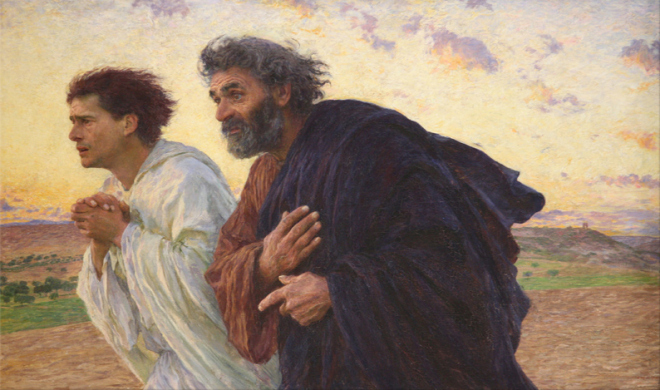
A.W. Tozer (April 21, 1897 – May 12, 1963)
Fundamentalism has stood aloof from the liberal in self-conscious superiority and has on its own part fallen into error, the error of textualism, which is simply orthodoxy without the Holy Ghost. Everywhere among conservatives we find persons who are Bible-taught but not Spirit-taught. They conceive truth to be something which they can grasp with the mind.
Category / Religion
Nihilism and the End of Law — Phillip E. Johnson
Nihilism and the End of the Law by Phillip E. Johnson
“Secularized intellectuals have long been complacent in their apostasy because they were sure they weren’t missing anything important in consigning God to the ashcan of history. They were happy to replace the Creator with a mindless evolutionary process that left humans free and responsible only to themselves. They complacently assumed that when their own reasoning power was removed from its grounding in the only ultimate reality, it could float, unsupported, on nothing at all. As modernist rationalism gives way in universities to its own natural child-postmodernist nihilism-modernists are learning very slowly what a bargain they have made. It isn’t a bargain a society can live with indefinitely.”
John 1:1 — “it is not simply that the Word was with God” from Holloman’s Apologetics Commentary on the Bible
In the beginning was the Word, and the Word was with God, and the Word was God (John 1:1):
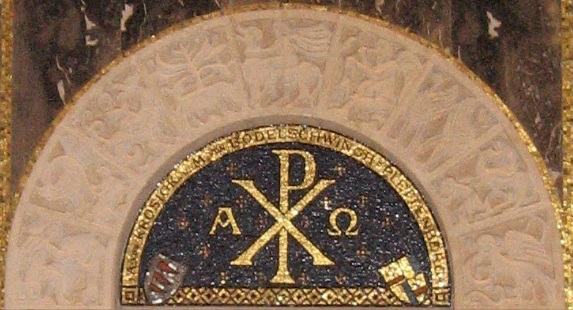
In this opening verse of John’s Gospel, God is set in relation to the Word. The Word, which in verses 14-18 is clearly identified as Jesus Christ, is an eternal being that existed prior to creation. However, it is not simply that the Word was with God (so, too, was Isaiah’s personified Word and Wisdom), but John refers to the Word itself as God. This is quite a claim coming from a Jewish monotheist. From the patristic era (Arius) to the present (Jehovah’s Witnesses), some have argued that, because there is no definite article in front of theos, this verse merely identifies Jesus as a god rather than as God. Interestingly, around 1950 there was a change in how Jehovah’s Witnesses dealt with this verse. Before 1950, they carried a copy of the American Standard Version of the Bible. However, the problem they faced was that the ASV rendered verse 1 accurately with the phrase “the Word was God.” In an effort to resolve the difficulty this rendering posed for its theology, the Watchtower Society (the Jehovah’s Witnesses’ publishing group) issued its own translation of the Bible, which rendered the verse as “the Word was a god” (Reed 1986, 71). However, there are several reasons why this translation is inaccurate.
First, John, as a monotheistic Jew, would not have referred to another person as “a god.” The Jews had no place for demigods in their belief system. Second, if John had placed a definite article before theos, he would have abandoned the distinction between the two persons he established in the previous clause (“the Word was with God”). Third, the view defended by Jehovah’s Witnesses misunderstands Greek syntax. It is common in Greek for a predicate noun to be specific without having an article. For example, later in this chapter reference is made to Nathanael’s confession of Jesus, “you are the King of Israel” (1:49), with no article being before “King” in the Greek (for other NT examples of this construction, see 8:39; 17:17; Rom 14:17; Gal 4:25; Rev 1:20). From these examples, it is clear that the lack of an article in Greek does not necessarily imply indefiniteness (“a” god). Finally, John could have used the word theios if he were simply trying to say that Jesus was “divine” (i.e., that he had God-like qualities) rather than being God himself. The anarthrous (article-less) theos is most likely used to explain that Jesus “shared the essence of the Father though they differed in person” (Wallace 1996, 269). As D. A. Carson explains, “In fact, if John had included the article, he would have been saying something quite untrue. He would have been so identifying the Word with God that no divine being could exist apart from the Word. In that case, it would be nonsense to say (in the words of the second clause of this verse) that the Word was with God” (1991, 117).
The Word was with God, and the Word was God (1:1): Critics often say that the Christian doctrine of the Trinity is unbiblical. While it is true that no verse specifically spells out that God is “three divine persons in one essence,” as our historic creeds have stated, the fact is the biblical witness demands the Trinitarian doctrine. The present verse disproves any monistic model of God, for the Word is at one and the same time “with” God, meaning there is some way of making distinction between Word and God, while at the same time the Word is God. Hence from this verse one would conclude that there are at least two personal beings united in the one godhead. A sampling of other verses supporting Trinitarianism includes Genesis 1:26; Isaiah 9:6; Matthew 28:19; 1 Corinthians 2:10; and Colossians 1:17.
Holman Apologetics Commentary on the Bible – Gospels to Acts.
page 505


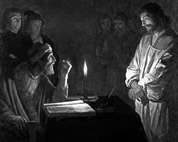

 St. John One: One