Month / March 2014

Persecution Blog: The Real Story of St. Patrick

Watch “About Global Legacy 2014” on YouTube
The Farewell Command–by William Barclay
The Farewell Command (John 13:33-35)

William Barclay 1907-1978
13:33-35 “Little children, I am still going to be with you for a little while. You will search for me; and, as I said to the Jews, so now I say to you too: ‘You cannot go where I am going.’ I give you a new commandment, that you love one another; that you too love one another, as I have loved you; it is by this that all will know that you are my disciples—if you have love amongst each other.”
Jesus was laying down his farewell commandment to his disciples. The time was short; if they were ever to hear his voice they must hear it now. He was going on a journey on which none might accompany him; he was taking a road that he had to walk alone; and before he went, he gave them the commandment that they must love one another as he had loved them. What does this mean for us, and for our relationships with our fellow-men? How did Jesus love his disciples?
(i) He loved his disciples selflessly. Even in the noblest human love there remains some element of self. We so often think—maybe unconsciously—of what we are to get. We think of the happiness we will receive, or of the loneliness we will suffer if love fails or is denied. So often we are thinking: What will this love do for me? So often at the back of things it is our happiness that we are seeking. But Jesus never thought of himself. His one desire was to give himself and all he had for those he loved.
(ii) Jesus loved his disciples sacrificially. There was no limit to what his love would give or to where it would go. No demand that could be made upon it was too much. If love meant the Cross, Jesus was prepared to go there. Sometimes we make the mistake of thinking that love is meant to give us happiness. So in the end it does, but love may well bring pain and demand a cross.
(iii) Jesus loved his disciples understandingly. He knew his disciples through and through. We never really know people until we have lived with them. When we are meeting them only occasionally, we see them at their best. It is when we live with them that we find out their moods and their irritabilities and their weaknesses. Jesus had lived with his disciples day in and day out for many months and knew all that was to be known about them—and he still loved them. Sometimes we say that love is blind. That is not so, for the love that is blind can end in nothing but bleak and utter disillusionment. Real love is open-eyed. It loves, not what it imagines a man to be, but what he is. The heart of Jesus is big enough to love us as we are.
(iv) Jesus loved his disciples forgivingly. Their leader was to deny him. They were all to forsake him in his hour of need. They never, in the days of his flesh, really understood him. They were blind and insensitive, slow to learn, and lacking in understanding. In the end they were craven cowards. But Jesus held nothing against them; there was no failure which he could not forgive. The love which has not learned to forgive cannot do anything else but shrivel and die. We are poor creatures, and there is a kind of fate in things which makes us hurt most of all those who love us best. For that very reason all enduring love must be built on forgiveness, for without forgiveness it is bound to die.
Barclay’s Daily Study Bible (NT)..
Through the house the child would shout ‘Abba!’—William Barclay
William Barclay 1907-1978
Like most people brought up in an evangelical home I did not at first know that there was any other way of thinking of the Atonement except in terms of God laying on Jesus the punishment that should have been laid on me… It seemed to me that the whole conception starts from the wrath of God, while the New Testament starts from the love of God. It was because he so loved the world that God sent his Son into the world (John 3:16). It was his love that God showed to us in the death of Christ for us while we were still sinners (Romans 5:8). Never in the New Testament, never once, is God said to be reconciled to man; it is always man who is reconciled to God. We plead with you, says Paul, on behalf of Christ, be reconciled to God (2 Corinthians 5:20).
Slowly it began to dawn on me that apart from the love of God there would have been no Atonement at all. And then I began to see this tremendous thing, the fact that Jesus came, not to change God’s attitude to men, but to demonstrate God’s attitude to men, to show men at the cost of the Cross what God is like. And then still later when I had to study the New Testament, I came to see that this is precisely what John is saying [John 1:14] — and what a difference! The God of terror became the God of love. It became the most natural thing in the world to seek the presence of God instead of running away from God.
Let us see this difference in operation. I have written of this again and again because I do not think that it can be stated too often. First of all, let us see the thing in Judaism. The angel of the Lord came to Manoah and his wife to tell them that their son Samson was to be born, and when Manoah realized who their heavenly visitor had been he said in terror: ‘We shall surely die, for we have seen God’ (Judg. 13:22). In Judaism to see God was, so they believed, [would be] to die. Now let us turn to the New Testament. No one has seen God; it is the only Son who has revealed Him (John 1:18). And revealed him as what? ‘He who has seen me has seen the Father’ (John 14:9). And in what sense? Jesus called God Abba (Mark 14:36). It is but that name that we too may call God, that we are invited to call him, says Paul (Rom.8:15; Gal. 4:6). And what does this word Abba mean? Abba is the word—to this day—by which a little Jewish boy or girl addresses his father in the home circle, in the family. Through the house the child would shout ‘Abba!’—Daddy.
Second, let us take the early Greek conception of God. In the old Greek mythology Prometheus was the supreme benefactor of man; he instructed man in architecture, astronomy, mathematics, writing, rearing cattle, navigation, medicine, the art of prophecy, working in metal and in every other art. The myth said that Prometheus had made man of clay, and, to give his clay life, [Prometheus] stole fire from heaven to put into it. The result was that Zeus chained him to a rock in the middle of the ocean and prepared a vulture to tear out his liver, which grew again each night to be torn out again each day. The gods grudged man everything, and any god who became a benefactor of men incurred the divine wrath in its most savage manifestation. What a difference between that and the God and Father of our Lord Jesus Christ!
Third, let us take the conception of the God of Greek philosophy with the New Testament. Both the great school of philosophy, the Stoics and the Epicureans, held that the supreme good in life is ataraxia, which means serenity. If that is true for man, how much more must it be true of God? In order to provide God with this ataraxia, the held that God must have apatheia. Apatheia is not apathy in the sense of indifference; it is the complete inability to feel anything at all. The being who has apatheia cannot know love or hate, but remains forever completely insulated against all feeling. If anyone can cause us sorrow or joy, it means that for that moment that person is greater than we are, because that person can have some influence over us. So the way to complete serenity is insulation against all feeling. When the countess of Lyttelton’s husband died, J. M. Barrie wrote to her: ‘If you had cared for him less, if he had been less worth caring for, the road would be less heavy-going. Joy has to be paid for.’ Sorrow is the price of love. If we never allowed ourselves to care for any one then there would be no such thing as sorrow. So the Greeks conceived of a God who essentially was unable to care. What a difference from the God who so loved the world, from the Jesus who could be moved with compassion, who wept! The difference between the apathetic Greek God and the Christian God of love is as wide as infinity.
I believe in Jesus, because it is only through Jesus that I know God as the Friend and Father, in whose presence I can be at home without fear, as a child with his father.
[from William Barclay: A Spiritual Autobiography, pg 51-54, William B Eerdmans Publishing Company, Grand Rapids, 1975.]
Professor of Divinity and Biblical Criticism at Glasgow University and the author of many Biblical commentaries and books, including a translation of the New Testament, Barclay New Testament, and The Daily Study Bible Series.
The Men of Atalissa – Video – NYTimes.com
What Does the Bible Say About The Flood? – YouTube
When Is Y-Chromosomal Adam’s Birthday?– by Dr. Fazale Rana


Watch “Overpopulation is a Myth” on YouTube
Man of the Millennium (Haille Selassie’s History) Full Movie – YouTube
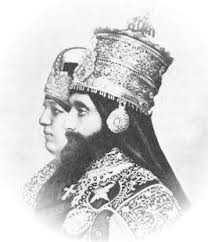 Man of the Millennium (Haille Selassie’s History) Full Movie – YouTube.
“We can say a lot about Emperor Haile Selassie I…Good for
some and bad for others..and for some, he is the Messiah
and Almighty God..for me he is a good father, the pride of
all black people, pioneer of Ethiopia’s modernization a
great leader, who strengthened our unity more than ever. Is this how a father’s story is supposed to end?”
Tikher Teferra Kidane– Director
Film Chronicle of the life and times of
His Imperial Majesty Haile Selassie I,
Conquering Lion of the Tribe of Judah, King of Kings of
Ethiopia and Elect of God


August 27 1975
It was reported that the death of Haille Selassie came from complications of prostate operation.
His personal physician, Dr. Asrat Woldeyes, said this operation never happened.
After the coup Ethiopia came under a communist regime led
by Colonel Mengistu Haile Marium. 
From 1975-1978, Mengistu was responsible for the 7th worst
Genocide in World history.
About 1.5 million Ehiopians were victims of the Derg
Genocide…the Ethiopian people have still not recovered
from this trauma and destruction.
 St. John One: One