Mark Vernon
 http://www.sheldrake.org/audios/science-set-free-podcast
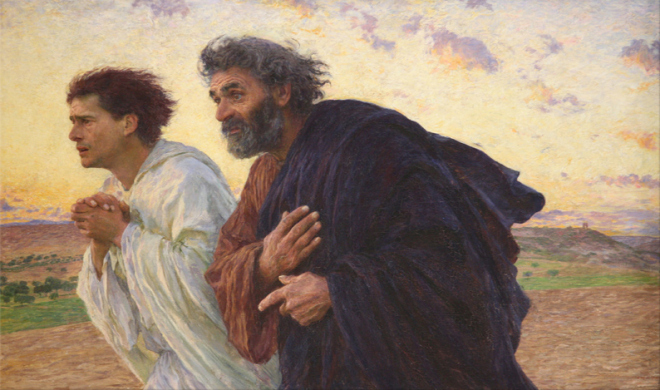

Dr. Rupert Sheldrake
Source: Detoxifying Christianity (30 min) – Dialogues with Bishop Marc Andrus at Grace Cathedral

Bishop Marc Andrus
‘About two-thirds of the papers in leading psychology journals turn out to be non-replicable, and more than 75% of papers in top-tier biomedical journals cannot be validated.” Rupert Sheldrake
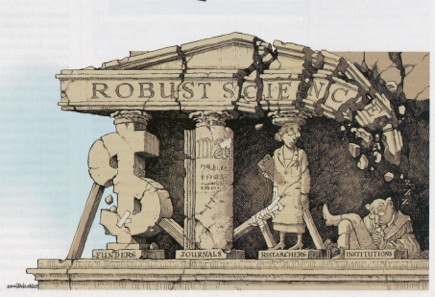
sciencesetfree
Source: Science Set Free
| Worldview | God | Nature |
| Traditional Christian | God Interactive | Nature Living organism |
| Early mechanistic | God Interactive | Nature Machine |
| Enlightenment deism | God Creator only | Nature Machine |
| Romantic deism | God Creator only | Nature Living organism |
| Romantic atheism | No God | Nature Living organism |
| Materialism | No God | Nature Machine |
Sheldrake, Rupert (2012-09-04). Science Set Free: 10 Paths to New Discovery (p. 39). Random House, Inc.. Kindle Edition.

The philosopher David Hume (1711– 76) is perhaps best known today for his skepticism about religion. Yet he was equally skeptical about the mechanistic philosophy of nature. There was nothing in the universe to prove that it was more like a machine than an organism; the organization we see in nature was more analogous to plants and animals than to machines. Hume was against the idea of a machine-designing God, and suggested instead that the world could have originated from something like a seed or an egg. In Hume’s words, published posthumously in 1779, “There are other parts of the universe (besides the machines of human invention) which bear still a greater resemblance to the fabric of the world, and which, therefore, afford a better conjecture concerning the universal origin of the system. These parts are animals and plants. The world plainly resembles more an animal or a vegetable, than…
View original post 478 more words
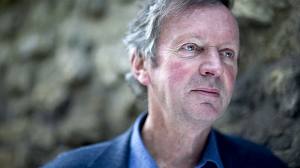
Rupert Sheldrake
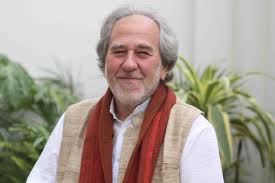
Bruce Lipton
Rupert Sheldrake & Bruce Lipton: Why Biologists still ignore Quantum Physics – YouTube.


 St. John One: One