 These women generally loathe Trump. When I ask why they rate him as doing a bad job, they rarely pull their punches. He’s a “narcissist,” “bully,” and “racist”; he’s “unprofessional” and “embarrassing” as well. They are dismayed by the chaos, the tweeting, his general nastiness and divisiveness. They thought that the bombastic showman they saw on the campaign trail in 2016 was an act and that Trump would rise to the dignity of the presidency. They agree—with a mixture of horror and bemusement—that such a transformation never took place.Anyone watching this part of one of my focus groups would assume that virtually none of these women would vote for Trump again. But when I ask who they plan to vote for in November, the results are mixed. Typically, some are voting for, or leaning toward, Biden; some are voting for, or leaning toward, Trump; and many are still undecided.Some of the women who are definitely voting for Biden had immediate buyer’s remorse after voting for Trump in 2016. One of them memorably told me that she “would vote for a dog over Donald Trump.” Many women who fall into this category say that if they had it to do over, knowing what they know now, they would have voted for Hillary Clinton.But most of these women say their thinking evolved over time as they weighed the foibles of the president against sins of the elites, whom they viscerally distrust. For instance, during the focus groups I convened throughout Trump’s impeachment, few of the women had anything nice to say about Trump’s actions. But their real contempt was reserved for Democrats and “the media,” whom they viewed as unnecessarily adversarial to Trump. And the plain fact is that they were unwilling to give much weight to an argument about the rule of law and abuse of power, because it didn’t have a visible impact on their lives.But the pandemic has. In fact, it has created a noticeable shift in support away from Trump and toward Biden.
Source: Why People Who Hate Trump Stick With Him – The Atlantic
 Looking bad
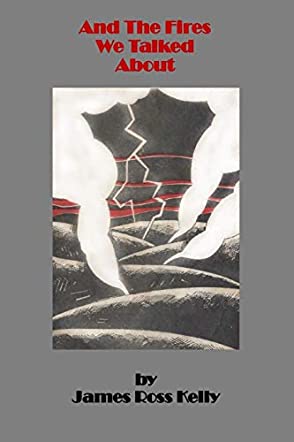
 And The Fires We Talked About by James Ross Kelly is an anthology of 35 stories of varying lengths. The tales are set mainly in and around the town of Medford, Oregon and the California hills, though some stray much further afield to North Africa and the Red Sea. Many contain pithy local dialect or idioms which bring a flavor of the forests and mountains in the area and the men who work at logging and tree planting in the unforgiving landscape. The stories tell of their lives, the back-breaking work, the dangers, and the recreational visits to clubs and bars. There are strippers and fistfights, and beer flows freely in the bars as the men relax and for a time forget the perils of their chosen field of labor. Some stories tell of military men during the Vietnam conflict and there is one particularly moving tale of a forest fire in the California hills. The author displays an extraordinary depth of knowledge about the nature of the forests and the logging operations, while he also bemoans the disappearance of community and a particular bucolic way of life as farms and holdings are snapped up by rapacious, faceless corporations. But there are more diverse tales too – tales that will stretch your imagination, such as Standing in the Rain, where he writes about an author who is experiencing a degree of success writing formulaic detective novels, but is assailed by one of his characters who is unhappy about the way the plot has developed. James Ross Kelly also displays an intricate knowledge of the topless bars and strip joints of the seventies and eighties – knowledge which features in several of the tales and perhaps particularly so in No One Here Gets Out Alive. Well-written and covering a variety of themes and subjects, there is something in this collection for most tastes but maybe should be avoided by your maiden aunt.I enjoyed And The Fires We Talked About; it contains many glimpses into worlds and ways of life that are rapidly disappearing. Written in a forthright, unflinching style, Mr Kelly’s characters live and breathe and rise solidly from the pages. There is a certain amount of sex and violence but I found none of it offensive and felt that it was in keeping with the themes being explored. If I had to pick a favourite story from the collection, I would choose The Fire Itself, a beautifully observed tale of a California forest fire along with a touching look at the natural ecology of the region and one family who lives in it. And The Fires We Talked About is an impressive anthology from the pen of a talented author – I do not hesitate to recommend it.