“And he [the elder brother] was angry and would not go in…” (Luke 15:28)


scroggie

William Graham Scroggie 1877-1958

The greatest hindrance to the progress of Christianity in this world is the elder brother class in the Church; people who make a religion of their morality and who despise others. His attitude toward himself is ridiculous, his attitude toward his brother is despicable. But that is not all; what is his attitude towards the household, and remember that is the Church? He despised all their expressions of joy.
He heard music and dancing, and looked grave, and he sent in for a servant and said, “What is the meaning of all this?” “Oh, everybody in there is glad because your brother is home again.” “Oh! Well it should not be, it is not decent, it is a disregard of convention and propriety” Such people pray for revival in the Church, and immediately [after] revival appears they grow serious and say it is contrary to custom and convention; “We should not do it, we really should not.” I do not think the Spirit of God has much use for custom and convention for custom’s sake and convention’s sake. I am not against custom or against convention; I believe we should do all things decently and in order, but I believe also that if there is ever any excuse for a man or woman dancing, it is when sinners are saved, but that is not when it is done. These self-righteous people disapprove; they say “it is unseemly.” And this man was incensed at the occasion of their joy; he was angry! A Church member, mind you, Angry! What about? About a sinner coming home. Angry!

William Graham Scroggie

Rastafarian Last Supper Painting by EJ Lefavour – Rastafarian Last Supper Fine Art Prints and Posters for Sale


Rastafarian Last Supper Painting by EJ Lefavour – Rastafarian Last Supper Fine Art Prints and Posters for Sale.

“Early Rasta mystical experience emphasized the immediate presence of JAH within the “dread,” God-fearer… Through union with JAH [Yahweh or Jehovah], the dread becomes who he truly is but never was, a process of self-discovery possible only through repentance. For this reason, Rastas did not proselytize, but relied on compunction sent by JAH. The mystical union was expressed by the use of the pronoun “I&I” (which can mean I, we, or even you, with JAH present) or simply “I” in contrast to the undeclined Jamaican dialect “me”.

“A Sketch Of Rastafari History” by Norman Hugh Redington, Editor, The St. Pachomius Orthodox Library

Thomas Merton—The New Man


thomas merton

Thomas Merton 1915-1968

In those who are most alive and therefore most themselves, the life of the body is subordinated to a higher life that is within them. It quietly surrenders to the far more abundant vitality of a spirit living on levels that defy measurement and observation. The mark of true life in man is therefore not turbulence but control, not effervescence but lucidity and direction, not passion but the sobriety that sublimates all passion and elevates it to the clear inebriation of mysticism. The control we mean here is not arbitrary and tyrannical control by an interior principle which can be called, variously, a “super-ego” or a pharasaical conscience: it is the harmonious coordination of man’s powers in striving for the realization of his deepest spiritual potentialities. It is not so much a control of one part of man by another, but the peaceful integration of all man’s powers into one perfect actuality which is his true self, that is to say his spiritual self. Man, then, can only fully be said to be alive when he becomes plainly conscious of the real meaning of his own existence, that is to say when he experiences something of the fulness of intelligence, freedom and spirituality that are actualized within himself. But can we really expect a man to attain to this kind of consciousness? Is it not utterly cruel to hold before his eyes the delusive hope of this “fulness” of life and of “realization?” Of course, if the nature of the hope is not understood, it is the cruelest and most mocking of delusions. It may be the worst of all spiritual mirages that torments him in his desert pilgrimage. How can a man, plunged in the agonia, the wrestling of life and death in their most elemental spiritual forms, be beguiled by the promise of self realization? His very self, his very reality, is all contradiction: a contradiction mercifully obscured by confusion. If the confusion is cleared away, and he fully “realizes” this tormented self, what will he see if not the final absurdity of the contradiction? The “real meaning of his existence” would then be precisely that it has no meaning. In a certain sense, that is true. To find life we must die to life as we know it. To find meaning we must die to meaning as we know it. The sun rises every morning and we are used to it, and because we know the sun will rise we have finally come to act as if it rose because we wanted it to. Suppose the sun should choose not to rise? Some of our mornings would then be “absurd”—or, to put it mildly, they would not meet our expectations. To find the full meaning of our existence we must find not the meaning that we expect but the meaning that is revealed to us by God. The meaning that comes to us out of the transcendent darkness of His mystery and our own. We do not know God and we do not know ourselves. How then can we imagine that it is possible for us to chart our own course toward the discovery of the meaning of our life? This meaning is not a sun that rises every morning, though we have come to think that it does, and on mornings when it does not rise we substitute some artificial light of our own so as not to admit that this morning was absurd. Meaning is then not something we discover in ourselves, or in our lives. The meanings we are capable of discovering are never sufficient. The true meaning has to be revealed. It has to be “given.” And the fact that it is given is, indeed, the greater part of its significance: for life itself is, in the end, only significant in so far as it is given. As long as we experience life and existence as suns that have to rise every morning, we are in agony. We must learn that life is a light that rises when God summons it out of darkness. For this there are no fixed times.

Merton, Thomas (1999-11-29). The New Man (Kindle Locations 72-100). Macmillan. Kindle Edition.

Thomas Merton, The New Man


thomas merton

The most paradoxical and at the same time the most unique and characteristic claim made by Christianity is that in the Resurrection of Christ the Lord from the dead, man has completely  conquered death, and that “in Christ” the dead will rise again to enjoy eternal life, in spiritualized and transfigured bodies and in a totally new creation. This new life in the Kingdom of God is to be not merely a possibly received inheritance but in some sense the fruit of our agony and labor, love, and prayers in union with the Holy Spirit. Such a fantastic and humanly impossible belief has generally been left in the background by liberal Christianity of the 19th and early 20th centuries, but anyone who reads the New Testament objectively must admit that this is the doctrine of the first Christians.

Thomas Merton, The New Man, 1961

C.S. Lewis on Who Jesus is:


C.S. Lewis

C.S. Lewis

“I am trying here to prevent anyone saying the really foolish thing that people often say about Him: I’m ready to accept Jesus as a great moral teacher, but I don’t accept his claim to be God. That is the one thing we must not say. A man who was merely a man and said the sort of things Jesus said would not be a great moral teacher. He would either be a lunatic — on the level with the man who says he is a poached egg — or else he would be the Devil of Hell. You must make your choice. Either this man was, and is, the Son of God, or else a madman or something worse. You can shut him up for a fool, you can spit at him and kill him as a demon or you can fall at his feet and call him Lord and God, but let us not come with any patronising nonsense about his being a great human teacher. He has not left that open to us. He did not intend to. … Now it seems to me obvious that He was neither a lunatic nor a fiend: and consequently, however strange or terrifying or unlikely it may seem, I have to accept the view that He was and is God.” C.S. Lewis, Mere Christianity

Science, Religion and Power by Rupert Sheldrake,


sheldrake

from Science Set Free: 10 Paths to New Discovery; Prologue: Science, Religion and Power

[Published in UK as The Science Delusion]
fbacon

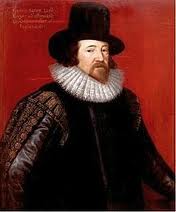
The scientific priesthood Francis Bacon (1561– 1626), a politician and lawyer who became Lord Chancellor of England, foresaw the power of organized science more than anyone else. To clear the way, he needed to show that there was nothing sinister about acquiring power over nature. When he was writing, there was a widespread fear of witchcraft and black magic, which he tried to counteract by claiming that knowledge of nature was God-given, not inspired by the devil. Science was a return to the innocence of the first man, Adam, in the Garden of Eden before the Fall.

Bacon argued that the first book of the Bible, Genesis, justified scientific knowledge. He equated man’s knowledge of nature with Adam’s naming of the animals. God “brought them unto Adam to see what he would call them, and what Adam called every living creature, that was the name thereof” (Genesis 2: 19– 20). This was literally man’s knowledge, because Eve was not created until two verses later. Bacon argued that man’s technological mastery of nature was the recovery of a God-given power, rather than something new. He confidently assumed that people would use their new knowledge wisely and well: “Only let the human race recover that right over nature which belongs to it by divine bequest; the exercise thereof will be governed by sound reason and true religion.” [1]

The key to this new power over nature was organized institutional research. In New Atlantis (1624), Bacon described a technocratic Utopia in which a scientific priesthood made decisions for the good of the state as a whole. The Fellows of this scientific “Order or Society” wore long robes and were treated with a respect that their power and dignity required. The head of the order traveled in a rich chariot, under a radiant golden image of the sun. As he rode in procession, “he held up his bare hand, as he went, as blessing the people.”

The general purpose of this foundation was “the knowledge of causes and secret motions of things; and the enlarging of human empire, to the effecting of all things possible.” The Society was equipped with machinery and facilities for testing explosives and armaments, experimental furnaces, gardens for plant breeding, and dispensaries. [2]

This visionary scientific institution foreshadowed many features of institutional research, and was a direct inspiration for the founding of the Royal Society in London in 1660, and for many other national academies of science. But although the members of these academies were often held in high esteem, none achieved the grandeur and political power of Bacon’s imaginary prototypes. Their glory was continued even after their deaths in a gallery, like a Hall of Fame, where their images were preserved. “For upon every invention of value we erect a statue to the inventor, and give him a liberal and honourable reward.” [3]

In England in Bacon’s time (and still today) the Church of England was linked to the state as the established church. Bacon envisaged that the scientific priesthood would also be linked to the state through state patronage, forming a kind of established church of science. And here again he was prophetic. In nations both capitalist and Communist, the official academies of science remain the centers of power of the scientific establishment. There is no separation of science and state. Scientists play the role of an established priesthood, influencing government policies on the arts of warfare, industry, agriculture, medicine, education and research.

Bacon coined the ideal slogan for soliciting financial support from governments and investors: “Knowledge is power.”[4] But the success of scientists in eliciting funding from governments varied from country to country. The systematic state funding of science began much earlier in France and Germany than in Britain and the United States where, until the latter half of the nineteenth century, most research was privately funded or carried out by wealthy amateurs like Charles Darwin. [5]

In France, Louis Pasteur (1822– 95) was an influential proponent of science as a truth-finding religion, with laboratories like temples through which mankind would be elevated to its highest potential:

Take interest, I beseech you, in those sacred institutions which we designate under the expressive name of laboratories. Demand that they be multiplied and adorned; they are the temples of wealth and of the future. There it is that humanity grows, becomes stronger and better. [6]

By the beginning of the twentieth century, science was almost entirely institutionalized and professionalized, and after the Second World War expanded enormously under government patronage, as well as through corporate investment. [7] The highest level of funding is in the United States, where in 2008 the total expenditure on research and development was $ 398 billion, of which $ 104 billion came from the government. [8] But governments and corporations do not usually pay scientists to do research because they want innocent knowledge, like that of Adam before the Fall. Naming animals, as in classifying endangered species of beetles in tropical rain forests, is a low priority. Most funding is a response to Bacon’s persuasive slogan “knowledge is power.”

By the 1950s, when institutional science had reached an unprecedented level of power and prestige, the historian of science George Sarton approvingly described the situation in a way that sounds like the Roman Catholic Church before the Reformation:

Truth can be determined only by the judgment of experts. Everything is decided by very small groups of men, in fact, by single experts whose results are carefully checked, however, by a few others. The people have nothing to say but simply to accept the decisions handed out to them. Scientific activities are controlled by universities, academies and scientific societies, but such control is as far removed from popular control as it possibly could be. [9]

Bacon’s vision of a scientific priesthood has now been realized on a global scale. But his confidence that man’s power over nature would be guided by “sound reason and true religion” was misplaced.

Sheldrake, Rupert (2012-09-04). Science Set Free: 10 Paths to New Discovery (p. 13-16). Random House, Inc.. Kindle Edition.


[1] Collins, in Carr (ed.) (2007), pp. 50.

[2] Bacon (1951), pp. 290– 91.

[3] Ibid., p. 298..

[4] Fara (2009), p. 132.

[5] Kealey (1996).

[6] Dubos (1960), p. 146.

[7] Kealey.

[8] National Science Board (2010), Chapter 4.

[9] Sarton (1955), p. 12.
Picking up the pieces


Well see— he’d already named the animals!
I didn’t really have anything to do, yes we did
Walk in the garden every evening..
I must admit maybe I was bored & the serpent
Was an intellectual & he made me laugh & I was laughing when I tasted it.
I wanted to change names of some of the animals,
I must admit I never asked if I could,
Neither of them said I couldn’t..
Just seemed like it was a bargain already made, oh he would do anything for me!
& well I didn’t even know that he hadn’t named all the animals
Didn’t find that out til, well
after we were outside & some of these other animals seemed to be intent on eating us
Oh this surprised me, this thing called fear, but I like eating meat!
& now I’m not bored with him any more I must admit
He protects & takes care of me, but these children, oh if I didn’t
Have him, as much as I love them, it would be impossible..
But you know I think someday one of them will kill the other
&  I cannot imagine this..
I do miss those walks
When it was that love was as constant as air..
Now there are only times when I look at him & vaguely remember..
Still he can be bad
Now he growls & once after drinking he hit me & this was not like him &
I bled, & now I bleed regularly &
What have we done?
I killed the snake last week & after I did
I heard him laugh from the grove in the garden we can’t go into any more,
But then again maybe it was from the forest beyond,
& I’m afraid of that place..
I couldn’t tell & anyway I saw the snake again the next day
I know where there are flowers by a quiet pool
Perhaps I could go there and come back?
If I leave him it will be dangerous
Perhaps I’ll go there and come back..
Oh, my heart breaks when he screams in the middle of the night!

I will continue to seek visions and count on my friends to know everything


I dreamed I was in 1962, in a department store dressing room
w/ Lana Turner, who told me she had to adjust
her nylon stocking and didn’t mind
if I looked–and I awoke and remembered that year
I had been in a desk behind the cloak room in my
eighth grade English teachers classroom
(who hated me, and whose name I’ve long ago forgotten)
where I’d  been put for being a smart ass
& was napping & it was really Joanie
& Janet that I had known since they were girls
but but that year they were no longer girls & they really were letting me watch,
skirts hiked up athletic like race horses
w/ black back seamed nylons w/garterbelts
and just above were taught tight heavenly white thighs
pure as driven snow & I remembered that dream ended too…