Thomas Merton, The New Man


All men were united in Adam. All were “one image” of God in Adam. “Adam is in us all.” We all sinned in Adam. Adam is saved and redeemed in us all. What does all this mean? It means simply, as St. Bernard says, that man’s creation in the image of God (ad imaginem) constituted all men as created “copies” of the Word Who is the eternal and uncreated Image of the Father. The potentiality in the human soul which makes man capable of being drawn to God is nothing else than a capacity to become more and more like the Word of God, and thus to participate in God’s own vision of Himself. St. Gregory of Nyssa says: thomas merton“The whole of human nature, from the first man to the last, is but one image of Him Who is.” When Adam was created in the image and likeness of God, we all were created in him, with a nature capable of being conformed to the Word of God. Therefore Adam, who contains all human nature in himself, and is therefore “humanity,” is created in the image of the Image of God, Who has already decided, from all eternity, to become man in Jesus Christ. Hence in his very creation, Adam is a representation of Christ Who is to come, and we too, from the very moment we come into existence, are potential representations of Christ simply because we possess the human nature which was created in Him and was assumed by Him in the Incarnation, saved by Him on the Cross and glorified by Him in His Ascension.

Thomas Merton, The New Man (Kindle Locations 1203-1214). Macmillan. Kindle Edition.

from The Problem of Pain, by C.S. Lewis


From the moment a creature becomes aware of God as God and of it’self as self, the terrible alternative of choosing God or self for the centre is opened to it. This sin is committed daily by young children and ignorant peasants as well as by sophisticated persons, by solitaries no less than by those who live in society: it is the fall in every individual life, and in each day of each individual life, the basic sin behind all particular sins: at this very moment you and I are either committing it, or about to

C.S. Lewis

C.S. Lewis

commit it, or repenting it. We try, when we wake, to lay the new day at God’s feet; before we have finished shaving, it becomes our day and God’s share in it is felt as a tribute which we must pay out of ‘our own’ pocket, a deduction from the time which ought, we feel, to be ‘our own’.

Lewis, C. S. (2009-05-28). The Problem of Pain (p. 70). Harper Collins, Inc.. Kindle Edition.

Architect and Governor of the universe


augustine

“..O Lord, to You most excellent and most good, You are Architect and Governor of the universe, thanks would be due You, O our God, even if you had not willed that I should survive my childhood.  For I existed even then; I lived and felt and was careful about my own well-being–a trace of that most mysterious unity from where I had my being.  I kept watch, by my inner sense, over the integrity of my outer senses, and even in these trifles and also in my thoughts about trifles, I learned to take pleasure in truth.  I was averse to being deceived; I had a vigorous memory; I was gifted with the power of speech, was softened by friendship, shunned sorrow, meanness, and ignorance.  Is not such an animated creature as this wonderful and praiseworthy? But all these are gifts of my God. I did not give them to myself. Moreover, they are good, and all together these gifts constitute myself. Good, then, is He that made me, and He is my God; and before Him will I rejoice exceedingly for every good gift which, even as a child, I had.  But this was my sin! That it was not in God the Creator, but in His creatures–myself and the rest–that I sought for pleasures, honors, and truths.  And I fell consequently into sorrows, troubles, and errors.  Thanks be to You, my joy, my pride, my confidence, my God–thanks be to You for Your gifts. Please preserve them in me.  For by this You will preserve me; and those things which You have given me will be developed and perfected, and I myself will be with You, for from You, comes my being.”

Augustine ca 285AD.2

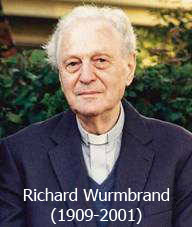
Richard Wurmbrand, “Preparing for the Underground Church”


richard

“God is the Truth. The Bible is the truth about the Truth. Theology is the truth about the truth about the Truth. A good sermon is the truth about the truth, about the truth, about the Truth. It is not the Truth. The Truth is God alone. Around this Truth there is a scaffolding of words, of theologies, and of exposition. None of these is of any help in times of suffering. It is only the Truth Himself Who is of help, and we have to penetrate through sermons, through theological books, through everything which is ‘words’ and be bound up with the reality of God himself.

I have told in the West how Christians were tied to crosses for four days and four nights. The crosses were put on the floor and other prisoners were tortured and made to fulfill their bodily necessities upon the faces and bodies of the crucified ones. I have since been asked: “Which bible verse helped and strengthened you in those circumstances?” My answer is: “NO Bible verse was of any help.” It is sheer cant and religious hypocrisy to say, “This Bible verse strengthens me, or that Bible verse helps me.” Bible verses alone are not meant to help. We knew Psalm 23.. “The Lord is my Shepherd; I shall not want…though I walk through the valley of the shadow of death…”

When you pass through suffering you realize that it was never meant by God that Psalm 23 should strengthen you. It is the Lord who can strengthen you, not the Psalm which speaks of Him so doing. It is not enough to have the Psalm. You must have the One about whom the Psalm speaks. We also knew the verse:  “My Grace is sufficient for thee.” But the verse is not sufficient. It is the Grace, which is sufficient, and not the verse.

Pastors and zealous witnesses who are handling the Word as a calling from God are in danger of giving Holy words more value than they really have. Holy words are only the means to arrive at the reality expressed by them. If you are united with the Reality, the Lord Almighty, evil loses its power over you; it cannot break the Lord Almighty. If you only have the words of the Lord almighty you can be very easily broken.” Richard Wurmbrand, “Preparing for the Underground Church”

“And he [the elder brother] was angry and would not go in…” (Luke 15:28)


scroggie

William Graham Scroggie 1877-1958

The greatest hindrance to the progress of Christianity in this world is the elder brother class in the Church; people who make a religion of their morality and who despise others. His attitude toward himself is ridiculous, his attitude toward his brother is despicable. But that is not all; what is his attitude towards the household, and remember that is the Church? He despised all their expressions of joy.
He heard music and dancing, and looked grave, and he sent in for a servant and said, “What is the meaning of all this?” “Oh, everybody in there is glad because your brother is home again.” “Oh! Well it should not be, it is not decent, it is a disregard of convention and propriety” Such people pray for revival in the Church, and immediately [after] revival appears they grow serious and say it is contrary to custom and convention; “We should not do it, we really should not.” I do not think the Spirit of God has much use for custom and convention for custom’s sake and convention’s sake. I am not against custom or against convention; I believe we should do all things decently and in order, but I believe also that if there is ever any excuse for a man or woman dancing, it is when sinners are saved, but that is not when it is done. These self-righteous people disapprove; they say “it is unseemly.” And this man was incensed at the occasion of their joy; he was angry! A Church member, mind you, Angry! What about? About a sinner coming home. Angry!

William Graham Scroggie

Thomas Merton, The New Man


thomas merton

The most paradoxical and at the same time the most unique and characteristic claim made by Christianity is that in the Resurrection of Christ the Lord from the dead, man has completely  conquered death, and that “in Christ” the dead will rise again to enjoy eternal life, in spiritualized and transfigured bodies and in a totally new creation. This new life in the Kingdom of God is to be not merely a possibly received inheritance but in some sense the fruit of our agony and labor, love, and prayers in union with the Holy Spirit. Such a fantastic and humanly impossible belief has generally been left in the background by liberal Christianity of the 19th and early 20th centuries, but anyone who reads the New Testament objectively must admit that this is the doctrine of the first Christians.

Thomas Merton, The New Man, 1961

C.S. Lewis on Who Jesus is:


C.S. Lewis

C.S. Lewis

“I am trying here to prevent anyone saying the really foolish thing that people often say about Him: I’m ready to accept Jesus as a great moral teacher, but I don’t accept his claim to be God. That is the one thing we must not say. A man who was merely a man and said the sort of things Jesus said would not be a great moral teacher. He would either be a lunatic — on the level with the man who says he is a poached egg — or else he would be the Devil of Hell. You must make your choice. Either this man was, and is, the Son of God, or else a madman or something worse. You can shut him up for a fool, you can spit at him and kill him as a demon or you can fall at his feet and call him Lord and God, but let us not come with any patronising nonsense about his being a great human teacher. He has not left that open to us. He did not intend to. … Now it seems to me obvious that He was neither a lunatic nor a fiend: and consequently, however strange or terrifying or unlikely it may seem, I have to accept the view that He was and is God.” C.S. Lewis, Mere Christianity

Science, Religion and Power by Rupert Sheldrake,


sheldrake

from Science Set Free: 10 Paths to New Discovery; Prologue: Science, Religion and Power

[Published in UK as The Science Delusion]
fbacon

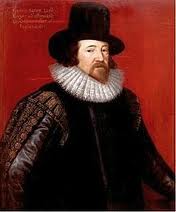
The scientific priesthood Francis Bacon (1561– 1626), a politician and lawyer who became Lord Chancellor of England, foresaw the power of organized science more than anyone else. To clear the way, he needed to show that there was nothing sinister about acquiring power over nature. When he was writing, there was a widespread fear of witchcraft and black magic, which he tried to counteract by claiming that knowledge of nature was God-given, not inspired by the devil. Science was a return to the innocence of the first man, Adam, in the Garden of Eden before the Fall.

Bacon argued that the first book of the Bible, Genesis, justified scientific knowledge. He equated man’s knowledge of nature with Adam’s naming of the animals. God “brought them unto Adam to see what he would call them, and what Adam called every living creature, that was the name thereof” (Genesis 2: 19– 20). This was literally man’s knowledge, because Eve was not created until two verses later. Bacon argued that man’s technological mastery of nature was the recovery of a God-given power, rather than something new. He confidently assumed that people would use their new knowledge wisely and well: “Only let the human race recover that right over nature which belongs to it by divine bequest; the exercise thereof will be governed by sound reason and true religion.” [1]

The key to this new power over nature was organized institutional research. In New Atlantis (1624), Bacon described a technocratic Utopia in which a scientific priesthood made decisions for the good of the state as a whole. The Fellows of this scientific “Order or Society” wore long robes and were treated with a respect that their power and dignity required. The head of the order traveled in a rich chariot, under a radiant golden image of the sun. As he rode in procession, “he held up his bare hand, as he went, as blessing the people.”

The general purpose of this foundation was “the knowledge of causes and secret motions of things; and the enlarging of human empire, to the effecting of all things possible.” The Society was equipped with machinery and facilities for testing explosives and armaments, experimental furnaces, gardens for plant breeding, and dispensaries. [2]

This visionary scientific institution foreshadowed many features of institutional research, and was a direct inspiration for the founding of the Royal Society in London in 1660, and for many other national academies of science. But although the members of these academies were often held in high esteem, none achieved the grandeur and political power of Bacon’s imaginary prototypes. Their glory was continued even after their deaths in a gallery, like a Hall of Fame, where their images were preserved. “For upon every invention of value we erect a statue to the inventor, and give him a liberal and honourable reward.” [3]

In England in Bacon’s time (and still today) the Church of England was linked to the state as the established church. Bacon envisaged that the scientific priesthood would also be linked to the state through state patronage, forming a kind of established church of science. And here again he was prophetic. In nations both capitalist and Communist, the official academies of science remain the centers of power of the scientific establishment. There is no separation of science and state. Scientists play the role of an established priesthood, influencing government policies on the arts of warfare, industry, agriculture, medicine, education and research.

Bacon coined the ideal slogan for soliciting financial support from governments and investors: “Knowledge is power.”[4] But the success of scientists in eliciting funding from governments varied from country to country. The systematic state funding of science began much earlier in France and Germany than in Britain and the United States where, until the latter half of the nineteenth century, most research was privately funded or carried out by wealthy amateurs like Charles Darwin. [5]

In France, Louis Pasteur (1822– 95) was an influential proponent of science as a truth-finding religion, with laboratories like temples through which mankind would be elevated to its highest potential:

Take interest, I beseech you, in those sacred institutions which we designate under the expressive name of laboratories. Demand that they be multiplied and adorned; they are the temples of wealth and of the future. There it is that humanity grows, becomes stronger and better. [6]

By the beginning of the twentieth century, science was almost entirely institutionalized and professionalized, and after the Second World War expanded enormously under government patronage, as well as through corporate investment. [7] The highest level of funding is in the United States, where in 2008 the total expenditure on research and development was $ 398 billion, of which $ 104 billion came from the government. [8] But governments and corporations do not usually pay scientists to do research because they want innocent knowledge, like that of Adam before the Fall. Naming animals, as in classifying endangered species of beetles in tropical rain forests, is a low priority. Most funding is a response to Bacon’s persuasive slogan “knowledge is power.”

By the 1950s, when institutional science had reached an unprecedented level of power and prestige, the historian of science George Sarton approvingly described the situation in a way that sounds like the Roman Catholic Church before the Reformation:

Truth can be determined only by the judgment of experts. Everything is decided by very small groups of men, in fact, by single experts whose results are carefully checked, however, by a few others. The people have nothing to say but simply to accept the decisions handed out to them. Scientific activities are controlled by universities, academies and scientific societies, but such control is as far removed from popular control as it possibly could be. [9]

Bacon’s vision of a scientific priesthood has now been realized on a global scale. But his confidence that man’s power over nature would be guided by “sound reason and true religion” was misplaced.

Sheldrake, Rupert (2012-09-04). Science Set Free: 10 Paths to New Discovery (p. 13-16). Random House, Inc.. Kindle Edition.


[1] Collins, in Carr (ed.) (2007), pp. 50.

[2] Bacon (1951), pp. 290– 91.

[3] Ibid., p. 298..

[4] Fara (2009), p. 132.

[5] Kealey (1996).

[6] Dubos (1960), p. 146.

[7] Kealey.

[8] National Science Board (2010), Chapter 4.

[9] Sarton (1955), p. 12.
Picking up the pieces


Well see— he’d already named the animals!
I didn’t really have anything to do, yes we did
Walk in the garden every evening..
I must admit maybe I was bored & the serpent
Was an intellectual & he made me laugh & I was laughing when I tasted it.
I wanted to change names of some of the animals,
I must admit I never asked if I could,
Neither of them said I couldn’t..
Just seemed like it was a bargain already made, oh he would do anything for me!
& well I didn’t even know that he hadn’t named all the animals
Didn’t find that out til, well
after we were outside & some of these other animals seemed to be intent on eating us
Oh this surprised me, this thing called fear, but I like eating meat!
& now I’m not bored with him any more I must admit
He protects & takes care of me, but these children, oh if I didn’t
Have him, as much as I love them, it would be impossible..
But you know I think someday one of them will kill the other
&  I cannot imagine this..
I do miss those walks
When it was that love was as constant as air..
Now there are only times when I look at him & vaguely remember..
Still he can be bad
Now he growls & once after drinking he hit me & this was not like him &
I bled, & now I bleed regularly &
What have we done?
I killed the snake last week & after I did
I heard him laugh from the grove in the garden we can’t go into any more,
But then again maybe it was from the forest beyond,
& I’m afraid of that place..
I couldn’t tell & anyway I saw the snake again the next day
I know where there are flowers by a quiet pool
Perhaps I could go there and come back?
If I leave him it will be dangerous
Perhaps I’ll go there and come back..
Oh, my heart breaks when he screams in the middle of the night!

Our Father + Spontaneous Worship – Bethel Church feat.Amy Renée Jeremy Riddle – January 20, 2013 – YouTube


Our Father + Spontaneous Worship – Bethel Church feat.Amy Renée Jeremy Riddle – January 20, 2013 – YouTube.