Category / Religion
John MacArthur, You Are Fighting Against God–Darren Wilson

Is Evil a Problem Only for Christianity? | Ratio Christi
Western worldview and Christianity–Harold Eberle
from Christianity Unshackled by Harold Eberle,

Harold R. Eberle
Many agnostics will reason that if there is a God, then it is His responsibility to reveal Himself. Certainly a person cannot be expected to believe in something that cannot be seen or verified. Certainly if there is a God, He will not hold us accountable to believe in Him, since He is the one who is failing to make Himself known. It is His fault that we do not believe in Him— or so the agnostic reasons.
Yet, it is the western worldview that blinds a person from seeing the reality of God. To see this more clearly, think again of the words we quoted earlier from the famous atheist Richard Dawkins: “Faith is the great cop-out, the great excuse to evade the need to think and evaluate evidence.” Dawkins can only make this statement because he has assumed the worldview of modern Western intellectualism. However, if we hold to a worldview with no wall between the spiritual and natural realms, we could restructure Dawkins’ words to state: “The worldview of modern Western intellectualism is the great cop-out, the great excuse to evade the need to think about God and evaluate evidence for His existence.”The truth is that any worldview that relegates things like God, religion, and faith to the spiritual world is a worldview built on an indefensible foundation. It may be attractive to people who want to distance themselves from facing reality, but it is tragic when modern-day Christians get pulled into that deceptive way of thinking.
Most Christians think that their worldview has been built on a biblical foundation. In reality, Western Christianity has a mixture of biblical thought and Western thought. It is most accurate to say that Western Christianity is the result of taking biblical truths and laying them upon the spiritual/ natural division developed by the ancient Greek philosophers.
That division became more and more pronounced throughout the later part of the Middle Ages. As I mentioned earlier, theology and philosophy were king and queen in the kingdom of education. Much more than the Bible, Aristotle’s writings were the focus of study. When discussing theology, students and professors spent most of their time dissecting and rehashing the writings of Church giants like Augustine and Thomas Aquinas— leaders who had developed their theology on the ancient Greek foundation.
When the historical Church went through the Scientific Revolution along with the rest of Western society, it was pulled right along and in many ways was at the forefront of change. The separation of the spiritual and natural worlds became even more clearly defined. Then God and faith were compartmentalized in the spiritual world while science and knowledge were compartmentalized in the natural world.
This compartmentalization was most prominent in philosophy. When philosophers such as Descartes, Hume, Kant, and Hegel developed their ideas, they each built on the spiritual/ natural division. Even today Western philosophy is fully locked into the dichotomous world-view laid down by the ancient Greek philosophers.
Unfortunately, Christian theology developed side-by-side and intertwined with Western philosophy. Church leaders like Martin Luther and John Calvin were fully submerged in the Western dichotomy of the spiritual world versus the natural world. Of course, they did not limit God to the spiritual world, but they still were Western people with Western minds. It is disturbing for modern Christians to hear this, but in some ways, Plato and Aristotle have had a more profound impact upon Western Christianity than the apostle Paul (proven by the fact that most university-educated Christians today cannot agree with Paul that God’s existence is undeniable and obvious).
There are many implications of this that we will discuss as we continue. Here we can simply mention how the foundation that divides the spiritual world from the natural world tends to create a lifestyle separated from the spiritual and supernatural. This is most obvious by considering a Western-minded atheist and then relating that to a modern Christian. Let me explain.
If God were to perform a miracle healing before a crowd of Western-minded atheists, they would make every attempt to give a natural explanation for the event. In their minds, natural events must have natural causes. Therefore, if God were to work a miraculous healing in their presence, thoughts would immediately go through their minds that the healing was not a true miracle but perhaps the result of coincidence, psychosomatic phenomenon, or deception. The modern Western mind can’t help but impose such thoughts upon supernatural experiences. Because the framework through which they view life allows for no miracles, they must search for a natural explanation— and they usually find it.
This same process goes through the mind of Christians who have been indoctrinated in the Western worldview. They may want to believe, but their minds will mold the events to fit the split spiritual/ natural framework. Such patterns of thought go beyond our understanding of miracles and permeate all our understanding. They subtly create a lifestyle separated from the spiritual and supernatural. They lead to a form of godliness, but deny the power.
Eberle, Harold (2009-12-28). Christianity Unshackled: Are You A Truth Seeker (pp. 90-94). Destiny Image, Inc.. Kindle Edition.
The Didache—TEACHING of the TWELVE APOSTLES

The Didache (pronounced /ˈdɪdəkiː/; Koine Greek: Διδαχή, Didachē “Teaching”; Modern Greek [ðiðaˈxi]) is the common name of an early Christian writing (dated by some scholars to the late first/early second century although John Robinson argues that it is first generation, dating it c. 40-60 AD). The Didache is an anonymous work that was virtually lost until a Greek manuscript of the Didache was rediscovered in 1873 by Philotheos Bryennios, Metropolitan of Nicomedia in the Codex Hierosolymitanus.
The Teaching of the Lord by the Twelve Apostles to the Gentiles (or Nations).
I.
1. There are two Ways, one of Life and one of Death; but there is a great difference between the two Ways.
2. Now the Way of Life is this: First, Thou shalt love God who made thee; secondly, thy neighbor as thyself; and all things whatsoever thou wouldst not have done to thee, neither do thou to another.
3. Now the teaching of these [two] words [of the Lord] is this: Bless those who curse you, and pray for your enemies, and fast for those who persecute you; for what thank is there if ye love those who love you? Do not even Gentiles the same? But love ye those who hate you, and ye shall not have an enemy.
4. Abstain from fleshly and bodily [worldly] lusts. If any one give thee a blow on the right cheek turn to him the other also, and thou shalt be perfect. If any one press thee to go with him one mile, go with him two; if any one take away thy cloak, give him also thy tunic; if any one take from thee what is thine, ask it not back, as indeed thou canst not.
5. Give to every one that asketh thee, and ask not back, for the Father wills that from our own blessings we should give to all. Blessed is he that gives according to the commandment, for he is guiltless. Woe to him that receives; for if any one receives, having need, he shall be guiltless, but he that has not need shall give account, why he received and for what purpose, and coming into distress he shall be strictly examined concerning his deeds, and he shall not come out thence till he have paid the last farthing.
6. But concerning this also it hath been said, “Let thine alms sweat (drop like sweat) into thy hands till thou know to whom thou shouldst give.”
II.
1. And the second commandment of the Teaching is:
2. Thou shalt not kill. Thou shalt not commit adultery; thou shalt not corrupt boys; thou shalt not commit fornication. Thou shalt not steal. Thou shalt not use witchcraft; thou shalt not practice sorcery. Thou shalt not procure abortion, nor shalt thou kill the new-born child. Thou shalt not covet thy neighbor’s goods.
3. Thou shalt not forswear thyself (swear falsely). Thou shalt not bear false witness. Thou shalt not speak evil; thou shalt not bear malice.
4. Thou shalt not be double-minded nor double-tongued; for duplicity of tongue is a snare of death.
5. Thy speech shall not be false, nor vain, but fulfilled by deed.
6. Thou shalt not be covetous, nor rapacious, nor a hypocrite, nor malignant, nor haughty. Thou shalt not take evil counsel against thy neighbor.
7. Thou shalt not hate any one, but some thou shalt rebuke and for some thou shalt pray, and some thou shalt love above thine own soul (or, life).
III.
1. My child, flee from every evil, and from every thing that is like unto it.
2. Be not prone to anger, for anger leadeth to murder; nor given to party spirit, nor contentious, nor quick-tempered (or, passionate); for from all these things murders are generated.
3. My child, be not lustful, for lust leadeth to fornication; neither be a filthy talker, nor an eager gazer, for from all these are generated adulteries.
4. My child, be not an observer of birds [for divination] for it leads to idolatry; nor a charmer (enchanter), nor an astrologer, nor a purifier (a user of purifications or expiations), nor be thou willing to look on those things; for from all these is generated idolatry.
5. My child, be not a liar, for lying leads to theft; nor avaricious, nor vainglorious, for from all these things are generated thefts.
6. My child, be not a murmurer, for it leads to blasphemy; neither self-willed (presumptuous), nor evil-minded, for from all these things are generated blasphemies.
7. But be thou meek, for the meek shall inherit the earth.
8. Be thou long-suffering, and merciful, and harmless, and quiet, and good, and trembling continually at the words which thou hast heard.
9. Thou shalt not exalt thyself, nor shalt thou give audacity (presumption) to thy soul. Thy soul shall not be joined to the lofty, but with the just and lowly shalt thou converse.
10. The events that befall thee thou shalt accept as good, knowing that nothing happens without God.
IV.
1. My child, thou shalt remember night and day him that speaks to thee the word of God, and thou shalt honor him as the Lord, for where the Lordship is spoken of, there is the Lord.
2. And thou shalt seek out day by day the faces of the saints, that thou mayest rest upon their words.
3. Thou shalt not desire (make) division, but shalt make peace between those at strife. Thou shalt judge justly; thou shalt not respect a person (or, show partiality) in rebuking for transgressions.
4. Thou shalt not be double-minded (doubtful in thy mind) whether it shall be or not.
5. Be not one that stretches out his hands for receiving, but draws them in for giving.
6. If thou hast [anything], thou shalt give with thy hands a ransom for thy sins.
7. Thou shalt not hesitate to give, nor in giving shalt thou murmur, for thou shalt know who is the good recompenser of the reward.
8. Thou shalt not turn away him that needeth, but shalt share all things with thy brother, and shalt not say that they are thine own; for if you are fellow-sharers in that which is imperishable (immortal), how much more in perishable (mortal) things?
9. Thou shalt not take away thy hand from thy son or from thy daughter, but from [their] youth up thou shalt teach [them] the fear of God.
10. Thou shalt not in thy bitterness lay commands on thy man-servant (bondman), or thy maid-servant (bondwoman), who hope in the same God, lest they should not fear Him who is God over [you] both; for He comes not to call [men] according to the outward appearance (condition), but [he comes] on those whom the Spirit has prepared.
11. But ye, bondmen, shall be subject to our (your) masters as to the image of God in reverence (modesty) and fear.
12. Thou shalt hate all hypocrisy, and everything that is not pleasing to the Lord.
13. Thou shalt not forsake the commandments of the Lord, but thou shalt keep what thou hast received, neither adding [thereto] nor taking away [therefrom].
14. In the congregation (in church) thou shalt confess thy transgressions, and thou shalt not come to thy prayer (or, place of prayer) with an evil conscience.
This is the way of life.
V.
1. But the way of death is this. First of all it is evil and full of curse; murders, adulteries, lusts, fornications, thefts, idolatries, witchcrafts, sorceries, robberies, false-witnessings, hypocrisies, double-heartedness, deceit, pride, wickedness, self-will, covetousness, filthy-talking, jealousy, presumption, haughtiness, boastfulness.
2. Persecutors of the good, hating truth, loving a lie, not knowing the reward of righteousness, not cleaving to that which is good nor to righteous judgment, watchful not for that which is good but for that which is evil; far from whom is meekness and endurance, loving vanity, seeking after reward, not pitying the poor, not toiling with him who is vexed with toil, not knowing Him that made them, murderers of children, destroyers of the handiwork of God, turning away from the needy, vexing the afflicted, advocates of the rich, lawless judges of the poor, wholly sinful.
May ye, children, be delivered from all these.
VI.
1. Take heed that no one lead thee astray from this way of teaching, since he teacheth thee apart from God.
2. For if indeed thou art able to bear the whole yoke of the Lord thou shalt be perfect; but if thou art not able, do what thou canst.
3. And as regards food, bear what thou canst, but against idol-offerings be exceedingly on thy guard, for it is a service of dead gods.
VII.
1. Now concerning baptism, baptize thus: Having first taught all these things, baptize ye into the name of the Father, and of the Son, and of the Holy Spirit, in living water.
2. And if thou hast not living water, baptize into other water; and if thou canst not in cold, then in warm (water).
3. But if thou hast neither, pour [water] thrice upon the head in the name of the Father, and of the Son, and of the Holy Spirit.
4. But before Baptism let the baptizer and the baptized fast, and any others who can; but thou shalt command the baptized to fast for one or two days before.
VIII.
1. Let not your fasts be with the hypocrites, for they fast on the second and fifth day of the week; but ye shall fast on the fourth day, and the preparation day (Friday).
2. Neither pray ye as the hypocrites, but as the Lord commanded in His Gospel, so pray ye: “Our Father, who art in heaven, hallowed be Thy Name. Thy Kingdom come. Thy will be done, as in heaven, so on earth. Give us this day our daily (needful) bread. And forgive us our debt as we also forgive our debtors. And bring us not into temptation, but deliver us from the evil one (or, from evil). For Thine is the power and the glory for ever.”
3. Pray thus thrice a day.
IX.
1. Now as regards the Eucharist (the Thank-offering), give thanks after this manner:
2. First for the cup: “We give thanks to Thee, our Father, for the holy vine of David Thy servant, which thou hast made known to us through Jesus, Thy servant: to Thee be the glory for ever.”
3. And for the broken bread: “We give thanks to Thee, our Father, for the life and knowledge which Thou hast made known to us through Jesus, Thy servant: to Thee be the glory for ever.
4. “As this broken bread was scattered upon the mountains and gathered together became one, so let Thy church be gathered together from the ends of the earth into Thy kingdom, for Thine is the glory and the power through Jesus Christ for ever.”
5. But let no one eat or drink of your Eucharist, except those baptized into the name of the Lord; for as regards this also the Lord has said: “Give not that which is holy to the dogs.”
X.
1. Now after being filled, give thanks after this manner:
2. “We thank Thee, Holy Father, for Thy Holy Name, which Thou hast caused to dwell (tabernacle) in our hearts, and for the knowledge and faith and immortality which Thou hast made known to us through Jesus Thy Servant, to Thee be the glory for ever.
3. “Thou, O, Almighty Sovereign, didst make all things for Thy Name’s sake; Thou gavest food and drink to men for enjoyment that they might give thanks to Thee; but to us Thou didst freely give spiritual food and drink and eternal life through Thy Servant.
4. “Before all things we give thanks to Thee that Thou art mighty; to Thee be the glory for ever.
5. “Remember, O Lord, Thy Church to deliver her from all evil and to perfect her in Thy love; and gather her together from the four winds, sanctified for Thy kingdom which Thou didst prepare for her; for Thine is the power and the glory for ever.
6. “Let grace come, and let this world pass away. Hosanna to the God of David. If any one is holy let him come, if any one is not holy let him repent. Maranatha. Amen.”
7. But permit the Prophets to give thanks as much as [in what words] they wish.
XI.
1. Whosoever then comes and teaches you all the things aforesaid, receive him.
2. But if the teacher himself being perverted teaches another teaching to the destruction [of this], hear him not, but if [he teach] to the increase of righteousness and the knowledge of the Lord, receive him as the Lord.
3. Now with regard to the Apostles and Prophets, according to the decree (command) of the gospel, so do ye.
4. Let every Apostle that cometh to you be received as the Lord.
5. But he shall not remain [longer than] one day; and, if need be, another [day] also; but if he remain three [days] he is a false prophet.
6. And when the Apostle departeth, let him take nothing except bread [enough] till he reach his lodging (night-quarters). But if he ask for money, he is a false prophet.
7. And every prophet who speaks in the spirit ye shall not try or prove; for every sin shall be forgiven, but this sin shall not be forgiven.
8. Not every one that speaks in the spirit is a Prophet, but only if he has the behavior (the ways) of the Lord. By their behavior then shall the false prophet and the [true] Prophet be known.
9. And no Prophet that orders a table in the spirit eats of it [himself], unless he is a false prophet.
10. And every Prophet who teaches the truth if he does not practice what he teaches, is a false prophet.
11. And every approved, genuine Prophet, who makes assemblies for a worldly mystery, but does not teach [others] to do what he himself does, shall not be judged by you; for he has his judgment with God (or, his judgment is in the hands of God); for so did also the ancient Prophets.
12. But whosoever says in the spirit: Give me money or any other thing, ye shall not listen to him; but if he bid you to give for others that lack, let no one judge him.
XII.
1. Let every one that comes in the name of the Lord be received, and then proving him ye shall know him; for ye shall have understanding right and left.
2. If indeed he who comes is a wayfarer, help him as much as ye can; but he shall not remain with you longer than two or three days, unless there be necessity.
3. If he wishes to settle among you, being a craftsman (artisan), let him work and eat (earn his living by work).
4. But if he has not handicraft (trade), provide according to your understanding that no Christian shall live idle among you.
5. And if he will not act thus he is a Christ-trafficker. Beware of such.
XIII.
1. But every true Prophet who wishes to settle among you is worthy of his food (or, support).
2. Likewise a true Teacher is himself worthy, like the workman, of his food.
3. Therefore thou shalt take and give all the first-fruit of the produce of the wine-press and threshing-floor, of oxen and sheep, to the Prophets; for they are your chief-priests.
4. But if ye have no Prophet, give to the poor.
5. If thou preparest bread, take the first fruit and give according to the commandment.
6. Likewise when thou openest a jar of wine or of oil, take the first-fruit and give to the Prophets.
7. And of silver, and raiment, and every possession, take the first-fruit, as may seem good to thee, and give according to the commandment.
XIV.
1. And on the Lord’s Day of the Lord come together, and break bread, and give thanks, having before confessed your transgressions, that your sacrifice may be pure.
2. Let no one who has a dispute with his fellow come together with you until they are reconciled, that your sacrifice may not be defiled.
3. For this is that which was spoken by the Lord: “In every place and time offer me a pure sacrifice, for I am a great King, saith the Lord, and my name is wonderful among the Gentiles.”
XV.
1. Elect therefore for yourselves Bishops and Deacons worthy of the Lord, men meek, and not lovers of money, and truthful, and approved; for they too minister to you the ministry of the Prophets and Teachers.
2. Therefore despise them not, for they are those that are the honored [men] among you with the Prophets and Teachers.
3. And reprove one another not in wrath, but in peace, as ye have [it] in the gospel; and with every one that transgresses against another let no one speak, nor let him hear [a word] from you until he repents.
4. But so do your prayers and alms and all your actions as ye have [it] in the gospel of our Lord.
XVI.
1. Watch over your life; let not your lamps be quenched and let not your loins be unloosed, but be ye ready; for ye know not the hour in which our Lord comes.
2. But be ye frequently gathered together, seeking the things that are profitable for your souls; for the whole time of your faith shall not profit you except in the last season ye be found perfect.
3. For in the last days the false prophets and destroyers shall be multiplied, and the sheep shall be turned into wolves, and love shall be turned into hate.
4. For when lawlessness increases, they shall hate and persecute, and deliver up one another; and then shall appear the world-deceiver as Son of God, and shall do signs and wonders, and the earth shall be delivered into his hands, and he shall commit iniquities which have never yet come to pass from the beginning of the world.
5. And then shall the race of men come into the fire of trial, and many shall be offended and shall perish; but they who endure in their faith shall be saved from under the curse itself.
6. And then shall appear the signs of the truth: first the sign of opening in heaven; then the sign of the voice of the trumpet; and the third, the resurrection of the dead.
7. Not, however, of all, but as was said, “The Lord shall come, and all the saints with him.”
8. Then shall the world see the Lord coming upon the clouds of heaven.
This version of The Didache was originally published in 1885 by Funk & Wagnalls, Publishers (New York). The translation was made by Philip Schaff from the Jerusalem Manuscript of the Didache. The copyright has expired, so that this translation is now in the public domain. Anyone may freely copy, print and republish this document. No permission is needed.
G. K. Chesterton on Comparative Religion

Comparative religion is very comparative indeed. That is, it is so much a matter of degree and distance and difference that it is only comparatively successful when it tries to compare. When we come to look at it closely we find it comparing things that are really quite incomparable. We are accustomed to see a table or catalogue of the world’s great religions in parallel columns, until we fancy they are really parallel. We are accustomed to see the names of the great religious founders all in a row: Christ; Mahomet; Buddha; Confucius. But in truth this is only a trick, another of these optical illusions by which any objects may be put into a particular relation by shifting to a particular point of sight. Those religions and religious founders, or rather those whom we choose to lump together as religions and religious founders, do not really show any common character. The illusion is partly produced by Islam coming immediately after Christianity in the list; as Islam did come after Christianity and was largely an imitation of Christianity. But the other eastern religions, or what we call religions, not only do not resemble the Church but do not resemble each other. When we come to Confucianism at the end of the list, we come to something in a totally different world of thought. To compare the Christian and Confucian religions is like comparing a theist with an English squire or asking whether a man is a believer in immortality or a hundred-per-cent American. Confucianism may be a civilisation but it is not a religion.
Chesterton, G. K. (2012-12-19). Everlasting Man (Kindle Locations 1165-1176). . Kindle Edition.
Desire of the Nations—Bill Johnson
Jesus is called the desire of the nations. To make us successful in the commission to disciple nations He chose to live inside of us. This gives us the potential of appealing to the world around us. That is far from the present experience of most of us. While sinners loved to be with Jesus, they seldom like to be with us. It is up to us to find out why and fix it. Part of the reason is because we tend to be very impractical, answering questions that few people are asking, bringing direction that no one is looking for. Yet it is God’s time for His people to become highly esteemed by unbelievers again (we prefer to call them, “pre-believers”). Jesus has all the answers to all the world’s problems. We have legal access to the mysteries of the kingdom. His world is the answer for this one. No matter the problem, whether it is medical, political, or as simple as a traffic-flow problem in our neighborhood or a conflict on the local school board, Jesus has the answers. Not only that, but He also desires to reveal them to us and through us. His method of choice is to use His children, the descendants of the Creator, to represent Him in such matters. It’s hard for us to bring solutions for this world’s dilemmas when our hope (end-time theology) is eagerly anticipating the destruction of the planet. Both Jesus and the apostle Paul said we inherit this world.” Our correct stewardship should start now. To ignore this part of the commission because of the conviction that the world cannot be made perfect before Jesus’s return is very similar to ignoring the poor because Jesus said they’d always be with us. It is irresponsible stewardship of our commission and anointing.
Bill Johnson. Face to Face With God (pp. 192-193). Kindle Edition.

This Is Your Brain On Religion | RELEVANT Magazine

Karl Barth – On Revelation – YouTube
Karl Barth – On Revelation – YouTube.
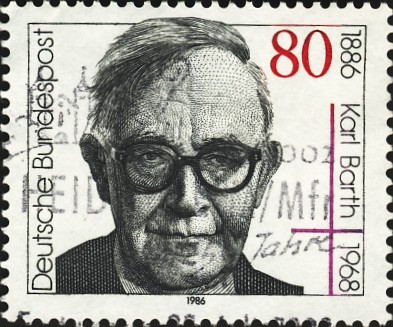
He started out life conventionally enough: he was born in Basel, Switzerland, the son of Fritz Barth (pronounced “bart”), a professor of New Testament and early church history at Bern, and Anna Sartorius. He studied at some of the best universities: Bern, Berlin, Tübingen, and Marburg. At Berlin he sat under the famous liberals of the day (like historian Adolph von Harnack), most of whom taught an optimistic Christianity that focused not so much on Jesus Christ and the Cross as the fatherhood of God and the brotherhood of man. After serving a Geneva curacy from 1909 to 1911, Barth was appointed to a working-class parish in Switzerland, and in 1913 he married Nell Hoffman, a talented violinist (they eventually had one daughter and four sons). As he pastored, he noted with alarm that Germany was becoming increasingly militaristic and that his former professors were supportive of this. Barth, dismayed with the moral weakness of liberal theology, plunged into a study of the Bible, especially Paul’s Epistle to the Romans. He also visited Moravian preacher Christoph Frederick Blumhardt and came away with an overwhelming conviction about the victorious reality of Christ’s resurrection—which deeply influenced his theology. Out of this emerged his Commentary on the Epistle to the Romans (1919). He sounded themes that had been muted in liberal theology. Liberal theology had domesticated God into the patron saint of human institutions and values. Instead, Barth wrote of the “crisis,” that is, God’s judgment under which all the world stood; he pounded on the theme of God’s absolute sovereignty, of his complete freedom in initiating his revelation in Jesus Christ. He spoke dialectically, in paradox, to shock readers into seeing the radicalness of the gospel: “Faith is awe in the presence of the divine incognito; it is the love of God that is aware of the qualitative difference between God and man and God and the world.” The first of six heavily revised editions followed in 1922. It rocked the theological community. Barth later wrote, “AsI look back upon my course, I seem to myself as one who, ascending the dark staircase of a church tower and trying to steady himself, reached for the banister, but got hold of the bell rope instead. To his horror he had then to listen to what the great bell had sounded over him and not over him alone.” Liberal theologians gasped in horror and attacked Barth furiously. But Barth had given that form of liberalism a mortal wound. His theology came to be known as “dialectical theology,” or “the theology of crisis”; it initiated a trend toward neo-orthodoxy in Protestant theology. In 1921 Barth was appointed professor of Reformed theology at the University of Göttingen, and later to chairs at Münster (1925) and Bonn (1930). He published works critiquing nineteenth-century Protestant theology and produced a celebrated study of Anselm. In 1931 he began the first book of his massive Church Dogmatics. It grew year by year out of his class lectures; though incomplete, it eventually filled four volumes in 12 parts, printed with 500 to 700 pages each. Many pastors in the 1930s, ’40s, and ’50s, desperate for an antidote to liberalism, eagerly awaited the publication of each book.
Fascist idolatry
Barth fought not just with liberals but allies who challenged some of his extreme conclusions. When Emil Brunner proposed that God revealed himself not just in the Bible but in nature as well (though not in a saving way), Barth replied in 1934 with an article titled, “No! An Answer to Emil Brunner.” Barth believed that such a “natural theology” was the root of the religious syncretism and anti-Semitism of the “German Christians”—those who supported Hitler’s national socialism. By this time, Barth was immersed in the German church struggle. He was a founder of the so-called Confessing Church, which reacted vigorously against the ideology of “blood and soil” and the Nazis’ attempt to create a “German Christian” church. The 1934 Barmen Declaration, largely written by Barth, pitted the revelation of Jesus Christ against the “truth” of Hitler and national socialism: “Jesus Christ…is the one Word of God…. We reject the false doctrine, as though the Church could and would have to acknowledge as a source of its proclamation, apart from and beside this one Word of God, still other events and powers, figures and truths, as God’s revelation.” When Barth refused to take the oath of unconditional allegiance to the Führer, he was fired. He was offered the chair of theology in his native Basel, however, and from there he continued to champion the causes of the Confessing Church, the Jews, and oppressed people everywhere.
After the war, Barth engaged in controversies regarding baptism (though a Reformed theologian, he rejected infant baptism), hermeneutics, and the demythologizing program of Rudolf Bultmann (which denied the historical nature of Scripture, instead believing it a myth whose meaning could heal spiritual anxiety). Barth also made regular visits to the prison in Basel, and his sermons to the prisoners, Deliverance to the Captives, reveal his unique combination of evangelical passion and social concern that characterized all his life. When asked in 1962 (on his one visit to America) how he would summarize the essence of the millions of words he had published, he replied, “Jesus loves me this I know, for the Bible tells me so.” Though Barth made it possible for theologians again to take the Bible seriously, American evangelicals have been skeptical of Barth because he refused to consider the written Word “infallible” (he believed only Jesus was).
Galli, Mark (2010-07-19). 131 Christians Everyone Should Know (pp. 46-48). Holman Reference. Kindle Edition.
 St. John One: One