Category / History
St. Francis, Christian Love, and the Biotechnological Future – The New Atlantis
Watch “Jesus: A Unique Savior (2 of 2) – Ravi Zacharias” on YouTube
The Historical Jesus – Jerry Newcombe – Page full
Western worldview and Christianity–Harold Eberle
from Christianity Unshackled by Harold Eberle,
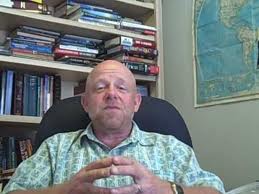
Harold R. Eberle
Many agnostics will reason that if there is a God, then it is His responsibility to reveal Himself. Certainly a person cannot be expected to believe in something that cannot be seen or verified. Certainly if there is a God, He will not hold us accountable to believe in Him, since He is the one who is failing to make Himself known. It is His fault that we do not believe in Him— or so the agnostic reasons.
Yet, it is the western worldview that blinds a person from seeing the reality of God. To see this more clearly, think again of the words we quoted earlier from the famous atheist Richard Dawkins: “Faith is the great cop-out, the great excuse to evade the need to think and evaluate evidence.” Dawkins can only make this statement because he has assumed the worldview of modern Western intellectualism. However, if we hold to a worldview with no wall between the spiritual and natural realms, we could restructure Dawkins’ words to state: “The worldview of modern Western intellectualism is the great cop-out, the great excuse to evade the need to think about God and evaluate evidence for His existence.”The truth is that any worldview that relegates things like God, religion, and faith to the spiritual world is a worldview built on an indefensible foundation. It may be attractive to people who want to distance themselves from facing reality, but it is tragic when modern-day Christians get pulled into that deceptive way of thinking.
Most Christians think that their worldview has been built on a biblical foundation. In reality, Western Christianity has a mixture of biblical thought and Western thought. It is most accurate to say that Western Christianity is the result of taking biblical truths and laying them upon the spiritual/ natural division developed by the ancient Greek philosophers.
That division became more and more pronounced throughout the later part of the Middle Ages. As I mentioned earlier, theology and philosophy were king and queen in the kingdom of education. Much more than the Bible, Aristotle’s writings were the focus of study. When discussing theology, students and professors spent most of their time dissecting and rehashing the writings of Church giants like Augustine and Thomas Aquinas— leaders who had developed their theology on the ancient Greek foundation.
When the historical Church went through the Scientific Revolution along with the rest of Western society, it was pulled right along and in many ways was at the forefront of change. The separation of the spiritual and natural worlds became even more clearly defined. Then God and faith were compartmentalized in the spiritual world while science and knowledge were compartmentalized in the natural world.
This compartmentalization was most prominent in philosophy. When philosophers such as Descartes, Hume, Kant, and Hegel developed their ideas, they each built on the spiritual/ natural division. Even today Western philosophy is fully locked into the dichotomous world-view laid down by the ancient Greek philosophers.
Unfortunately, Christian theology developed side-by-side and intertwined with Western philosophy. Church leaders like Martin Luther and John Calvin were fully submerged in the Western dichotomy of the spiritual world versus the natural world. Of course, they did not limit God to the spiritual world, but they still were Western people with Western minds. It is disturbing for modern Christians to hear this, but in some ways, Plato and Aristotle have had a more profound impact upon Western Christianity than the apostle Paul (proven by the fact that most university-educated Christians today cannot agree with Paul that God’s existence is undeniable and obvious).
There are many implications of this that we will discuss as we continue. Here we can simply mention how the foundation that divides the spiritual world from the natural world tends to create a lifestyle separated from the spiritual and supernatural. This is most obvious by considering a Western-minded atheist and then relating that to a modern Christian. Let me explain.
If God were to perform a miracle healing before a crowd of Western-minded atheists, they would make every attempt to give a natural explanation for the event. In their minds, natural events must have natural causes. Therefore, if God were to work a miraculous healing in their presence, thoughts would immediately go through their minds that the healing was not a true miracle but perhaps the result of coincidence, psychosomatic phenomenon, or deception. The modern Western mind can’t help but impose such thoughts upon supernatural experiences. Because the framework through which they view life allows for no miracles, they must search for a natural explanation— and they usually find it.
This same process goes through the mind of Christians who have been indoctrinated in the Western worldview. They may want to believe, but their minds will mold the events to fit the split spiritual/ natural framework. Such patterns of thought go beyond our understanding of miracles and permeate all our understanding. They subtly create a lifestyle separated from the spiritual and supernatural. They lead to a form of godliness, but deny the power.
Eberle, Harold (2009-12-28). Christianity Unshackled: Are You A Truth Seeker (pp. 90-94). Destiny Image, Inc.. Kindle Edition.
Watch “N. T. Wright: how to study the Bible | Logos Bible Software” on YouTube
Solzhenitsyn—are there Evildoers?
As the act of an evildoer? What sort of behavior is it? Do such people really exist? We would prefer to say that such people cannot exist, that there aren’t any. It is permissible to portray evildoers in a story for children, so as to keep the picture simple. But when the great world literature of the past—Shakespeare, Schiller, Dickens—inflates and inflates images of evildoers of the blackest shades, it seems somewhat farcical and clumsy to our contemporary perception. The trouble lies in the way these classic evildoers are pictured. They recognize themselves as evildoers, and they know their souls are black. And they reason: “I cannot live unless I do evil. So I’ll set my father against my brother! I’ll drink the victim’s sufferings until I’m drunk with them!” lago very precisely identifies his purposes and his motives as being black and born of hate.
But no; that’s not the way it is! To do evil a human being must first of all believe that what he’s doing is good, or else that it’s a well-considered act in conformity with natural law. Fortunately, it is in the nature of the human being to seek a justification for his actions.
Macbeth’s self-justifications were feeble—and his conscience devoured him. Yes, even lago was a little lamb too. The imagination and the spiritual strength of Shakespeare’s evildoers stopped short at a dozen corpses. Because they had no ideology.
Ideology—that is what gives evildoing its long-sought justification and gives the evildoer the necessary steadfastness and determination. That is the social theory which helps to make his acts seem good instead of bad in his own and others’ eyes, so that he won’t hear reproaches and curses but will receive praise and honors. That was how the agents of the Inquisition fortified their wills: by invoking Christianity; the conquerors of foreign lands, by extolling the grandeur of their Motherland; the colonizers, by civilization; the Nazis, by race; and the Jacobins (early and late), by equality, brotherhood, and the happiness of future generations.
Thanks to ideology, the twentieth century was fated to experience evildoing on a scale calculated in the millions. This cannot be denied, nor passed over, nor suppressed. How, then, do we dare insist that evildoers do not exist? And who was it that destroyed these millions? Without evildoers there would have been no Archipelago.

THE GULAG ARCHIPELAGO by Aleksandr Solzhenitsyn
THE GOAL OF HISTORY– William Barclay
Ephesians 1:9–10 This happened because he made known to us the once hidden, but now revealed, secret of his will, for so it was his good pleasure to do. The secret was a purpose which he formed in his own mind before time began, so that the periods of time should be controlled and administered until they reached their full development, a development in which all things, in heaven and upon earth, are gathered into one in Jesus Christ.

William Barclay 1907-1978
IT is now that Paul is really getting to grips with his subject. He says, as the Authorized Version has it, that God has made known to us ‘the mystery of his will’. The New Testament uses the word mystery in a special sense. It is not something mysterious in the sense that it is hard to understand. It is something which has long been kept secret and has now been revealed, but is still incomprehensible to the person who has not been initiated into its meaning.
Let us take an example. Suppose someone who knew nothing whatever about Christianity was brought into a communion service. To that person, it would be a complete mystery; he or she would not understand in the least what was going on. But to anyone who knows the story and the meaning of the Last Supper, the whole service has a meaning which is quite clear. So, in the New Testament sense, a mystery is something which is hidden to non-Christians but clear to Christians.
What, for Paul, was the mystery of the will of God? It was that the gospel was open to the Gentiles too. In Jesus, God has revealed that his love and care, his grace and mercy, are meant not only for the Jews but for the whole world.
Now Paul, in one sentence, introduces his great thought. Up until now, people had been living in a divided world. There was division between the animals and human beings. There was division between Jews and Gentiles, Greeks and barbarians. All over the world, there was strife and tension. Jesus came into the world to wipe out the divisions. That, for Paul, was the secret of God. It was God’s purpose that all the many different strands and all the warring elements in this world should be gathered into one in Jesus Christ.
Here, we have another tremendous thought. Paul says that all history has been a working out of this process. He says that all through the ages there has been an arranging and an administering of things so that this day of unity should come. The word which Paul uses for this preparation is intensely interesting. It is oikonomia, which literally means household management. The oikonomos was the steward who saw to it that the family affairs ran smoothly.
It is the Christian conviction that history is the working out of the will of God. That is by no means what every historian or thinker has been able to see. In one of his epigrams, the Irish playwright and poet Oscar Wilde said: ‘You give the criminal calendar of Europe to your children under the name of history.’ The historian and poet Sir George Clark, in his inaugural lecture at Oxford, said: ‘There is no secret and no plan in history to be discovered. I do not believe that any future consummation could make sense of all the irrationalities of preceding ages. If it could not explain them, still less could it justify them.’ In the introduction to A History of Europe, H. A. L. Fisher writes: ‘One intellectual excitement, however, has been denied to me. Men wiser and more learned than I have discovered in history a plot, a rhythm, a predetermined pattern. These harmonies are concealed from me. I can see only one emergency following another, as wave follows upon wave, only one great fact with respect to which, since it is unique, there can be no generalizations, only one safe rule for the historian: that he should recognize in the development of human destinies the play of the contingent and the unforeseen.’ The French novelist and biographer André Maurois says: ‘The universe is indifferent. Who created it? Why are we here on this puny mud-heap spinning in infinite space? I have not the slightest idea, and I am quite convinced that no one has the least idea.’
It so happens that we are living in an age in which many people have lost their faith in any purpose for this world. But it is the faith of Christians that in this world God’s purpose is being worked out; and Paul’s conviction is that it is God’s purpose that one day all things and all people should be one family in Christ. As Paul sees it, that mystery was not even grasped until Jesus came, and now it is the great task of the Church to work out God’s purpose of unity, revealed in Jesus Christ.
William Barclay, The Letters to the Galatians and Ephesians (New Daily Study Bible) (pp. 95-98). Westminster John Knox Press. Kindle Edition.
 St. John One: One