Poetry, Symbolism and Typology—Thomas Merton


Cover of "The Literary Essays of Thomas M...

Cover via Amazon

thomas merton

Now the writers of the Bible were aware that they shared with other religions the cosmic symbols in which God has revealed Himself to all men. But they were also aware that pagan and idolatrous religions had corrupted this symbolism and perverted its original purity [Merton cites Romans 1:18 and 25] The Gentiles had “detained the truth of God in injustice” and “changed the truth of God into a lie.”
Creation had been given to man as a clean window through which the light of God could shine into men’s souls. Sun and moon, night and day, rain, the sea, the crops, the flowering tree, all these things were transparent. They spoke to man not of themselves only but of Him who made them. Nature was symbolic. But the progressive degradation of man after the fall led the Gentiles further and further from this truth. Nature became opaque. The nations were no longer able to penetrate the meaning of the world they lived in. Instead of seeing the sun a witness to the power of God they thought the sun was god. The whole universe became an enclosed system of myths. The meaning and the worth of creatures invested them with an illusory divinity.
Men still sensed that there was something to be venerated in the reality, in the peculiarity of living and growing things, but they no longer knew what that reality was. They became incapable of seeing that the goodness of the creature is only a vestige of God. Darkness settled upon the translucent universe. Men became afraid. Beings had a meaning which men could no longer understand. They became afraid of trees, of the sun, of the sea. These things had to be approached with superstitious rites. It began to seem that the mystery of their meaning, which had become hidden, was now a power that had to be placated and, if possible controlled with magic incantations.
Thus the beautiful living things which were all about us on this earth and which were the windows of heaven to every man, became infected with original sin. The world fell with man, and longs, with man, for regeneration. The symbolic universe, which had now become a labyrinth of myths and magic rites, the dwelling place of a million hostile spirits, ceased altogether to speak to most men of God and told them only of themselves. The symbols which would have raised man above himself to God now became myths, and as such they were simply projections of man’s own biological drives. His deepest appetites, now full of shame, became his darkest fears.
The corruption of cosmic symbolism can be understood by a simple comparison. It was like what happens to a window when a room ceases to receive light from the outside. As long as it is daylight, we see through our windowpane. When night comes, we can still see through it if there is no light inside our room. When our lights go on, then we see only ourselves and our own room reflected in the pane. Adam in Eden could see through creation as through a window. God shone through the windowpane as bright as the light of the sun. Abraham and the patriarchs and David and the holy men of Israel—the chosen race that preserved intact the testimony of God—could still see through the window as one looks out by night from a darkened room and sees the moon and stars. But the Gentiles had begun to forget the sky, and to light lamps of their own, and presently it seemed to them that the reflection of their own room in the window was the “world beyond.” They began to worship what they themselves were doing. And what they were doing was too often an abomination. Nevertheless, something of the original purity of natural revelation remained in the great religions for the East. It is found in the Upanishads in the Baghavad Gita. But the pessimism of Buddha was a reaction against the degeneration of nature by polytheism. Henceforth for the mysticism of the East, nature would no longer be symbol but illusion. Buddha knew too well that the reflections in the window were only projections of our own existence and our own desires, but did not know that this was a window and that there could be sunlight outside the glass.

from “Poetry, Symbolism, and Typology,” The Literary Essays of Thomas Merton, pp 333-335,  New Directions 1985. Originally from Merton’s Bread in the Wilderness, a study of the Psalms of the Old Testament as poetry, New Directions, 1953

Thomas Merton— from Theology of Creativity


thomas merton

Excerpted from an essay which first  appeared in 1960 in  The American Benedictine Review. 

The creativity of the Christian person must be seen in relation to the creative vocation of the new Adam, mystical person of the “whole Christ.” The creative will of God has been at work in the cosmos since he said: “Let there be light.”  This creative fiat was not uttered merely at the dawn of time. All time and all history are a continued, uninterrupted creative act, a stupendous, ineffable mystery in which God has signified his will to associate man with himself in his work of creation. The will and power of the Almighty Father were not satisfied simply to make the world and turn it over to man to run it as best he could. The creative love of God was met, at first, by the destructive and self-centered recusal of man: an act of such incalculable consequences that it would have amounted to a destruction of God’s plan, if that were possible. But the creative work of God could not be frustrated by man’s sin. On the contrary, sin itself entered into the plan. If man was first called to share in the creative work of his heavenly Father, he now became involved in the “new creation,” the redemption of his own kind and the restoration of the cosmos, purified and transfigured, into the hands of the Father. God himself became man in order that in this way man could be most perfectly associated with him in this great work, the fullest manifestation of his eternal wisdom and mercy.

The Literary Essays of Thomas Merton,  New Directions

Cover of "The Literary Essays of Thomas M...

Cover via Amazon

C. S.Lewis—Heaven


C.S. Lewis

C.S. Lewis

We are very shy nowadays of even mentioning heaven. We are afraid of the jeer about ‘pie in the sky’, and of being told that we are trying to ‘escape’ from the duty of making a happy world here and now into dreams of a happy world elsewhere. But either there is ‘pie in the sky’ or there is not. If there is not, then Christianity is false, for this doctrine is woven into it’s whole fabric. If there is, then this truth, like any other, must be faced, whether it is useful at political meetings or no. Again, we are afraid that heaven is a bribe, and that if we make it our goal we shall no longer be disinterested. It is not so. Heaven offers nothing that a mercenary soul can desire. It is safe to tell the pure in heart that they shall see God, for only the pure in heart want to. There are rewards that do not sully motives. A man’s love for a woman is not mercenary because he wants to marry her, nor his love for poetry mercenary because he wants to read it, nor his love of exercise less disinterested because he wants to run and leap and walk. Love, by definition, seeks to enjoy it’s object. You may think that there is another reason for our silence about heaven—namely, that we do not really desire it. But that may be an illusion. What I am now going to say is merely an opinion of my own without the slightest authority, which I submit to the judgement of better Christians and better scholars than myself. There have been times when I think we do not desire heaven; but more often I find myself wondering whether, in our heart of hearts, we have ever desired anything else. You may have noticed that the books you really love are bound together by a secret thread. You know very well what is the common quality that makes you love them, though you cannot put it into words: but most of your friends do not see it at all, and often wonder why, liking this, you should also like that. Again, you have stood before some landscape, which seems to embody what you have been looking for all your life; and then turned to the friend at your side who appears to be seeing what you saw—but at the first words a gulf yawns between you, and you realise that this landscape means something totally different to him, that he is pursuing an alien vision and cares nothing for the ineffable suggestion by which you are transported. Even in your hobbies, has there not always been some secret attraction which the others are curiously ignorant of—something, not to be identified with, but always on the verge of breaking through, the smell of cut wood in the workshop or the clap-clap of water against the boat’s side?

Are not all lifelong friendships born at the moment when at last you meet another human being who has some inkling (but faint and uncertain even in the best) of that something which you were born desiring, and which, beneath the flux of other desires and in all the momentary silences between the louder passions, night and day, year by year, from childhood to old age, you are looking for, watching for, listening for? You have never had it. All the things that have ever deeply possessed your soul have been but hints of it—tantalising glimpses, promises never quite fulfilled, echoes that died away just as they caught your ear. But if it should really become manifest—if there ever came an echo that did not die away but swelled into the sound it’self—you would know it. Beyond all possibility of doubt you would say ‘Here at last is the thing I was made for.’ We cannot tell each other about it. It is the secret signature of each soul, the incommunicable and unappeasable want, the thing we desired before we met our wives or made our friends or chose our work, and which we shall still desire on our deathbeds, when the mind no longer knows wife or friend or work. While we are, this is. If we lose this, we lose all.

This signature on each soul may be a product of heredity and environment, but that only means that heredity and environment are among the instruments whereby God creates a soul. I am considering not how, but why, He makes each soul unique. If He had no use for all these differences, I do not see why He should have created more souls than one. Be sure that the ins and outs of your individuality are no mystery to Him; and one day they will no longer be a mystery to you. The mould in which a key is made would be a strange thing, if you had never seen a key: and the key it’self a strange thing if you had never seen a lock. Your soul has a curious shape because it is a hollow made to fit a particular swelling in the infinite contours of the Divine substance, or a key to unlock one of the doors in the house with many mansions. For it is not humanity in the abstract that is to be saved, but you—you, the individual reader, John Stubbs or Janet Smith. Blessed and fortunate creature, your eyes shall behold Him and not another’s. All that you are, sins apart, is destined, if you will let God have His good way, to utter satisfaction. The Brocken spectre ‘looked to every man like his first love’, because she was a cheat. But God will look to every soul like it’s first love because He is it’s first love. Your place in heaven will seem to be made for you and you alone, because you were made for it—made for it stitch by stitch as a glove is made for a hand.

Lewis, C. S. (1940). The Problem of Pain (pp. 148-152). Harper Collins, Inc.. Kindle Edition.

William Douglas on Church and State


William O. Douglas 1898-1980

William O. Douglas 1898-1980

On April 28, 1952, in the decision of the Supreme Court of   the United States in Zorach v. Clauson, 343 U.S. 306 (1952), in   which school children were allowed to be excused from public   schools for religious observances and education, Justice William   O. Douglas, in writing for the Court stated:

‘The First Amendment, however, does not say that in every and all respects   there shall be a separation of Church and State. Rather, it   studiously defines the manner, the specific ways, in which there   shall be no concern or union or dependency one on the other. That   is the common sense of the matter. Otherwise the State and religion would be aliens to each other – hostile, suspicious, and   even unfriendly. Churches could not be required to pay even   property taxes. Municipalities would not be permitted to render   police or fire protection to religious groups. Policemen who   helped parishioners into their places of worship would violate   the Constitution. Prayers in our legislative halls; the appeals to the Almighty in the messages of the Chief Executive; the   proclamations making Thanksgiving Day a holiday; “so help me God”   in our courtroom oaths – these and all other references to the Almighty that run through our laws, our public rituals, our   ceremonies would be flouting the First Amendment. A fastidious   atheist or agnostic could even object to the supplication with   which the Court opens each session: “God save the United States and this Honorable Court.”

from The Pursuit of God by A. W. Tozer (link at bottom for free Kindle addition)


 The Speaking Voice
In the beginning was the Word, and the Word was with God, and the Word was
God.
John 1:1

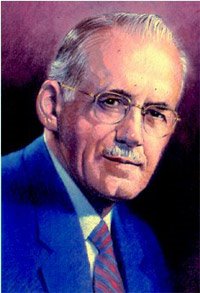
A.W. Tozer  (April 21, 1897 - May 12, 1963)

A.W. Tozer (April 21, 1897 – May 12, 1963)

An intelligent plain man, untaught in the truths of Christianity, coming upon this text, would likely conclude that John meant to teach that it is the nature of God to speak, to communicate His thoughts to others. And he would be right. A word is a medium by which thoughts are expressed, and the application of the term to the Eternal Son leads us to believe that self-expression is inherent in the Godhead, that God is forever seeking to speak Himself out to His creation. The whole Bible supports the idea. God is speaking. Not God spoke, but God is
speaking. He is by His nature continuously articulate. He fills the world with
His speaking Voice.
One of the great realities with which we have to deal is the Voice of God in His world. The briefest and only satisfying cosmogony is this: `He spake and it was done.’ The why of natural law is the living Voice of God immanent in His creation. And this word of God which brought all worlds into being cannot be understood to mean the Bible, for it is not a written or printed word at all,but the expression of the will of God spoken into the structure of all things.
This word of God is the breath of God filling the world with living
potentiality. The Voice of God is the most powerful force in nature, indeed the
only force in nature, for all energy is here only because the power-filled Word
is being spoken.
The Bible is the written word of God, and because it is written it is confined
and limited by the necessities of ink and paper and leather. The Voice of God,
however, is alive and free as the sovereign God is free. `The words that I speak
unto you, they are spirit, and they are life.’ The life is in the speaking
words. God’s word in the Bible can have power only because it corresponds to
God’s word in the universe. It is the present Voice which makes the written Word
all- powerful. Otherwise it would lie locked in slumber within the covers of a
book.
We take a low and primitive view of things when we conceive of God at the
creation coming into physical contact with things, shaping and fitting and
building like a carpenter. The Bible teaches otherwise: `By the word of the Lord
were the heavens made; and all the host of them by the breath of his mouth.
…For he spake, and it was done; he commanded, and it stood fast.’ (Ps 33:6,9)
`Through faith we understand that the worlds were framed by the word of God.’
(Heb 11:3) Again we must remember that God is referring ere not to His written
Word, but to His speaking Voice. His world-filling Voice is meant, that Voice
which antedates the Bible by uncounted centuries, that Voice which has not been
silent since the dawn of creation, but is sounding still throughout the full far
reaches of the universe.
The Word of God is quick and powerful. In the beginning He spoke to nothing, and
it became something. Chaos heard it and became order, darkness heard it and
became light. `And God said – – and it was so.’ (Gen 1:9) These twin phrases, as
cause and effect, occur throughout the Genesis story of the creation. The said
accounts for the so. The so is the said put into the continuous present. That
God is here and that He is speaking–these truths are back of all other Bible
truths; without them there could be no revelation at all. God did not write a
book and send it by messenger to be read at a distance by unaided minds. He
spoke a Book and lives in His spoken words, constantly speaking His words and
causing the power of them to persist across the years. God breathed on clay and
it became a man; He breathes on men and they become clay. `Return ye children of men,’ (Ps 90:3) was the word spoken at the Fall by which God decreed the death of every man, and no added word has He needed to speak. The sad procession of mankind across the face of the earth from birth to the grave is proof that His original Word was enough.

We have not given sufficient attention to that deep utterance in the Book of
John, `That was the true Light, which lighteth every man that cometh into the
world.’ (John 1:9) Shift the punctuation around as we will and the truth is
still there: the Word of God affects the hearts of all men as light in the soul.
In the hearts of all men the light shines, the Word sounds, and there is no
escaping them. Something like this would of necessity be so if God is alive and
in His world. And John says that it is so. Even those persons who have never
heard of the Bible have still been preached to with sufficient clarity to remove
every excuse from their hearts forever. `Which show the work of the law written
in their hearts, their conscience also bearing witness, and their thoughts the
mean while either accusing or else excusing one another.’ (Rom 2:15) `For the
invisible things of him from the creation of the world are clearly seen, being
understood by the things that are made, even his eternal power and Godhead; so
that they are without excuse.’ (Rom 1:20)
This universal Voice of God was by the ancient Hebrews often called Wisdom, and
was said to be everywhere sounding and searching throughout the earth, seeking
some response from the sons of men. The eighth chapter of the Book of Proverbs
begins, `Doth not wisdom cry? and understanding put forth her voice?’ The writer
then pictures wisdom as a beautiful woman standing `in the top of the high
places, by the way in the places of the paths.’ She sounds her voice from every
quarter so that no one may miss hearing it. `Unto you, O men, I call; and my
voice is to the sons of men.’ Then she pleads for the simple and the foolish to
give ear to her words. It is spiritual response for which this Wisdom of God is
pleading, a response which she has always sought and is but rarely able to
secure. The tragedy is that our eternal welfare depends upon our hearing, and we
have trained our ears not to hear.
This universal Voice has ever sounded, and it has often troubled men even when
they did not understand the source of their fears. Could it be that this Voice
distilling like a living mist upon the hearts of men has been the undiscovered
cause of the troubled conscience and the longing for immortality confessed by
millions since the dawn of recorded history? We need not fear to face up to
this. The speaking Voice is a fact. How men have reacted to it is for any
observer to note.
When God spoke out of heaven to our Lord, self-centered men who heard it
explained it by natural causes: they said, `It thundered.’ This habit of
explaining the Voice by appeals to natural law is at the very root of modern
science. In the living breathing cosmos there is a mysterious Something, too
wonderful, too awful [i.e. `awesome’] for any mind to understand. The believing
man does not claim to understand. He falls to his knees and whispers, `God.’ The
man of earth kneels also, but not to worship. He kneels to examine, to search,
to find the cause and the how of things. Just now we happen to be living in a
secular age. Our thought habits are those of the scientist, not those of the
worshipper. We are more likely to explain than to adore. `It thundered,’ we
exclaim, and go our earthly way. But still the Voice sounds and searches. The
order and life of the world depend upon that Voice, but men are mostly too busy
or too stubborn to give attention.
Everyone of us has had experiences which we have not been able to explain: a
sudden sense of loneliness, or a feeling of wonder or awe in the face of the
universal vastness. Or we have had a fleeting visitation of light like an
illumination from some other sun, giving us in a quick flash an assurance that
we are from another world, that our origins are divine. What we saw there, or
felt, or heard, may have been contrary to all that we had been taught in the
schools and at wide variance with all our former beliefs and opinions. We were
forced to suspend our acquired doubts while, for a moment, the clouds were
rolled back and we saw and heard for ourselves. Explain such things as we will,
I think we have not been fair to the facts until we allow at least the
possibility that such experiences may arise from the Presence of God in the
world and His persistent effort to communicate with mankind. Let us not dismiss
such an hypothesis too flippantly.
It is my own belief (and here I shall not feel bad if no one follows me) that
every good and beautiful thing which man has produced in the world has been the
result of his faulty and sin-blocked response to the creative Voice sounding
over the earth. The moral philosophers who dreamed their high dreams of virtue,
the religious thinkers who speculated about God and immortality, the poets and
artists who created out of common stuff pure and lasting beauty: how can we
explain them? It is not enough to say simply, `It was genius.’ What then is
genius? Could it be that a genius is a man haunted by the speaking Voice,
laboring and striving like one possessed to achieve ends which he only vaguely
understands? That the great man may have missed God in his labors, that he may
even have spoken or written against God does not destroy the idea I am
advancing. God’s redemptive revelation in the Holy Scriptures is necessary to
saving faith and peace with God. Faith in a risen Saviour is necessary if the
vague stirrings toward immortality are to bring us to restful and satisfying
communion with God. To me this is a plausible explanation of all that is best
outside of Christ. But you can be a good Christian and not accept my thesis.
The Voice of God is a friendly Voice. No one need fear to listen to it unless he
has already made up his mind to resist it. The blood of Jesus has covered not
only the human race but all creation as well. `And having made peace through the
blood of his cross, by him to reconcile all things unto himself; by him, I say,
whether they be things in earth, or things in heaven.’ (Col 1:20) We may safely
preach a friendly Heaven. The heavens as well as the earth are filled with the
good will of Him that dwelt in the bush (Ex. 3). The perfect blood of atonement
secures this forever.
Whoever will listen will hear the speaking Heaven. This is definitely not the
hour when men take kindly to an exhortation to listen, for listening is not
today a part of popular religion. We are at the opposite end of the pole from
there. Religion has accepted the monstrous heresy that noise, size, activity and
bluster make a man dear to God. But we may take heart. To a people caught in the tempest of the last great conflict God says, `Be still, and know that I am God,’
(Ps 46:10) and still He says it, as if He means to tell us that our strength and
safety lie not in noise but in silence.
It is important that we get still to wait on God. And it is best that we get
alone, preferably with our Bible outspread before us. Then if we will we may
draw near to God and begin to hear Him speak to us in our hearts. I think for
the average person the progression will be something like this: First a sound as
of a Presence walking in the garden. Then a voice, more intelligible, but still
far from clear. Then the happy moment when the Spirit begins to illuminate the
Scriptures, and that which had been only a sound, or at best a voice, now
becomes an intelligible word, warm and intimate and clear as the word of a dear
friend. Then will come life and light, and best of all, ability to see and rest
in and embrace Jesus Christ as Saviour and Lord and All.
The Bible will never be a living Book to us until we are convinced that God is
articulate in His universe. To jump from a dead, impersonal world to a dogmatic
Bible is too much for most people. They may admit that they should accept the
Bible as the Word of God, and they may try to think of it as such, but they find
it impossible to believe that the words there on the page are actually for them.
A man may say, `These words are addressed to me,’ and yet in his heart not feel
and know that they are. He is the victim of a divided psychology. He tries to
think of God as mute everywhere else and vocal only in a book.
I believe that much of our religious unbelief is due to a wrong conception of
and a wrong feeling for the Scriptures of Truth. A silent God suddenly began to
speak in a book and when the book was finished lapsed back into silence again
forever. Now we read the book as the record of what God said when He was for a
brief time in a speaking mood. With notions like that in our heads how can we
believe? The facts are that God is not silent, has never been silent. It is the
nature of God to speak. The second Person of the Holy Trinity is called the
word. The Bible is the inevitable outcome of God’s continuous speech. It is the
infallible declaration of His mind for us put into our familiar human words.
I think a new world will arise out of the religious mists when we approach our
Bible with the idea that it is not only a book which was once spoken, but a book
which is now speaking. The prophets habitually said, `Thus saith the Lord.’ They
meant their hearers to understand that God’s speaking is in the continuous
present. We may use the past tense properly to indicate that at a certain time a
certain word of God was spoken, but a word of God once spoken continues to be
spoken, as a child once born continues to be alive, or a world once created
continues to exist. And those are but imperfect illustrations, for children die
and worlds burn out, but the Word of our God endureth forever.
If you would follow on to know the Lord, come at once to the open Bible
expecting it to speak to you. Do not come with the notion that it is a thing
which you may push around at your convenience. It is more than a thing, it is a
voice, a word, the very Word of the living God. Lord, teach me to listen. The
times are noisy and my ears are weary with the thousand raucous sounds which
continuously assault them. Give me the spirit of the boy Samuel when he said to
Thee, `Speak, for thy servant heareth.’ Let me hear Thee speaking in my heart.
Let me get used to the sound of Thy Voice, that its tones may be familiar when
the sounds of earth die away and the only sound will be the music of Thy
speaking Voice. Amen.

The Pursuit of GodChapter 6by A. W. Tozer

“..whatever the world is like, God has not abandoned it.” William Barclay on Matthew 24


The Day Of The Lord (Matt 24:6-8,29-31)

24:6-8,29-31 “You will hear of wars and reports of wars. See that you are not disturbed; for these things must happen; for the end is not yet. For nation shall rise against nation, and kingdom against kingdom, and there will be famines and earthquakes in various places.

“Immediately after the affliction of these days the sun will be darkened, and the moon will not give her light, and the stars will fall from heaven, and the powers of heaven will be shaken. Then there will appear the sign of the Son of Man in heaven. And then all the tribes of the earth will lament, and they will see the Son of Man coming in the clouds of heaven with power and much glory. And he will send his angels with a great trumpet call, and they will gather the elect from the four winds, from one boundary of heaven to the other.” [RSV]

William Barclay 1907-1978

William Barclay 1907-1978

“… an essential part of the Jewish thought of the future was the Day of the Lord that day when God was going to intervene directly in history, and when the present age, with all its incurable evil, would begin to be transformed into the age to come.

Very naturally the New Testament writers to a very great extent identified the Second Coming of Jesus and the Day of the Lord; and they took over all the imagery which had to do with the Day of the Lord and applied them to the Second Coming. None of these pictures is to be taken literally; they are pictures, and they are visions; they are attempts to put the indescribable into human words and to find some kind of picture for happenings for which human language has no picture.

But from all these pictures there emerge certain great truths.

(i) They tell us that God has not abandoned the world; for all its wickedness, the world is still the scene in which God’s purpose is being worked out. It is not abandonment that God contemplates; it is intervention.

(ii) They tell us that even a very crescendo of evil must not discourage us. An essential part of the Jewish picture of the Day of the Lord is that a complete breakdown of all moral standards and an apparent complete disintegration of the world must precede it. But, for all that, this is not the prelude to destruction; it is the prelude to recreation.

(iii) They tell us that both judgment and a new creation are certain. They tell us that God contemplates the world both in justice and in mercy; and that God’s plan is not the obliteration of the world, but the creation of a world which is nearer to his heart’s desire.

The value of these pictures is not in their details, which at best are only symbolic and which use the only pictures which the minds of men could conceive, but in the eternal truth which they conserve; and the basic truth in them is that, whatever the world is like, God has not abandoned it.”

William Barclay, Gospel of Matthew Vol. 2 p. 308-309

from The Problem of Pain, by C.S. Lewis


From the moment a creature becomes aware of God as God and of it’self as self, the terrible alternative of choosing God or self for the centre is opened to it. This sin is committed daily by young children and ignorant peasants as well as by sophisticated persons, by solitaries no less than by those who live in society: it is the fall in every individual life, and in each day of each individual life, the basic sin behind all particular sins: at this very moment you and I are either committing it, or about to

C.S. Lewis

C.S. Lewis

commit it, or repenting it. We try, when we wake, to lay the new day at God’s feet; before we have finished shaving, it becomes our day and God’s share in it is felt as a tribute which we must pay out of ‘our own’ pocket, a deduction from the time which ought, we feel, to be ‘our own’.

Lewis, C. S. (2009-05-28). The Problem of Pain (p. 70). Harper Collins, Inc.. Kindle Edition.