That our glassy sea be mingled with fire— by William Graham Scroggie


“A sea of glass mingled with fire” (Rev. 15:2).

 William Graham Scroggie

William Graham Scroggie

Peace and energy do not always go together, though they should. Energy need be none the less energetic if it be peaceful, nor peace the less peaceful if it be energetic. Peace without energy may be only stagnation; and energy without peace may be but a form of panic. What we need is that our glassy sea be mingled with fire, and that our fire shall have for its home a glassy sea. Too often the water puts out the fire, or the fire dries up the water; but in every true life these dwell helpfully together. Why should peace exclude passion, and why should passion destroy peace? Why should one moral quality triumph at the expense of another? Yet, too often it is so. Sometimes our sea is not glassy, but tempest tossed; and sometimes our fire burns low. Sometimes it is all calm, and no energy, and sometimes it is all energy and no calm. But what is possible and right is, that the glassy sea be mingled with fire! That our outward energy be regulated by inward peace, and that our inward peace find expression in outward energy. Then shall there be equipoise of power.

The Farewell Command–by William Barclay


The Farewell Command (John 13:33-35)

William Barclay 1907-1978

William Barclay 1907-1978

13:33-35 “Little children, I am still going to be with you for a little while. You will search for me; and, as I said to the Jews, so now I say to you too: ‘You cannot go where I am going.’ I give you a new commandment, that you love one another; that you too love one another, as I have loved you; it is by this that all will know that you are my disciples—if you have love amongst each other.”

Jesus was laying down his farewell commandment to his disciples. The time was short; if they were ever to hear his voice they must hear it now. He was going on a journey on which none might accompany him; he was taking a road that he had to walk alone; and before he went, he gave them the commandment that they must love one another as he had loved them. What does this mean for us, and for our relationships with our fellow-men? How did Jesus love his disciples?
(i) He loved his disciples selflessly. Even in the noblest human love there remains some element of self. We so often think—maybe unconsciously—of what we are to get. We think of the happiness we will receive, or of the loneliness we will suffer if love fails or is denied. So often we are thinking: What will this love do for me? So often at the back of things it is our happiness that we are seeking. But Jesus never thought of himself. His one desire was to give himself and all he had for those he loved.
(ii) Jesus loved his disciples sacrificially. There was no limit to what his love would give or to where it would go. No demand that could be made upon it was too much. If love meant the Cross, Jesus was prepared to go there. Sometimes we make the mistake of thinking that love is meant to give us happiness. So in the end it does, but love may well bring pain and demand a cross.
(iii) Jesus loved his disciples understandingly. He knew his disciples through and through. We never really know people until we have lived with them. When we are meeting them only occasionally, we see them at their best. It is when we live with them that we find out their moods and their irritabilities and their weaknesses. Jesus had lived with his disciples day in and day out for many months and knew all that was to be known about them—and he still loved them. Sometimes we say that love is blind. That is not so, for the love that is blind can end in nothing but bleak and utter disillusionment. Real love is open-eyed. It loves, not what it imagines a man to be, but what he is. The heart of Jesus is big enough to love us as we are.
(iv) Jesus loved his disciples forgivingly. Their leader was to deny him. They were all to forsake him in his hour of need. They never, in the days of his flesh, really understood him. They were blind and insensitive, slow to learn, and lacking in understanding. In the end they were craven cowards. But Jesus held nothing against them; there was no failure which he could not forgive. The love which has not learned to forgive cannot do anything else but shrivel and die. We are poor creatures, and there is a kind of fate in things which makes us hurt most of all those who love us best. For that very reason all enduring love must be built on forgiveness, for without forgiveness it is bound to die.
Barclay’s Daily Study Bible (NT)..

Through the house the child would shout ‘Abba!’—William Barclay


William Barclay 1907-1978

William Barclay 1907-1978

Like most people brought up in an evangelical home I did not at first know that there was any other way of thinking of the Atonement except in terms of God laying on Jesus the punishment that should have been laid on me… It seemed to me that the whole conception starts from the wrath of God, while the New Testament starts from the love of God. It was because he so loved the world that God sent his Son into the world (John 3:16). It was his love that God showed to us in the death of Christ for us while we were still sinners (Romans 5:8). Never in the New Testament, never once, is God said to be reconciled to man; it is always man who is reconciled to God. We plead with you, says Paul, on behalf of Christ, be reconciled to God (2 Corinthians 5:20).

Slowly it began to dawn on me that apart from the love of God there would have been no Atonement at all. And then I began to see this tremendous thing, the fact that Jesus came, not to change God’s attitude to men, but to demonstrate God’s attitude to men, to show men at the cost of the Cross what God is like. And then still later when I had to study the New Testament, I came to see that this is precisely what John is saying [John 1:14] — and what a difference! The God of terror became the God of love. It became the most natural thing in the world to seek the presence of God instead of running away from God.

Let us see this difference in operation. I have written of this again and again because I do not think that it can be stated too often. First of all, let us see the thing in Judaism. The angel of the Lord came to Manoah and his wife to tell them that their son Samson was to be born, and when Manoah realized who their heavenly visitor had been he said in terror: ‘We shall surely die, for we have seen God’ (Judg. 13:22). In Judaism to see God was, so they believed, [would be] to die. Now let us turn to the New Testament. No one has seen God; it is the only Son who has revealed Him (John 1:18). And revealed him as what? ‘He who has seen me has seen the Father’ (John 14:9). And in what sense? Jesus called God Abba  (Mark 14:36). It is but that name that we too may call God, that we are invited to call him, says Paul (Rom.8:15; Gal. 4:6). And what does this word Abba mean? Abba is the word—to this day—by which a little Jewish boy or girl addresses his father in the home circle, in the family. Through the house the child would shout ‘Abba!’—Daddy.

Second, let us take the early Greek conception of God. In the old Greek mythology Prometheus was the supreme benefactor of man; he instructed man in architecture, astronomy, mathematics, writing, rearing cattle, navigation, medicine, the art of prophecy, working in metal and in every other art. The myth said that Prometheus had made man of clay, and, to give his clay life, [Prometheus] stole fire from heaven to put into it. The result was that Zeus chained him to a rock in the middle of the ocean and prepared a vulture to tear out his liver, which grew again each night to be torn out again each day. The gods grudged man everything, and any god who became a benefactor of men incurred the divine wrath in its most savage manifestation. What a difference between that and the God and Father of our Lord Jesus Christ!

Third, let us take the conception of the God of Greek philosophy with the New Testament. Both the great school of philosophy, the Stoics and the Epicureans, held that the supreme good in life is ataraxia, which means serenity. If that is true for man, how much more must it be true of God? In order to provide God with this ataraxia, the held that God must have apatheia. Apatheia is not apathy in the sense of indifference; it is the complete inability to feel anything at all. The being who has apatheia cannot know love or hate, but remains forever completely insulated against all feeling. If anyone can cause us sorrow or joy, it means that for that moment that person is greater than we are, because that person can have some influence over us. So the way to complete serenity is insulation against all feeling. When the countess of Lyttelton’s husband died, J. M. Barrie wrote to her: ‘If you had cared for him less, if he had been less worth caring for, the road would be less heavy-going. Joy has to be paid for.’ Sorrow is the price of love. If we never allowed ourselves to care for any one then there would be no such thing as sorrow. So the Greeks conceived of a God who essentially was unable to care. What a difference from the God who so loved the world,  from the Jesus who could be moved with compassion, who wept! The difference between the apathetic Greek God and the Christian God of love is as wide as infinity.

I believe in Jesus, because it is only through Jesus that I know God as the Friend and Father, in whose presence I can be at home without fear, as a child with his father.

[from William Barclay: A Spiritual Autobiography, pg 51-54, William B Eerdmans Publishing Company, Grand Rapids, 1975.]

Professor of Divinity and Biblical Criticism at Glasgow University and the author of many Biblical commentaries and books, including a translation of the New Testament, Barclay New Testament, and The Daily Study Bible Series.
When Is Y-Chromosomal Adam’s Birthday?– by Dr. Fazale Rana


Fuzy-chromosome-1Reasons To Believe : When Is Y-Chromosomal Adam’s Birthday?.

Logos — The Eternal Word—William Barclay


From  The Daily Bible Study Series

The Gospel of John Volume 1

by William Barclay

(John 1:1-2)
1:1-2 When the world had its beginning, the word was already there; and the word was with God; and the word was God. This word was in the beginning with God.

William Barclay 1907-1978

William Barclay 1907-1978

The beginning of John’s gospel is of such importance and of such depth of meaning that we must study it almost verse by verse.* It is John’s great thought that Jesus is none other than God’s creative and life-giving and light-giving word, that Jesus is the power of God which created the world and the reason of God which sustains the world come to earth in human and bodily form.
Here at the beginning John says three things about the Word; which is to say that he says three things about Jesus.
(i) The Word was already there at the very beginning things. John’s thought is going back to the first verse of the Bible. “In the beginning God created the heavens and the earth” (Gen 1:1). What John is saying is this—the Word is not one of the created things; the Word was there before creation.The Word is not part of the world which came into being in time; the Word is part of eternity and was there with God before time and the world began. John was thinking of what is known as the preexistence of Christ.
In many ways this idea of preexistence is very difficult, if not altogether impossible, to grasp. But it does mean one very simple, very practical, and very tremendous thing. If the Word was with God before time began, if God’s Word is part of the eternal scheme of things, it means that God was always like Jesus. Sometimes we tend to think of God as stern and avenging; and we tend to think that something Jesus did changed God’s anger into love and altered his attitude to men. The New Testament knows nothing of that idea. The whole New Testament tells us, this passage of John especially, that God has always been like Jesus. What Jesus did was to open a window in time that we might see the eternal and unchanging love of God.
We may well ask, “What then about some of the things that we read in the Old Testament? What about the passages which speak about commandments of God to wipe out whole cities and to destroy men, women and children? What of the anger and the destructiveness and the jealousy of God that we sometimes read of in the older parts of Scripture?” The answer is this—it is not God who has changed; it is men’s knowledge of him that has changed. Men wrote these things because they did not know any better; that was the stage which their knowledge of God had reached.
When a child is learning any subject, he has to learn it stage by stage. He does not begin with full knowledge; he begins with what he can grasp and goes on to more and more. When he begins music appreciation, he does not start with a Bach Prelude and Fugue; he starts with something much more simple; and goes through stage after stage until his knowledge grows. It was that way with men and God. They could only grasp and understand God’s nature and his ways in part. It was only when Jesus came that they saw fully and completely what God has always been like.
It is told that a little girl was once confronted with some of the more bloodthirsty and savage parts of the Old Testament. Her comment was: “But that happened before God became a Christian!” If we may so put it with all reverence, when John says that the Word was always there, he is saying that God was always a Christian. He is telling us that God was and is and ever shall be like Jesus; but men could never know and realize that until Jesus came.
(ii) John goes on to say that the Word was with God. What does he mean by that? He means that always there has been the closest connection between the Word and God. Let us put that in another and a simpler way—there has always been the most intimate connection between Jesus and God. That means no one can tell us what God is like, what God’s will is for us, what God’s love and heart and mind are like, as Jesus can.
Let us take a simple human analogy. If we want to know what someone really thinks and feels about something, and if we are unable to approach the person ourselves, we do not go to someone who is merely an acquaintance of that person, to someone who has known him only a short time; we go to someone whom we know to be an intimate friend of many years’ standing. We know that he will really be able to interpret the mind and the heart of the other person to us.
It is something like that that John is saying about Jesus. He is saying that Jesus has always been with God. Let us use very human language because it is the only language we can use. John is saying that Jesus is so intimate with God that God has no secrets from him; and that, therefore, Jesus is the one person in all the universe who can reveal to us what God is like and how God feels towards us.
(iii) Finally John says that the Word was God. This is a difficult saying for us to understand, and it is difficult because Greek, in which John wrote, had a different way of saying things from the way in which English speaks. When Greek uses a noun it almost always uses the definite article with it. The Greek for God is theos  and the definite article is  ho. When Greek speaks about God it does not simply say theos; it says ho theos. Now when Greek does not use the definite article with a noun that noun becomes much more like an adjective. John did not say that the Word was ho  theos ; that would have been to say that the Word was identical with God. He said that the Word was theos—without the definite article—which means that the Word was, we might say, of the very same character and quality and essence and being as God. When John said the Word was God he was not saying that Jesus was identical with God; he was saying that Jesus was so perfectly the same as God in mind, in heart, in being that in him we perfectly see what God is like.
So right at the beginning of his Gospel John lays it down that in Jesus, and in him alone, there is perfectly revealed to men all that God always was and always will be, and all that he feels towards and desires for men.

[*italics of the 1955 edition restored but not text, which differs slightly]

A.W. Tozer on Fundamentalism


A.W. Tozer  (April 21, 1897 - May 12, 1963)

A.W. Tozer (April 21, 1897 – May 12, 1963)

Fundamentalism has stood aloof from the liberal in self-conscious superiority and has on its own part fallen into error, the error of textualism, which is simply orthodoxy without the Holy Ghost. Everywhere among conservatives we find persons who are Bible-taught but not Spirit-taught. They conceive truth to be something which they can grasp with the mind.

– See more at: http://webcache.googleusercontent.com/search?q=cache:http://www.charismanews.com/opinion/41471-an-open-letter-to-john-macarthur-from-a-w-tozer-he-being-dead-yet-speaketh#sthash.rSBzJ2cz.dpuf

Physical Evidence of Jesus Christ — Unwrapping The Shroud of Turin. You decide–YouTube


Jesus and the Shroud of Turin [BEST FILM ON SHROUD EVER PRODUCED] The Resurrection of Jesus Christ – YouTube.

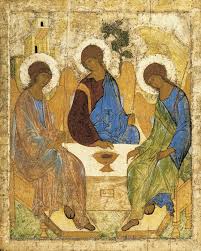
The Athanasian Creed: the first creed in which the equality of the three persons of the Trinity is explicitly stated.


trinitypic

The Athanasian Creed, or Quicunque Vult (also Quicumque Vult), is a Christian statement of belief focused on Trinitarian doctrine and Christology. The Latin name of the creed, Quicumque vult, is taken from the opening words, “Whosoever wishes”. The creed has been used by Christian churches since the sixth century. It is the first creed in which the equality of the three persons of the Trinity is explicitly stated. (Wikipedia)

(1) Whosoever will be saved, before all things it is necessary that he hold the catholic faith;
(2) Which faith except every one do keep whole and undefiled, without doubt he shall perish everlastingly.
(3) And the catholic faith is this: That we worship one God in Trinity, and Trinity in Unity;
(4) Neither confounding the persons, nor dividing the substance.
(5) For there is one Person of the Father, another of the Son and another of the Holy Spirit.
(6) But the Godhead of the Father, of the Son, and of the Holy Spirit is all one, the glory equal, the majesty co-eternal.
(7) Such as the Father is, such is the Son and such is the Holy Spirit.
(8) The Father uncreate, the Son uncreate, and the Holy Spirit uncreate.
(9) The Father incomprehensible, the Son incomprehensible, and the Holy Spirit incomprehensible. (10) The Father eternal, the Son eternal, and the Holy Spirit eternal.
(11) And yet they are not three eternals, but one eternal.
(12) As also there are not three uncreated nor three incomprehensibles, but one uncreated and one incomprehensible.
(13) So likewise the Father is almighty, the Son almighty, and the Holy Spirit almighty;
(14) And yet they are not three almighties, but one almighty.
(15) So the Father is God, the Son is God, and the Holy Spirit is God;
(16) And yet they are not three Gods, but one God.
(17) So likewise the Father is Lord, the Son Lord, and the Holy Spirit Lord;
(18) And yet they are not three Lords, but one Lord.
(19) For like as we are compelled by the Christian verity to acknowledge every person by himself to be God and Lord;
(20) so are we forbidden by the catholic religion to say: There are three Gods or three Lords.
(21) The Father is made of none, neither created nor begotten.
(22) The Son is of the Father alone; not made nor created, but begotten.
(23) The Holy Spirit is of the Father and of the Son; neither made, nor created, nor begotten, but proceeding.
(24) So there is one Father, not three Fathers; one Son, not three Sons; one Holy Spirit, not three Holy Spirits.
(25) And in this Trinity none is afore, nor after another; none is greater, or less than another.
(26) But the whole three persons are co-eternal, and co-equal.
(27) So that in all things, as aforesaid, the Unity in Trinity and the Trinity in Unity is to be worshipped.
(28) He therefore that will be saved must thus think of the Trinity.
(29) Furthermore it is necessary to everlasting salvation that he also believe rightly the incarnation of our Lord Jesus Christ.
(30) For the right faith is that we believe and confess that our Lord Jesus Christ, the Son of God, is God and man.
(31) God of the substance of the Father, begotten before the worlds; and man of the substance of His mother, born in the world.
(32) Perfect God and perfect man, of a reasonable soul and human flesh subsisting.
(33) Equal to the Father as touching His Godhead, and inferior to the Father as touching His manhood.
(34) Who, although He is God and man, yet He is not two, but one Christ.
(35) One, not by conversion of the Godhead into flesh, but by taking of the manhood into God. (36) One altogether, not by the confusion of substance, but by unity of person.
(37) For as the reasonable soul and flesh is one man, so God and man is one Christ;
(38) Who suffered for our salvation, descended into hell, rose again the third day from the dead;
(39) He ascended into heaven, He sitteth on the right hand of the Father, God Almighty;
(40) From thence He shall come to judge the living and the dead.
(41) At whose coming all men shall rise again with their bodies;
(42) And shall give account of their own works.
(43) And they that have done good shall go into life everlasting, and they that have done evil into everlasting fire.
(44) This is the catholic faith, which except a man believe faithfully, he cannot be saved.

An Interview with Daniel B. Wallace on the New Testament Manuscripts – Justin Taylor


An Interview with Daniel B. Wallace on the New Testament Manuscripts – Justin Taylor.

Watch “Saints and Sceptics. Graham Veale” explains the veracity of the resurection and other points, on YouTube