Author / James Ross Kelly

The Beauty of the Infinite: The Aesthetics of Christian Truth by David Bentley Hart–a review | The Russell Kirk Center
The second part of the book is a critical history of western philosophy that starts with Kant and concludes with postmodern thinkers like Gilles Deleuze, Jacques Derrida, and Emmanuel Levinas. According to Hart, these philosophers have remained confined to an ontology of violence in which Kantian antinomies—such as space and time, freedom and necessity—and Hegelian dialectics—in which reality is a conflict between nature and history—dominate philosophical reflection. Such thinkers have trivialized the concretely beautiful for the abstract sublime, thereby closing themselves off to the Christian narrative of beauty and peace. Hart is particularly skeptical of postmodern claims that we have reached “the end of metaphysics,” for the rhetorical claim of the end of metaphysics is simply the introduction of another sort of violent metaphysics.
Polar Bears Living Their Best Life on Abandoned Island in Russia

“Nature always sends you something when you least expect it.”
Source: Polar Bears Living Their Best Life on Abandoned Island in Russia
God Is Not a “He”. The Actual Names of God and Why They Matter | John D Gee
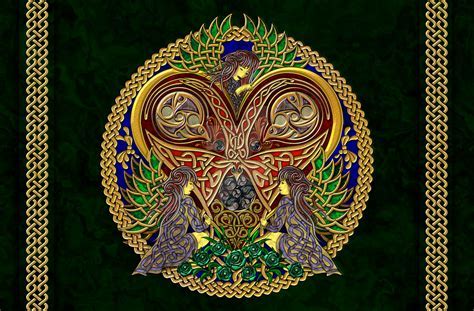
At no time in scripture does the Name of God contain a gender outside of Jesus Christ. God is not a He, that is the consequence of a Patriarchial Society
Source: God Is Not a “He”. The Actual Names of God and Why They Matter | John D Gee
Pacific Yew by James Ross Kelly (HOW TO HEAL THE EARTH Series) | Silver Birch Press

Pacific Yew by James Ross Kelly I was once paid to survey Yew trees in Old Growth forests in Oregon near Crater Lake, as mammoth Douglas fir & White fir covered the landscape, rolling sides of …
Source: Pacific Yew by James Ross Kelly (HOW TO HEAL THE EARTH Series) | Silver Birch Press
Year One of the Biden-Harris Administration – YouTube
10 Reasons To Stop Tithing | Keith Giles
Here are 10 very good reasons to stop tithing your 10% every week:
Source: 10 Reasons To Stop Tithing | Keith Giles
Why is Critical Race Theory So Dangerous? | Tim Suttle

Critical Race Theory actually is dangerous, but not because it’s some radical liberal agenda. CRT is dangerous because it challenges the “I’m not personally racist” excuse, by exposing the ways in which all white people—liberal democrats and conservative republicans alike—benefit from our current systems, simply because they are white.
Source: Why is Critical Race Theory So Dangerous? | Tim Suttle
10 Quick Facts About Christian Universalism | Matthew Distefano

I. The Early Church Were Universalists:
Okay, not all of the early church were Universalists, but a lot of them were. Clement of Alexandria. Origin. Gregory of Nyssa. A bunch of others. As Augustine once put it, “indeed very many.” In fact, out of the 6 major theological schools, 4 taught universal reconciliation, 1 taught conditional immortality (annihilationism), and 1 taught eternal conscious torment.
II. Universalism Wasn’t Heretical for 500 Years:
A lot of people get confused about whether Universalism is heretical or not. They think because some of Origin’s beliefs were rejected, that means universal reconciliation was also rejected. This isn’t quite true. It’s not until the 6th century when Universalism is declared “anathema,” first by the despot Justinian in 543 CE and then at the Fifth Ecumenical Council of Constantinople in 553 CE.
III. The Final Editor of the Nicene Creed Was an Open Universalist
The Nicene Creed is, for many, the standard of what it means to be a Christian. I personally don’t need you to affirm it in order to consider you a Christian, but no one is really asking me these days. Interestingly enough, however, Gregory of Nyssa, one of the final editors of the Creed, was an unabashed Universalist, and yet no one thought it important enough to bring it up before allowing him to be involved in arguably the most important confession in the history of Christianity.
IV. Universalism Never Went Away
While universal reconciliation became a fringe belief after being declared anathema, it never went away. There were always a handful of Christians who kept the tradition alive throughout the Middle Ages, past the Reformation, and on into the modern world.
V. Your Favorite Fiction May Be Influenced by Universalism
I’m not certain that folks like C.S. Lewis or J.R.R. Tolkien were closet Universalists, but they were certainly influenced by a non-closeted one. Heavily so. In fact, both credit George MacDonald as being a great influence on their thinking, and he was not secretive about his Universalism. In addition, beloved novelist Madeleine L’Engle was a Universalist.
VI. Karl Barth Was Probably a Universalist
This is only speculation, but the most influential theologian of the 20th century was perhaps a Universalist. At minimum, Barth’s theology deemed it logically necessary. And while he never outright said it, he was certainly smart and wise enough to know the implications of his Christology.
VII. William Barclay Was a Universalist
This may come as a surprise to many, given how popular his Daily Study Bible commentaries were and still are, but it’s true. William Barclay was an unashamed Universalist, which means millions of Christians worldwide should gather up the sticks and wood and get ready to burn a whole hell of a lot of books.
VIII. Universalism is Biblical
Universalism is not correct simply because it is found in the Bible. Why? Well, aside from the fact that a lot of untrue stuff is found in the Bible, it’s because eternal torment can be found in there, too. Annihilationism is also there. But you can’t deny all the passages about God reconciling the world, about Jesus dragging all to him, about God being “all in all,” and so on. Again, it’s not to say it is necessarily true (because there are also passages about judgment, punishment, and torment), but it is in fact biblical.
IX. Universalism Comes in Many Forms
Contrary to popular belief, Universalism is not synonymous with “new age” or “liberal.” There are liberal Universalists, sure, but there are also Evangelical Universalists like Robin Parry. There are Universalists like Thomas Talbott who are more aligned with Barth or the Reformed tradition. There are Orthodox Universalists like David Bentley Hart. And so on and so forth.
X. Universalists Believe in Hell
This sounds contradictory, but only if you think hell must be everlasting. Many Christian Universalists believe in a hell of sorts. They just believe it serves an ultimate reconciliatory purpose, In other words, while the restorative effects are eternal, the duration is not.
Source: Patheos
 St. John One: One