Why Aren’t More Intellectuals Believers? | RELEVANT Magazine.
Tag / Religion and Spirituality
Stuff Exists—Harold Eberle

Harold R. Eberle
Stuff exists; therefore, there had to be a stuff creator. There comes a time when people should quit arguing and just laugh at stupid ideas— and this includes the atheists’ most cherished belief. I don’t want to be rude; I want to make the obvious obvious. The acceptance of God’s existence is not a blind leap. Just the opposite is true— to not believe in a stuff creator is to be blind to the obvious. It is absurd not to believe in a stuff creator. Of course, we have lost the Western atheists in this discussion because the Scientific Revolution (and the Enlightenment that followed) set up in their minds a dichotomy of faith versus reason. Their definitions of faith and reason exclude God from the realm of reason. In reality, those categories are pure assumptions— false assumptions. Indeed, we cannot prove the existence of God to the atheist who refuses to let go of those assumed categories. In like fashion, we cannot prove the existence of bacteria to a person who refuses to look through a microscope and see the bacteria for himself. If, however, a person is willing to look through a microscope, then we can prove to him the existence of bacteria. Similarly, if an atheist is willing to look at the world, outside of his present dichotomous framework, then we can prove the existence of God. Here it is: stuff exists, so a stuff creator exists (or at least existed in the past). Atheistic readers may object and quickly argue that this is no argument for the existence of the Christian God. Indeed, I have not yet stated anything about this creator’s nature, and to argue against the Christian God at this point is to change the subject. It is to dodge the bullet, to hide behind a smoke screen. So long as we define God as the stuff creator, it is absurd not to accept God’s existence.
Eberle, Harold (2009-12-28). Christianity Unshackled: Are You A Truth Seeker (pp. 81-82). Destiny Image, Inc.. Kindle Edition.
G. K. Chesterton on Comparative Religion

Comparative religion is very comparative indeed. That is, it is so much a matter of degree and distance and difference that it is only comparatively successful when it tries to compare. When we come to look at it closely we find it comparing things that are really quite incomparable. We are accustomed to see a table or catalogue of the world’s great religions in parallel columns, until we fancy they are really parallel. We are accustomed to see the names of the great religious founders all in a row: Christ; Mahomet; Buddha; Confucius. But in truth this is only a trick, another of these optical illusions by which any objects may be put into a particular relation by shifting to a particular point of sight. Those religions and religious founders, or rather those whom we choose to lump together as religions and religious founders, do not really show any common character. The illusion is partly produced by Islam coming immediately after Christianity in the list; as Islam did come after Christianity and was largely an imitation of Christianity. But the other eastern religions, or what we call religions, not only do not resemble the Church but do not resemble each other. When we come to Confucianism at the end of the list, we come to something in a totally different world of thought. To compare the Christian and Confucian religions is like comparing a theist with an English squire or asking whether a man is a believer in immortality or a hundred-per-cent American. Confucianism may be a civilisation but it is not a religion.
Chesterton, G. K. (2012-12-19). Everlasting Man (Kindle Locations 1165-1176). . Kindle Edition.
Didache 1

From time to time I will be making entries on the Didache. What is the Didache? Simply stated, it is the writings of the apostles about the teaching of Jesus. You might even call it the quick “Quick Help” version of the red letter words of our Lord. The Didache has way of cutting to the heart of the teachings of Jesus. The apostles set this forth as a manual for Christians, and we would do well to make it our guide as well. The translation of the text that I am using was translated and edited by Tony Jones, and is under the protection of a Creative Commons license. I invite your comments
There Are Two Ways
There are two ways, one of life and one of death! And there is a great difference between the two ways. The way of life is this: First, you shall love God…
View original post 465 more words
Hans Rosling: Religions and babies – YouTube
[official] Miracles: Is Belief in the Supernatural Irrational? With John Lennox at Harvard – YouTube
The Original Women’s Liberation Movement – YouTube
We need not wait for Him. He is waiting for us.
William Graham Scroggie
We need not wait for Him. He is waiting for us. In this place and moment He is offering Himself to us as the source of strength and satisfaction, as well as the place for safety, and if we would but receive Him, fear will be exchanged for trust, doubt for certainty, ineffectiveness for success, defeat for victory, and sadness for joy. We have tried trying and have failed; why not now try trusting? We have wrought in our own strength and have found it to be weakness; why not now take hold of His strength? The faith we once exercised from passion of divine life, let us now exercise for the experience of abounding life; and as Christ met us then, so He meets us now.
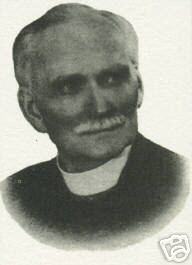
W. Graham Scroggie, Land of Life of Rest, London 1950 pp 82-84 [study of the Book of Joshua]
Hell–from The Problem of Pain, by C.S. Lewis
I am not going to try to prove the doctrine tolerable. Let us make no mistake; it is not tolerable. But I think the doctrine can be shown to be moral, by a critique of the objections ordinarily made, or felt, against it.

C.S. Lewis
First, there is an objection, in many minds, to the idea of retributive punishment as such. This has been partly dealt with in a previous chapter. It was there maintained that all punishment became unjust if the ideas of ill-desert and retribution were removed from it; and a core of righteousness was discovered within the vindictive passion its self, in the demand that the evil man must not be left perfectly satisfied with his own evil, that it must be made to appear to him what it rightly appears to others—evil. I said that Pain plants the flag of truth within a rebel fortress. We were then discussing pain which might still lead to repentance. How if it does not—if no further conquest than the planting of the flag ever takes place?
Let us try to be honest with ourselves. Picture to yourself a man who has risen to wealth or power by a continued course of treachery and cruelty, by exploiting for purely selfish ends the noble motions of his victims, laughing the while at their simplicity; who, having thus attained success, uses it for the gratification of lust and hatred and finally parts with the last rag of honour among thieves by betraying his own accomplices and jeering at their last moments of bewildered disillusionment. Suppose, further, that he does all this, not (as we like to imagine) tormented by remorse or even misgiving, but eating like a schoolboy and sleeping like a healthy infant—a jolly, ruddy-cheeked man, without a care in the world, unshakably confident to the very end that he alone has found the answer to the riddle of life, that God and man are fools whom he has got the better of, that his way of life is utterly successful, satisfactory, unassailable. We must be careful at this point. The least indulgence of the passion for revenge is very deadly sin. Christian charity counsels us to make every effort for the conversion of such a man: to prefer his conversion, at the peril of our own lives, perhaps of our own souls, to his punishment; to prefer it infinitely.
But that is not the question. Supposing he will not be converted, what destiny in the eternal world can you regard as proper for him? Can you really desire that such a man, remaining what he is (and he must be able to do that if he has free will) should be confirmed forever in his present happiness—should continue, for all eternity, to be perfectly convinced that the laugh is on his side? And if you cannot regard this as tolerable, is it only your wickedness—only spite—that prevents you from doing so? Or do you find that conflict between Justice and Mercy, which has sometimes seemed to you such an outmoded piece of theology, now actually at work in your own mind, and feeling very much as if it came to you from above, not from below? You are moved not by a desire for the wretched creature’s pain as such, but by a truly ethical demand that, soon or late, the right should be asserted, the flag planted in this horribly rebellious soul, even if no fuller and better conquest is to follow. In a sense, it is better for the creature its self, even if it never becomes good, that it should know its self a failure, a mistake. Even mercy can hardly wish to such a man his eternal, contented continuance in such ghastly illusion. Thomas Aquinas said of suffering, as Aristotle had said of shame, that it was a thing not good in its self; but a thing which might have a certain goodness in particular circumstances. That is to say, if evil is present, pain at recognition of the evil, being a kind of knowledge, is relatively good; for the alternative is that the soul should be ignorant of the evil, or ignorant that the evil is contrary to its nature, ‘either of which’, says the philosopher, ‘is manifestly bad’.* And I think, though we tremble, we agree.
The demand that God should forgive such a man while he remains what he is, is based on a confusion between condoning and forgiving. To condone an evil is simply to ignore it, to treat it as if it were good. But forgiveness needs to be accepted as well as offered if it is to be complete: and a man who admits no guilt can accept no forgiveness.
I have begun with the conception of Hell as a positive retributive punishment inflicted by God because that is the form in which the doctrine is most repellent, and I wished to tackle the strongest objection. But, of course, though Our Lord often speaks of Hell as a sentence inflicted by a tribunal, He also says elsewhere that the judgement consists in the very fact that men prefer darkness to light, and that not He, but His ‘word’, judges men** We are therefore at liberty—since the two conceptions, in the long run, mean the same thing—to think of this bad man’s perdition not as a sentence imposed on him but as the mere fact of being what he is. The characteristic of lost souls is ‘their rejection of everything that is not simply themselves’.*** Our imaginary egoist has tried to turn everything he meets into a province or appendage of the self. The taste for the other, that is, the very capacity for enjoying good, is quenched in him except in so far as his body still draws him into some rudimentary contact with an outer world. Death removes this last contact. He has his wish—to lie wholly in the self and to make the best of what he finds there. And what he finds there is Hell.
1 Summa Theol, I, IIae, Q. xxxix, Art. 1.
** John 3:19; 12:48.
*** See von Hügel, Essays and Addresses, 1st series, What do we mean by Heaven and Hell?
Lewis, C. S. (2009-05-28). The Problem of Pain (p.123- 125). Harper Collins, Inc.. Kindle Edition.
from The Problem of Pain, by C.S. Lewis
From the moment a creature becomes aware of God as God and of it’self as self, the terrible alternative of choosing God or self for the centre is opened to it. This sin is committed daily by young children and ignorant peasants as well as by sophisticated persons, by solitaries no less than by those who live in society: it is the fall in every individual life, and in each day of each individual life, the basic sin behind all particular sins: at this very moment you and I are either committing it, or about to
C.S. Lewis
commit it, or repenting it. We try, when we wake, to lay the new day at God’s feet; before we have finished shaving, it becomes our day and God’s share in it is felt as a tribute which we must pay out of ‘our own’ pocket, a deduction from the time which ought, we feel, to be ‘our own’.
Lewis, C. S. (2009-05-28). The Problem of Pain (p. 70). Harper Collins, Inc.. Kindle Edition.
 St. John One: One