Tag / Christianity
The Spirit of Truth (John 16:12-15)–William Barclay

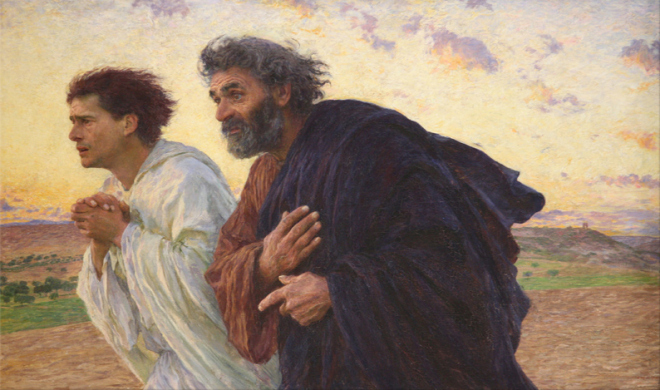
Eugene Burnand
John 16:12-15 “I have many things to say to you, but you cannot bear them now. When the Spirit of Truth has come, he will lead you into all the truth. For he will not speak on his own authority and out of his own knowledge, but he will speak all that he will hear, and he will tell you of the things to come. He will glorify me, for he will take of the things which belong to me, and will tell you of them. All things that the Father has are mine. That is why I said that the Spirit will take of the things which belong to me, and tell them to you.”
To Jesus the Holy Spirit is the Spirit of Truth, whose great work is to bring God’s truth to men. We have a special name for this bringing of God’s truth to men; we call it revelation, and no passage in the New Testament shows us what we might call the principles of revelation better than this one.
(i) Revelation is bound to be a progressive process. Many things Jesus knew he could not at that moment tell his disciples, because they were not yet able to receive them. It is only possible to tell a man as much as he can understand. We do not start with the binomial theorem when we wish to teach a boy algebra; we work up to it. We do not start with advanced theorems when we wish to teach a child geometry; we approach them gradually. We do not start with difficult passages when we teach a lad Latin or Greek; we start with the easy and the simple things. God’s revelation to men is like that. He teaches men what they are able and fit to learn. This most important fact has certain consequences.
(a) It is the explanation of the parts of the Old Testament which sometimes worry and distress us. AT that stage they were all of God’s truth that men could grasp. Take an actual illustration—in the Old Testament there are many passages which call for the wiping out of men and women and children when an enemy city is taken. At the back of these passages there is the great thought that Israel must not risk the taint of any heathen and lower religion. To avoid that risk, those who do not worship the true God must be destroyed. That is to say, the Jews had at that stage grasped the fact that the purity of religion must be safeguarded; but they wished to preserve that purity by destroying the heathen. When Jesus came, men came to see that the way to preserve that purity is to convert the heathen. The people of the Old Testament times had grasped a great truth, but only one side of it. Revelation has to be that way; God can reveal only as much as a man can understand.
(b) It is the proof that there is no end to God’s revelation. One of the mistakes men sometimes make is to identify God’s revelation solely with the Bible. That would be to say that since about A.D. 120, when the latest book in the New Testament was written, God has ceased to speak. But God’s Spirit is always active; he is always revealing himself. It is true that his supreme and unsurpassable revelation came in Jesus; but Jesus is not just a figure in a book, he is a living person and in him God’s revelation goes on. God is still leading us into greater realization of what Jesus means. He is not a God who spoke up to A.D. 120 and is now silent. He is still revealing his truth to men.
(ii) God’s revelation to men is a revelation of all truth. It is quite wrong to think of it as confined to what we might call theological truth. The theologians and the preachers are not the only people who are inspired. When a poet delivers to men a great message in words which defy time, he is inspired. When H. F. Lyte wrote the words of Abide with me he had no feeling of composing them; he wrote them as to dictation. A great musician is inspired. Handel, telling of how he wrote The Hallelujah Chorus, said: “I saw the heavens opened, and the Great White God sitting on the Throne.” When a scientist discovers something which will help the world’s toil and make life better for men, when a surgeon discovers a new technique which will save men’s lives and ease their pain, when someone discovers a new treatment which will bring life and hope to suffering humanity, that is a revelation from God. All truth is God’s truth, and the revelation of all truth is the work of the Holy Spirit.
(iii) That which is revealed comes from God. He is alike the possessor and the giver of all truth. Truth is not men’s discovery; it is God’s gift. It is not something which we create; it is something already waiting to be discovered. At the back of all truth there is God.
(iv) Revelation is the taking of the things of Jesus and revealing their significance to us. Part of the greatness of Jesus is his inexhaustibleness. No man has ever grasped all that he came to say. No man has fully worked out all the significance of his teaching for life and for belief, for the individual and for the world, for society and for the nation. Revelation is a continual opening out of the meaning of Jesus.
There we have the crux of the matter. Revelation comes to us, not from any book or creed, but from a living person. The nearer we live to Jesus, the better we will know him. The more we become like him, the more he will be able to tell us. To enjoy his revelation we must accept his mastery.
Favorite Miracle–Bill Johnson
The Future of Man–Pierre Teilhard de Chardin
It is perfectly possible that in the general spectrum of Life the line ending in Man was originally no more than one psychic radiation among countless others. But it happened, for some reason of hazard, position or structure, that this sole ray (this is an experiential fact) among the millions contrived to pass the critical barrier separating the Unreflective from the Reflective—that is to say, to enter the sphere of intelligence, foresight and freedom of action. Because it did so (and although in a sense, I must repeat, this ray was only one attempt among many) the whole essential stream of terrestrial biological evolution is now flowing through the breach which has been made. The cosmic tide may at one time have seemed to be immobilized, lost in the vast reservoir of living forms; but through the ages the level of consciousness was steadily rising behind the barrier, intil finally, by means of the human brain (the most ‘centro-complex’ organism yet achieved to our knowledge in the universe) there has occurred, at a first ending of time, the breaking of the dykes, followed by what is now in progress, the flooding of Thought over the entire surface of the biosphere.
Thus regarded, everything in history of the world takes shape, and what is better, everything goes on.
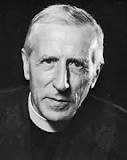
from an Essay, “Turmoil or Genesis?” by
Pierre Teilhard de Chardin, in The Future of Man. 1969 Harper Torchbook, pp 228-228
Nature of God by Graham Cooke part 2
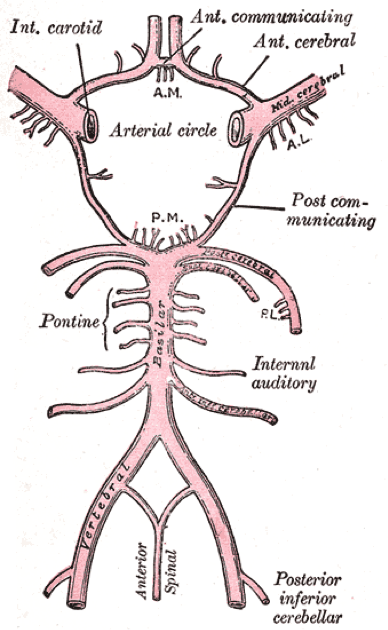
Reasons To Believe : Redundant Blood Supply to the Brain Shows Good Engineering
Hlengiwe Mhlaba- Living Waters
Let Your living water flow over my soul,
Let your Holy Spirit come and take control,
In every situation that has troubled my mind,
All my cares and burdens unto you I roll
All my cares and burdens unto you I roll
(Repeat)
Jesus, Jesus, Jesus.
(Call unto the son of the living God)
Jesus, Jesus, Jesus.
(Call unto the Spirit of the living God)
Spirit, Spirit, Spirit
(Call unto the mighty one who sits on the throne, Father)
Father, Father, Father
(Verse 1)
All my cares and burdens unto you I roll x6
Life Giving Water
From Theism to Christianity–C.S.Lewis
Jesus and Muhammad Words, Actions, Teachings Contrasted
from: Jesus and Muhammad Contrasted.
Jesus and Muhammad
Words, Actions, Teachings
Contrasted
By William J. Federer
What motivates fundamental Muslims to violence?
Much effort has gone into answering this. Muslim apologists are quick to point out Christians have also committed violence. Secularists suggest anybody who believes in God is prone to violence, conveniently ignoring the atheistic killings of the French Revolution, Stalin’s purges and Mao Tse-tung’s Cultural Revolution.
In an attempt to uncover motivations, founders of the world’s two largest religions can be compared. According to the http://www.CIA.gov World Factbook, the world’s 6.5 billion people are 33.32 percent Christian and 21.01 percent Muslim.
If a computer acts up, the technician resets it to the default settings it had when it left the factory. If followers of a religion act up, one should examine the default settings the religion had when it left its founder.
One can examine the life of Jesus from the four Gospels.
One can examine the life of Muhammad from the Quran, Hadith and sources like the Sirat Rasul Allah.
The Quran is a collection of private revelations Muhammad received between A.D. 610-632. Conflicting versions were passed down orally until Caliph Uthman standardized them around A.D. 650.
The Hadith are stories about Muhammad passed down orally until Caliph Umar II began collecting them around A.D. 717-720.
The Sirat Rasul Allah, or “The Life of the Prophet of Allah,” was written by Ibn Ishaq between A.D. 707-773 and preserved in copies by Ibn Hisham (d. 833) and al-Tabari (838-923). In 1861, Sir William Muir published an English translation, “The Life of Mahomet.” Edward Rehatsek’s translation, edited by Michael Edwardes, was presented to the Royal Asiatic Society of London in 1898. Oxford University published Alfred Guillaume’s translation in 1955.
A review of these resources reveal:
* Jesus was a religious leader.
* Muhammad was a religious leader and a military leader.
* Jesus never killed anyone.
* Muhammad killed an estimated 3,000 people, including beheading 700 Jews of the Banu Qurayza tribe in Medina, A.D. 627:
“The Jews surrendered and the apostle confined them in Medina. Then the apostle went out to the market and dug trenches in it. Then he sent for them and struck off their heads in those trenches as they were brought out to him in batches. … There were 600 or 700 in all, though some put the figure as high as 800 or 900. As they were being taken out in batches to the apostle they asked Ka’b what he thought would be done with them. He replied, ‘Will you never understand? Don’t you see that the summoner never stops and those who are taken away do not return? By Allah it is death!’ This went on until the apostle made an end of them.” (Sirat Rasul Allah)
* Jesus never owned slaves.
* Muhammad received a fifth of the prisoners taken in battle, including women. (Sura 8:41)
“Muhammad gave command and the heads of the two chiefs were severed from their bodies. The scene of torture and bloodshed was hardly ended when Muhammad sent Bilal to fetch the wife of Kinana. … He cast his mantle around her in token that she was to be his own.” (Conquest of Khaybar, A.D. 628, Sirat Rasul Allah)
“The apostle occupied the Jewish forts taking prisoners as he went. Among these were Safiya, the wife of Kinana. The apostle chose Safiya for himself. The other prisoners were distributed among the Muslims.” (Sirat Rasul Allah)
“Married women are forbidden unto you, except those whom your right hands possess (taken in battle.)” (Sura 4:24)
* Jesus never married.
* Muhammad had many wives.
“Anas said, ‘The prophet used to visit all his wives in an hour round, during the day and night and they were 11 in number.’ I asked Anas, ‘Had the prophet the strength for it?’ Anas replied, ‘We used to say that the prophet was given the strength of 30 (men).'” (Hadith Sahih al-Bukhari, Vol. 1, Bk. 5, No. 268)
“Muhammad said: ‘Woman can be married for religion, her fortune, or her beauty. So marry one for the religion.'” (Abu Issa al-Tarmidi, Sunan al-Tarmidi, Medina n.d., p.275, B: 4, H:1092)
“Prophet, we have made lawful to you the slave girls whom Allah has given you as booty.” (Sura 33:50)
When Muhammad’s behavior is reviewed, Muslim scholars point out that King David was also a prophet yet he killed people, owned slaves and had many wives.
The response is still that Jesus never killed anyone, never owned slaves and never married. David only wanted a small piece of land. There is no Bible command for Jews to subdue the world.
* Jesus never forced followers to continue believing. After Jesus made a difficult saying, “many of his disciples went back and walked no more with him. Then Jesus said to the twelve, ‘Will ye also go away?’ Then Simon Peter answered him, ‘Lord, to whom shall we go? Thou hast the words of eternal life.'” (John 6:31-69)
* Muhammad forced followers to continue believing, “Whoever changed his Islamic religion, then kill him.” (Hadith al-Bukhari, Vol. 9, Bk. 84, No. 57)
* Jesus taught God was our Father (Matthew 6:10).
* Muhammad taught it was blasphemy to call Allah your father (Sura 5:18)
* Jesus taught man was made in God’s image. (Matthew 22:20, ref. Gen. 1:26-27)
* Muhammad taught Allah has no image. (Sura 42:11, Sura 112:4)
* Jesus taught “forgive those who trespass against you.” (Matthew 6:10-15)
* Muhammad taught to avenge trespasses against your honor, family or religion.
“Narrated Anas bin Malik: ‘On the day of the Conquest, the Prophet entered Mecca, wearing a helmet on his head. When he took it off, a man came and said, “Ibn Khatal is clinging to the curtain of the Ka’ba.” The Prophet said, “Kill him.”‘” (Hadith Sahih al-Bukhari Vol. 5, Book 59, No. 582)
“Ibn Khatal … had two slave girls who used to sing for him and for his companions songs full of abuse of the Prophet. The Prophet’s instructions specified that the two slave girls should also be killed. Another (to be kiilled) was al-Huwayrith Nuqaydh Wahb Qusayy, one of those who used to insult him in Mecca.” (Sirat Rasul Allah)
* Jesus never tortured anyone.
* Muhammad tortured the chief of a Jewish tribe.
“Kinana had been guardian of the tribe’s treasures, and he was brought before the apostle, who asked where they were hidden. But Kinana refused to disclose the place. The apostle of Allah handed him over to al-Zubayr, saying, ‘Torture him until he tells what he knows’, and al-Zubayr kindled a fire on his chest so that he almost expired; then the apostle gave him to Muhammad b. Maslama, who struck off his head.” (Sirat Rasul Allah)
* Jesus did not retaliate when violence was committed against him, saying “Father, forgive them.” (Luke 23:34)
* Muhammad retaliated when violence was committed against him, ordering the death of his enemies.
“Muhammad sent Abdullah to use diplomacy to gain an opportunity to assassinate Sofyan. Abdullah went forth, pretending to be on his Sofyan’s side, and when the moment was right, cut off his head. He carried it to Muhammad, who was in the Mosque in Medina. Muhammad was so gratified, he gave the assassin his staff, saying: ‘This shall be a token betwixt you and me on the day of resurrection. Verily, few on that day shall have anything to lean upon.'” (Sirat Rasul Allah).
“Ibn Sa’d Tabaqat reported: ‘The apostle of Allah entered through Adhakhir into Mecca. He ordered six men and four women to be killed.” (Kitab al-Tabaqat, written by Ibn Sa’d (A.D. 745-845), Vol. 2, p. 168.)
* Following Jesus was voluntary, from the inside out.
* Following Muhammad could be coerced, from the outside in.
“Fight those who believe not in Allah nor the Last Day, nor hold that forbidden which hath been forbidden by Allah and His Messenger, nor acknowledge the religion of Truth, (even if they are) of the People of the Book, until they pay the Jizya with willing submission and feel themselves subdued.” (Sura 9:29)
* A martyr in Christian and Jewish thought is one who dies for his faith.
* A martyr in Islamic thought is one who dies for his faith while killing infidels.
“Narrated Abu Huraira: ‘The Prophet said, “The person who participates in (holy battles) in Allah’s cause and nothing compels him to do so except belief in Allah and His Apostles, will be recompensed by Allah either with a reward or booty (if he survives) or will be admitted to Paradise (if he is killed in the battle as a martyr).”‘”(Hadith al-Bukhari Vol 1, Bk 2, #35)
* Christianity teaches God wants a personal relationship with each individual.
* Islam teaches individuals cannot have a personal relationship with Allah, as he is transcendent and unknowable.
* Jesus’ religion is known for forgiveness and love.
* Muhammad’s religion is known for obedience and fear.
*None of Jesus’ Apostles led armies. A village did not receive Jesus “and when his disciples James and John saw this, they said, ‘Lord, wilt thou that we command fire to come down from heaven and consume them, even as Elias did?’ But he turned and rebuked them, and said, ‘Ye know not what manner of spirit ye are of. For the Son of man is not come to destroy men’s lives, but to save them.'” (Luke 9:52-56)
* All of the caliphs who followed Muhammad led armies. (Caliphs Abu Bakr, Umar, Uthman, Ali, Muawiyya, the Umayyads, the Abbasids, etc.)
* In the first 300 years of Christianity, there were 10 major Roman persecutions, and Christians were fed to lions in the Coliseum. Never did Christians lead an armed resistance against those who attacked them.
* In the first 300 years of Islam, Muslim armies conquered Arabia, Persia, the Holy Land, North Africa, Spain, Southern France, Central Africa, and invaded vast areas of Asia and Asia Minor.
Fighting is inconsistent with Jesus’ example but not Muhammad’s, as the Sirat Rasul Allah records Muhammad personally led 27 raids, including Battle of Badr, 624 AD; Battle of Uhud and expulsion of Banu Nadir, 625 AD; Attack on Banu Mustaliq, 626 AD; Battle of the Trench and killing Banu Qurayza, 627 AD; Battle of Khaybar, 628 AD; Battle of Mu’tah, 629 AD; Conquest of Mecca, Battle of Hunayn, Battle of Auras and Siege of al-Ta’if, where Mohammed used a catapult, 630 AD; Battle of Tabouk, Subjugation of Banu Thaqif (Yemen) and subjugation of Ghassanids (Arab Christians), 631 AD.
Jesus’ teaching on how to treat enemies:
* Love your enemies, bless them that curse you, do good to them that hate you, pray for them which despitefully use you (Matthew 5:44).
* Resist not evil (Matthew 5:39).
* If someone strikes you on one cheek, turn to them the other (Matthew 5:39).
* If someone takes your coat, give them your shirt (Matthew 5:40).
* If someone make you carry something one mile, carry it two (Matthew 5:41).
* Forgive and you shall be forgiven (Matthew 6:14).
* Judge not, that ye be not judged (Matthew 7:1).
* Blessed are the peacemakers (Matthew 5:9).
* Blessed are the merciful, for they shall obtain mercy (Matthew 5:7).
* Ye have heard that it was said, Thou shalt not kill, but I say who ever is angry with his brother is in danger of the judgment (Matthew 5:21-22).
* Treat others the same way you want them to treat you (Luke 6:27-36).
* Feed the hungry, clothe the naked, visit the sick, whatever you do to the very least you have done unto me (Matthew 25:40).
Muhammad’s teaching on how to treat enemies:
* Infidels are your sworn enemies (Sura 4:101).
* Be ruthless to the infidels (Sura 48:29).
* Make war on the infidels who dwell around you (Sura 9:123, 66:9).
* Fight those who believe not in Allah nor the Last Day (Sura 9:29).
* Strike off the heads of infidels in battle (Sura 47:4).
* If someone stops believing in Allah, kill him (al-Bukhari 9:84:57).
* Take neither the Jews nor the Christians for your friends (Sura 5:51, 60:13).
* Never be a helper to the disbelievers (Sura 28:86).
* Kill the disbelievers wherever we find them (Sura 2:191).
* No Muslim should be killed for killing an infidel (al-Bukhari 1:3:111).
* The only reward of those who make war upon Allah and His messenger will be that they will be killed or crucified, or have their hands and feet on alternate sides cut off, or will be expelled out of the land (Sura 5:33).
What motivates fundamental Muslims to violence?
Where Jesus was a religious leader, Muhammad was a religious leader and a military leader, thus the effort to separate the militant aspect of Islam from the religious aspect is an attempt to split Muhammad.
The closer one follows the example of Jesus, the more peaceful is one’s motivation.
The closer one follows example of Muhammad, the more militant is one’s motivation