http://www.bridgewaychurch.org/messageaudio/2015/3/15/stand-alone-message

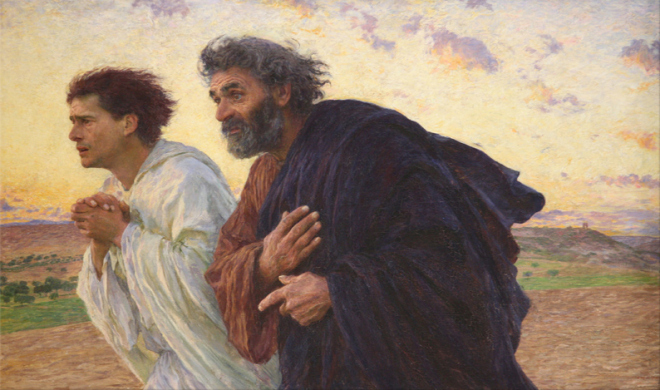
HeavenQuest is based on the original work of John Bunyan and his 1678 allegorical masterpiece, The Pilgrim’s Progress.
If God wanted something different than family He would have asked you to call Him something different than Father.
Leif Hetland
 John 10:7-10
10:7-10 So Jesus said to them again: “This is the truth I tell you—I am the door of the sheep. All who came before me are thieves and robbers, but the sheep did not listen to them. I am the door. If any man enter in through me, he will be saved, and he will go in and out, and he will find pasture. The thief comes only to kill and to steal and to destroy; I am come that they might have life, and that they might have it more abundantly.”

William Barclay 1907-1978
The Jews did not understand the meaning of the story of the Good Shepherd. So Jesus, plainly and without concealment, applied it to himself.
He began by saying: “I am the door.” In this parable Jesus spoke about two kinds of sheep-folds. In the villages and towns themselves there were communal sheep-folds where all the village flocks were sheltered when they returned home at night. These folds were protected by a strong door of which only the guardian of the door held the key. It was to that kind of fold Jesus referred in Jn 10:2-3. But when the sheep were out on the hills in the warm season and did not return at night to the village at all, they were collected into sheep-folds on the hillside. These hillside sheep-folds were just open spaces enclosed by a wall. In them there was an opening by which the sheep came in and went out; but there was no door of any kind. What happened was that at night the shepherd himself lay down across the opening and no sheep could get out or in except over his body. In the most literal sense the shepherd was the door.
That is what Jesus was thinking of when he said: “I am the door.” Through him, and through him alone, men find access to God. “Through him,” said Paul, “we have access to the Father” (Eph 2:18). “He,” said the writer to the Hebrews, “is the new and living way” (Heb 10:20). Jesus opens the way to God. Until Jesus came men could think of God only as, at best, a stranger and as, at worst, an enemy. But Jesus came to show men what God is like, and to open the way to him. He is the door through whom alone entrance to God becomes possible for men.
To describe something of what that entrance to God means, Jesus uses a well-known Hebrew phrase. He says that through him we can go in and come out. To be able to come and go unmolested was the Jewish way of describing a life that is absolutely secure and safe. When a man can go in and out without fear, it means that his country is at peace, that the forces of law and order are supreme, and that he enjoys perfect security. The leader of the nation is to be one who can bring them out and lead them in (Num 27:17). Of the man who is obedient to God it is said that he is blessed when he comes in and blessed when he goes out (Deut 28:6). A child is one who is not yet able by himself to go out and to come in (1 Ki 3:7). The Psalmist is certain that God will keep him in his going out and in his coming in (Ps 121:8). Once a man discovers, through Jesus Christ, what God is like, a new sense of safety and of security enters into life. If life is known to be in the hands of a God like that, the worries and the fears are gone.
Jesus said that those who came before him were thieves and robbers. He was of course not referring to the great succession of the prophets and the heroes, but to these adventurers who were continually arising in Palestine and promising that, if people would follow them, they would bring in the golden age. All these claimants were insurrectionists. They believed that men would have to wade through blood to the golden age. At this very time Josephus speaks of there being ten thousand disorders in Judaea, tumults caused by men of war. He speaks of men like the Zealots who did not mind dying themselves and who did not mind slaughtering their own loved ones, if their hopes of conquest could be achieved. Jesus is saying: “There have been men who claimed that they were leaders sent to you from God. They believed in war, murder, assassination. Their way only leads for ever farther and farther away from God. My way is the way of peace and love and life; and if you will only take it, it leads ever closer and closer to God.” There have been, and still are, those who believe that the golden age must be brought in with violence, class warfare, bitterness, destruction. It is the message of Jesus that the only way that leads to God in heaven and to the golden age on earth is the way of love.
Jesus claims that he came that men might have life and might have it more abundantly. The Greek phrase used for having it more abundantly means to have a superabundance of a thing. To be a follower of Jesus, to know who he is and what he means, is to have a superabundance of life. A Roman soldier came to Julius Caesar with a request for permission to commit suicide. He was a wretched dispirited creature with no vitality. Caesar looked at him. “Man,” he said, “were you ever really alive?” When we try to live our own lives, life is a dull, dispirited thing. When we walk with Jesus, there comes a new vitality, a superabundance of life. It is only when we live with Christ that life becomes really worth living and we begin to live in the real sense of the word.

1—I made a consecration of my life that I had never made before, when I saw that it was possible for me to so yield my life, my body, as a living sacrifice – a sacrifice so consecrated to Him that the name of God Almighty may be glorified through the life of a sinner saved by the grace of God. – Kathryn Kuhlman
2—The Heavenly Father does not ask for golden vessels. He does not ask for silver vessels. God asks for yielded vessels – those who will submit their will to the will of the Father. And the greatest human attainment in all the world is for a life to be so surrendered to Him that the name of God Almighty will be glorified through that life. – Kathryn Kuhlman
3—Remember something, God never permitted a difficulty to come into our life without also giving us the ability to handle it. God has provided us with every faculty. He has given us the power that we need for living victoriously. It is a fact that everyone of us down deep has what it takes to successfully meet whatever life brings. – Kathryn Kuhlman
4—It isn’t a matter of being worthy, for no man is worthy! It isn’t our perfection or our penitence, or a matter of our labors to reach the place of perfection or worthiness. It is God’s grace alone! – Kathryn Kuhlman
5—As an example, let me share a memorable experience I had as a young child. It was a hot Saturday night and Papa and I were about to enter the meat market situated on the main street of Concordia, Missouri. The two of us were at the doorway when suddenly a man, noticeably very drunk, shoved Papa back. I saw my father step aside and hold the door open while the stranger staggered into the market. Standing nearby was a man watching the whole scene. Knowing that Papa was mayor of Concordia, he asked, “Joe Kuhlman, are you going to let him get away with that?” I was still holding onto Papa’s hand when I saw him smile and answer: “I can afford to let him go first.” That was a lesson in love and humility that I have never forgotten. – Kathryn Kuhlman
6—Who can fathom the love of God? He loved us while we were yet sinners. You may be a sinner reading these words right now. You may have committed every sin in the book and broken every commandment of God. Yet, the Lord continues to love you. He has not cast you aside. – Kathryn Kuhlman
7— I surrendered unto Him all there was of me; everything! Then for the first time I realized what it meant to have real power. – Kathryn Kuhlman
8—I swell with pride when I can face the whole world and say, “I belong to Him. The mighty God of this universe is my heavenly Father. I’m His by adoption. I’m a joint-heir with His Wonderful Son’ In that moment when you’re prone to be depressed, when you find yourself in the spirit of bondage, look up. just pause and remember to whom you belong. – Kathryn Kuhlman
9—When Jesus hung on the cross, looking upon His enemies as He was being crucified, He said: “Father, forgive them for they know not what they do.” That is God’s love, the love of heaven paying earth a little visit through the Person of Jesus. – Kathryn Kuhlman
10—Beloved, the secret of victory over fear is very simple – it is trusting Jesus! One of the most frequent expressions on His lips throughout His life here on earth was, “Fear not!” So look up! Faith in God has in times past “subdued kingdoms, wrought righteousness, obtained promises, stopped the mouths of lions, quenched the violence of fire, escaped the edge of the sword…turned to flight the armies of the aliens” (Hebrews 11:33,34), and FAITH CAN DO IT AGAIN! You are not only a conqueror, you can be more than a conqueror through Him Who loves you! – Kathryn Kuhlman
an exhortation..as
a lay Christian examines his faith..
By James Ross Kelly
So again, how does any one judge this veracity? Some say it is truth in that it is mythological truth. I must say adamantly I know I know Him, not the myth of Him. Myth operates as powerful archetype in the human psyche. However the Gospel of John and all the Gospels are presented not as mythos. There is a sense that it could be viewed as a real myth (cf., C.S. Lewis through the Shadowlands, Sibley). Still it comes to us as a story. A story that is told as a true story. It survives as a compelling story from ancient times. Yet again, there seems to be a media friendly secular scholastic conjecture that there was an epistemological cabal involved. One which in a carefully orchestrated fiction was designed to belie and foster a following. Well if so, the purveyors of it all paid with their lives and made no money in doing so, nor any material gain whatsoever. Too many things stack up that surge against this secular conceit.
The reality is that the message spread of the good news that a Savior came to earth and died for all people on the planet throughout the Judeo/Roman/Hellenistic Mediterranean in less than twenty years. All the time the message was accompanied by the same miracles that were evidenced during Christ Jesus’s lifetime— and all done mostly through working class men of the times. The letters of the New Testament were written to various Mediterranean cultures and appeared synchronously through all the trade routes with small congregations of believers in their wake. Matthew was written to the Jewish congregations. Mark mostly likely is an account given from Peter to a disciple named John Mark and was for a population in Rome. Luke was written from a Greek view point by a Physician who traveled with Paul who interviewed the principals involve with the story. Many of these men had seen, walked with, and touched the Christ. All three may have drawn from the extant Gospel of Mark or another now lost early Manuscript referred to by scholars as ‘Q’ (meaning source).3 A manuscript which may have been from Peter’s own hand. John was written later. Do they differ? Yes, slightly. . As evidenced by John’s setting the record straight about who, got to the tomb first. But in context they do not differ in content and purpose. Jesus is the Messiah by all Gospel accounts. Attempts to make it other than that, by some form of “Christological” fabrication on the part of early or later believers comes from a doubting world that has not given the Gospel message its objective due—as simply being exactly what it is purported to be—Good News! It purports to be the Good News of a message from God for the salvation of mankind! All mankind for all time! There is nothing quite like this. A critical examination of the Gospels for what they are as “a story” and a truly objective look at the Archeological record of the manuscripts themselves has an unmistakable presentiment that there has been no other phenomenon like it.
Some have suggested that the disciples, during the years following Jesus death, simply fabricated their accounts of Jesus as the advent of an ecclesiastical cabal. These critics say that the disciples, in an attempt to enhance the authority of Jesus Christ, then published the story that Jesus “claimed to be,” God and was resurrected. Anyone should consider the historical evidence fairly before giving any credence to this conjecture of history. First, the apostles were continually threatened and pressured to deny their Lord Jesus Christ during their ministry. To this end they were constantly under the pressure of torture and martyrdom. However, none of these men who spent time with Jesus chose to save their lives by denying their faith in Him, nor did they deny the fact that He was Who-He-claimed-to-be.
Papyri fragments exist of portions of the New Testament:1. Chester Beatty Biblical Papyri (dated 200-250 A.D.)was made public in 1931 and contains the Gospels, Acts, Paul’s Epistles, and Revelation. 2. Payprus Bodmer Ii (dated 200 A.D.)this discovery announced in 1956 contains fourteen chapters of John, and portions of the last seven chapters.3.John Rylands Mss (dated 130 A.D.). This is oldest fragment of the new Testament books. “Because of its early date and location (Egypt), some distance from the traditional place of composition (Asia Minor), this portion of the Gospel of John tends to confirm the traditional date of the composition of the Gospel.“ General Introduction To The Bible, Geisler & Nix
Recent Biblical scholarship into the “Historical Jesus,” such as the “Jesus Seminar,” and others, claim late dates of the Authorship of the Gospels. Most of these sources deny that the Gospel of John was written by the Apostle John and put a late date (2nd or 3rd Century) on its authorship. There is really little evidence to support these claims. Yet there is much evidence that shows tradition is correct and that the Author of the Gospel that claims Christ’s Deity was the Apostle John, “the disciple whom Jesus loved.” W. Graham Scroggie in his critical work, Guide to the Gospels provides ample objective evidence to refute this Modern, Post-Modern and de-constructionist notion about authorship of the Gospel of John.
Indirect Internal Evidence [that the author of the Gospel of John was the Apostle John]
(a)The Author was a Jew.
He is familiar with Jewish opinions and customs, his composition is impressed with Jewish characteristics, he is penetrated with the spirit of the Jewish dispensation. the vocabulary, the structure of the sentences, the symmetry and arrangement of the thoughts, are essentially Hebrew. The Old Testament is the source of the religious life of the writer. His Jewish opinions and hopes are taken up into and transfigured by his Christian faith, but the Jewish foundation underlies his whole narrative. The Evangelist vindicates the Law as of Divine authority.
(b) The Author was a Jew of Palestine.
This was proved by his local knowledge. He speaks of places with an unaffected precision, as familiar in every case with the scene which he wishes to recall; he moves about in a country which he knows ( “John 1:28; “2:1; “2:11; “3:23; “4:46; “11:18, “11:54; “21:1, “21:2). The writer of the Fourth Gospel is evidently at home in Jerusalem as it was before its fall in AD 70 ( “5:2; “9:7; “18:1; “19:13;* “19:17; “19:20; “19:41). He has an accurate knowledge of the Temple and its ritual (“2:14-16; “2:20; “10:22; especially chapters. “7 , “8). The author’s quotations from the old Testament show that he was not dependent on the Septuagint (LXX), but was acquainted with the original Hebrew.
(c) The Author was an Eye-witness to what he describes.
His narrative is marked by minute details of persons, and time, an number, and place, and manner, which cannot but have come from a direct experience.Persons: “John 6:5, “6:7; “7:21; “14:5; “14:8; “14:22; “13:25; “3:1;”7:50; “19:39; “11:1; “12:1; “12:4; “13:2; “13:26;”18:10; “18:13;;”18:26;
Time: “John 2:13; “2:23; “5:1; “6:4; “7:2; “10:22; also “1:29, “1:35, “1:43; “2:1 ;”12:1; “12:12; “13:1; “19:31; “20:1, “20:26; “4:6 “4:52; “19:14; “13:30 “18:28; “20:1, “21:4;”6:16; “20:19; “3:2Number:”1:35; “2:6; “6:9, “6:19; “19:3; “21:8, “21:11; also, “4:18; “5:5; “7:5; “19:39
Place: “John 1:28; “3:23; “4:46; “5:14; “6:59; “8:20; “10:40; “11:30, “11:54; “11:56; “18:1
Manner: “1:35-51; “8:10-20; “18:1 “5:27; “21:1-14
Other details: “John 6:9; “11:32; “12:3, “12:13; “13:30; “18:3; “19:3; “20:7; “21:17; also, “13:24; “18:6; “19:5; “21:20
(d) The Author was an Apostle
This follows almost necessarily from the character of the scenes, which he describes. He exhibits intimate acquaintances with the feelings of the ‘the disciples.’ He knows their thoughts at critical moments (“John 2:11; “2:17; “2:22; “6:19; “6:60; “12:16; “13:22; “13:28; “21:12). He had an intimate knowledge of Jesus (” 11:33; “13:21; “2:24; “4:1; “5:6; “6:15; “7:1; “16:19; “6:6; “6:61; “6:64; “13:1; “13:3; “13:11; “18:4; “19:28).
(e) The Author was the Apostle John
As the writer is exact in defining the names in his Gospel (“1:42; “11:16; “20:24; “21:2; “6:71; “12:4;”13:2; “13:26;”14:22) it is presumed that the unnamed person of “13:23; “19:26; “20:2; “21:7; “21:20 is himself. If someone else had written this gospel it is unthinkable that he would not have mentioned by name so distinguished an Apostle as John. W. Graham Scroggie. Guide to the Gospels pp.135-139 — summary of an argument from Westcott.

 St. John One: One