Now as myth transcends thought, incarnation transcends myth. The heart of Christianity is a myth which is also a fact. The old myth of the Dying God, without ceasing to be myth, comes down from the heaven of legend and imagination to the earth of history. It happens—at a particular date, in a particular place, followed by definable historical consequences. We pass from a Balder or an Osiris, dying nobody knows when or where, to a historical Person crucified (it is all in order) under Pontius Pilate.2 Now the story of Christ is simply a true myth: a myth working on us the same way as the others, but with this tremendous difference that it really happened: and one must be content to accept it in the same way, remembering that it is God’s myth where the others are men’s myths: i.e. the Pagan stories are God expressing Himself through the minds of poets, using such images as He found there, while Christianity is God expressing Himself through what we call “real things.”
C. S. Lewis, The Collected Letters of C. S. Lewis, Vol. I. Family Letters 1905–1931, ed. Walter Hooper (New York: HarperOne, 2004), 977.
“..we do not know that only those who know Him can be saved through Him.” C.S. Lewis
Your natural life is derived from your parents; that does not mean it will stay there if you do nothing about it. You can lose it by neglect, or you can drive it away by committing suicide. You have to feed it and look after it: but always remember you are not making it, you are only keeping up a life you got from someone else. In the same way a Christian can lose the Christ-life which has been put into him, and he has to make efforts to keep it. But even the best Christian that ever lived is not acting on his own steam—he is only nourishing or protecting a life he could never have acquired by his own efforts. And that has practical consequences. As long as the natural life is in your body, it will do a lot towards repairing that body. Cut it, and up to a point it will heal, as a dead body would not. A live body is not one that never gets hurt, but one that can to some extent repair itself. In the same way a Christian is not a man who never goes wrong, but a man who is enabled to repent and pick himself up and begin over again after each stumble—because the Christ-life is inside him, repairing him all the time, enabling him to repeat (in some degree) the kind of voluntary death which Christ Himself carried out. That is why the Christian is in a different position from other people who are trying to be good. They hope, by being good, to please God if there is one; or—if they think there is not—at least they hope to deserve approval from good men. But the Christian thinks any good he does comes from the Christ-life inside him. He does not think God will love us because we are good, but that God will make us good because He loves us; just as the roof of a greenhouse does not attract the sun because it is bright, but becomes bright because the sun shines on it. And let me make it quite clear that when Christians say the Christ-life is in them, they do not mean simply something mental or moral. When they speak of being ‘in Christ’ or of Christ being ‘in them’, this is not simply a way of saying that they are thinking about Christ or copying Him. They mean that Christ is actually operating through them; that the whole mass of Christians are the physical organism through which Christ acts—that we are His fingers and muscles, the cells of His body. And perhaps that explains one or two things. It explains why this new life is spread not only by purely mental acts like belief, but by bodily acts like baptism and Holy Communion. It is not merely the spreading of an idea; it is more like evolution—a biological or superbiological fact. There is no good trying to be more spiritual than God. God never meant man to be a purely spiritual creature. That is why He uses material things like bread and wine to put the new life into us. We may think this rather crude and unspiritual. God does not: He invented eating. He likes matter. He invented it. Here is another thing that used to puzzle me. Is it not frightfully unfair that this new life should be confined to people who have heard of Christ and been able to believe in Him? But the truth is God has not told us what His arrangements about the other people are. We do know that no man can be saved except through Christ; we do not know that only those who know Him can be saved through Him. But in the meantime, if you are worried about the people outside, the most unreasonable thing you can do is to remain outside yourself. Christians are Christ’s body, the organism through which He works. Every addition to that body enables Him to do more. If you want to help those outside you must add your own little cell to the body of Christ who alone can help them. Cutting off a man’s fingers would be an odd way of getting him to do more work. Another possible objection is this. Why is God landing in this enemy-occupied world in disguise and starting a sort of secret society to undermine the devil? Why is He not landing in force, invading it? Is it that He is not strong enough? Well, Christians think He is going to land in force; we do not know when. But we can guess why He is delaying. He wants to give us the chance of joining His side freely. I do not suppose you and I would have thought much of a Frenchman who waited till the Allies were marching into Germany and then announced he was on our side. God will invade. But I wonder whether people who ask God to interfere openly and directly in our world quite realise what it will be like when He does. When that happens, it is the end of the world. When the author walks on to the stage the play is over. God is going to invade, all right: but what is the good of saying you are on His side then, when you see the whole natural universe melting away like a dream and something else—something it never entered your head to conceive—comes crashing in; something so beautiful to some of us and so terrible to others that none of us will have any choice left? For this time it will be God without disguise; something so overwhelming that it will strike either irresistible love or irresistible horror into every creature. It will be too late then to choose your side. There is no use saying you choose to lie down when it has become impossible to stand up. That will not be the time for choosing: it will be the time when we discover which side we really have chosen, whether we realized it before or not. Now, today, this moment, is our chance to choose the right side. God is holding back to give us that chance. It will not last for ever. We must take it or leave it.
Lewis, C. S. (2009-05-28). Mere Christianity (p.62- 66). Harper Collins, Inc.. Kindle Edition
Regular readers of my blog know that I am in the process of developing a course at my church on C. S. Lewis’s “Ransom Trilogy.” Although I’ve taught the third in the series a number of times, I’ve never attempted to cover all three, but I’m looking forward to helping tell Lewis’s tale to those who are unaware of it and who don’t know the underlying themes that Lewis explores.
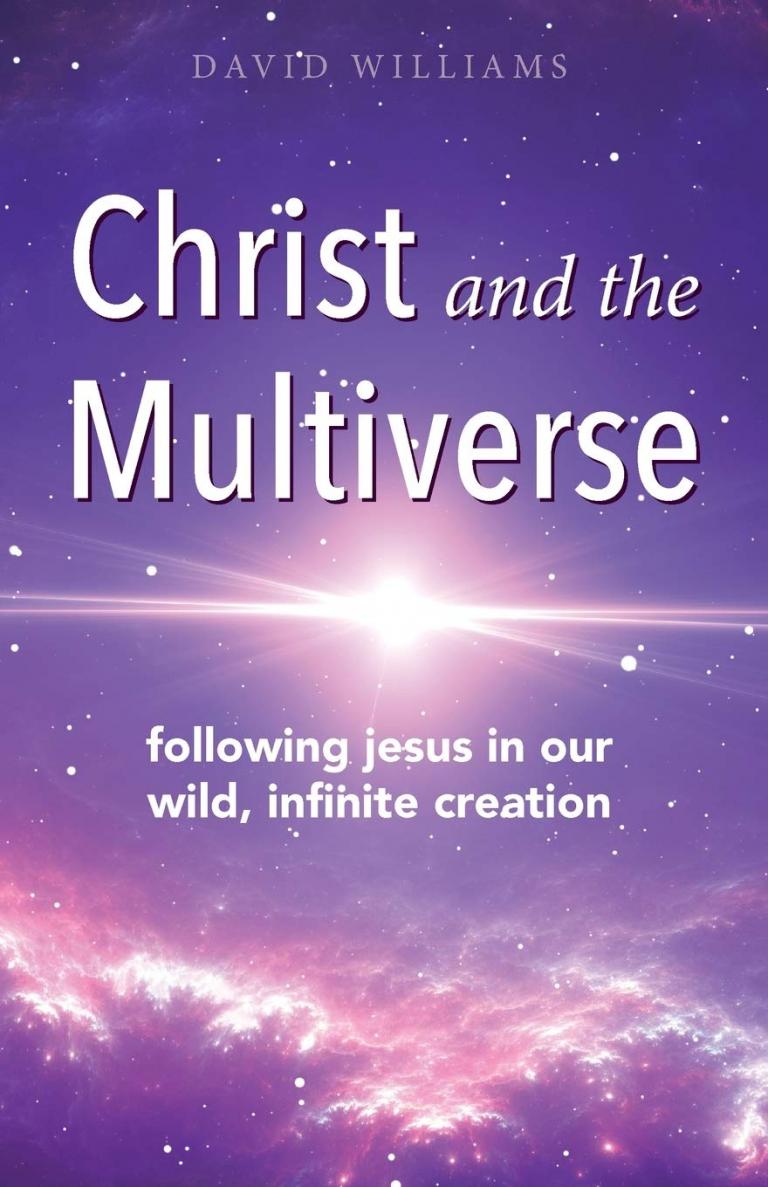
My choice to have Lewis open my chapters as I explored the impacts of this cosmology on Christian faith was more reflective of my personal journey than any other rationale. Clive Staples Lewis is an old friend, my first place of entry into the world of fantasy fiction. My mom was a linguist by training, and had me reading at an absurdly early age. I was five (five!) when I read The Lion, The Witch, and the Wardrobe alone in my room in Nairobi, and it was a peculiar experience. Perhaps it’s a factor of a child’s imagination, but my memory of it isn’t so much of sitting and reading, but of physically being in Narnia. Snow underfoot, the warmth of the fire in a beaver’s den, the hard terrible cold of a stone slab. Multiverse theology is certainly implied by storytelling that engages with both faith and the possibility of other realms of being, but it goes far deeper than the green fields of Narnia.
The Gospels declare that this mysterious maker of the world has visited His world in person. The most that any religious prophet has said was that he was the true servant of such a being. But the Creator was present in the daily life of the Roman Empire–that is something unlike anything else in nature. It is the one great startling statement that man has made since he spoke his first articulate word. It makes dust and nonsense of comparative religion.
“Heaven will solve our problems, but not, I think, by showing us subtle reconciliations between all our apparently contradictory notions. The notions will all be knocked from under our feet. We shall see that there never was any problem.
And, more than once, that impression which I can’t describe except by saying it’s like the sound of a chuckle in the darkness. The sense that some shattering and disarming simplicity is the real answer.”
The Gospels declare that this mysterious maker of the world has visited his world in person. The most that any religious prophet has said was that he was the true servant of such a being. But the creator was present in the daily life of the Roman Empire–that is something unlike anything else in nature. It is the one great startling statement that man has made since he spoke his first articulate word. It makes dust and nonsense of comparative religion. C.S. Lewis
St. Peter for a few seconds walks on the water; and the day will come when there will be a re-made universe, infinitely obedient to the will of glorified and obedient men, when we can do all things, when we shall be those gods that we are described as being in Scripture. To be sure, it feels wintry enough still: but often in the very early spring it feels like that. Two thousand years are only a day or two by this scale. A man really ought to say, “The Resurrection happened two thousand years ago” in the same spirit in which he says, “I saw a crocus yesterday.” Because we know what is coming behind the crocus. The spring comes slowly down this way; but the great thing is that the corner has been turned.




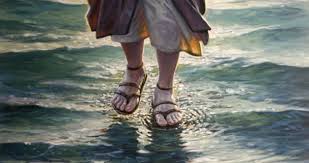 St. Peter for a few seconds walks on the water; and the day will come when there will be a re-made universe, infinitely obedient to the will of glorified and obedient men, when we can do all things, when we shall be those gods that we are described as being in Scripture. To be sure, it feels wintry enough still: but often in the very early spring it feels like that. Two thousand years are only a day or two by this scale. A man really ought to say, “The Resurrection happened two thousand years ago” in the same spirit in which he says, “I saw a crocus yesterday.” Because we know what is coming behind the crocus. The spring comes slowly down this way; but the great thing is that the corner has been turned.
 St. John One: One