Solve for X: Charles Chase on energy for everyone – YouTube.
St Patrick’s Breastplate Video Prayer – YouTube

Sacred Steel Trailer – YouTube
from The Pursuit of God by A. W. Tozer (link at bottom for free Kindle addition)
The Speaking Voice
In the beginning was the Word, and the Word was with God, and the Word was
God.
John 1:1
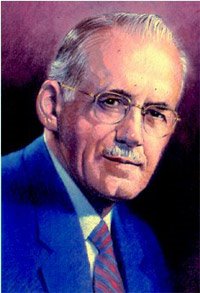
A.W. Tozer (April 21, 1897 – May 12, 1963)
An intelligent plain man, untaught in the truths of Christianity, coming upon this text, would likely conclude that John meant to teach that it is the nature of God to speak, to communicate His thoughts to others. And he would be right. A word is a medium by which thoughts are expressed, and the application of the term to the Eternal Son leads us to believe that self-expression is inherent in the Godhead, that God is forever seeking to speak Himself out to His creation. The whole Bible supports the idea. God is speaking. Not God spoke, but God is
speaking. He is by His nature continuously articulate. He fills the world with
His speaking Voice.
One of the great realities with which we have to deal is the Voice of God in His world. The briefest and only satisfying cosmogony is this: `He spake and it was done.’ The why of natural law is the living Voice of God immanent in His creation. And this word of God which brought all worlds into being cannot be understood to mean the Bible, for it is not a written or printed word at all,but the expression of the will of God spoken into the structure of all things.
This word of God is the breath of God filling the world with living
potentiality. The Voice of God is the most powerful force in nature, indeed the
only force in nature, for all energy is here only because the power-filled Word
is being spoken.
The Bible is the written word of God, and because it is written it is confined
and limited by the necessities of ink and paper and leather. The Voice of God,
however, is alive and free as the sovereign God is free. `The words that I speak
unto you, they are spirit, and they are life.’ The life is in the speaking
words. God’s word in the Bible can have power only because it corresponds to
God’s word in the universe. It is the present Voice which makes the written Word
all- powerful. Otherwise it would lie locked in slumber within the covers of a
book.
We take a low and primitive view of things when we conceive of God at the
creation coming into physical contact with things, shaping and fitting and
building like a carpenter. The Bible teaches otherwise: `By the word of the Lord
were the heavens made; and all the host of them by the breath of his mouth.
…For he spake, and it was done; he commanded, and it stood fast.’ (Ps 33:6,9)
`Through faith we understand that the worlds were framed by the word of God.’
(Heb 11:3) Again we must remember that God is referring ere not to His written
Word, but to His speaking Voice. His world-filling Voice is meant, that Voice
which antedates the Bible by uncounted centuries, that Voice which has not been
silent since the dawn of creation, but is sounding still throughout the full far
reaches of the universe.
The Word of God is quick and powerful. In the beginning He spoke to nothing, and
it became something. Chaos heard it and became order, darkness heard it and
became light. `And God said – – and it was so.’ (Gen 1:9) These twin phrases, as
cause and effect, occur throughout the Genesis story of the creation. The said
accounts for the so. The so is the said put into the continuous present. That
God is here and that He is speaking–these truths are back of all other Bible
truths; without them there could be no revelation at all. God did not write a
book and send it by messenger to be read at a distance by unaided minds. He
spoke a Book and lives in His spoken words, constantly speaking His words and
causing the power of them to persist across the years. God breathed on clay and
it became a man; He breathes on men and they become clay. `Return ye children of men,’ (Ps 90:3) was the word spoken at the Fall by which God decreed the death of every man, and no added word has He needed to speak. The sad procession of mankind across the face of the earth from birth to the grave is proof that His original Word was enough.
We have not given sufficient attention to that deep utterance in the Book of
John, `That was the true Light, which lighteth every man that cometh into the
world.’ (John 1:9) Shift the punctuation around as we will and the truth is
still there: the Word of God affects the hearts of all men as light in the soul.
In the hearts of all men the light shines, the Word sounds, and there is no
escaping them. Something like this would of necessity be so if God is alive and
in His world. And John says that it is so. Even those persons who have never
heard of the Bible have still been preached to with sufficient clarity to remove
every excuse from their hearts forever. `Which show the work of the law written
in their hearts, their conscience also bearing witness, and their thoughts the
mean while either accusing or else excusing one another.’ (Rom 2:15) `For the
invisible things of him from the creation of the world are clearly seen, being
understood by the things that are made, even his eternal power and Godhead; so
that they are without excuse.’ (Rom 1:20)
This universal Voice of God was by the ancient Hebrews often called Wisdom, and
was said to be everywhere sounding and searching throughout the earth, seeking
some response from the sons of men. The eighth chapter of the Book of Proverbs
begins, `Doth not wisdom cry? and understanding put forth her voice?’ The writer
then pictures wisdom as a beautiful woman standing `in the top of the high
places, by the way in the places of the paths.’ She sounds her voice from every
quarter so that no one may miss hearing it. `Unto you, O men, I call; and my
voice is to the sons of men.’ Then she pleads for the simple and the foolish to
give ear to her words. It is spiritual response for which this Wisdom of God is
pleading, a response which she has always sought and is but rarely able to
secure. The tragedy is that our eternal welfare depends upon our hearing, and we
have trained our ears not to hear.
This universal Voice has ever sounded, and it has often troubled men even when
they did not understand the source of their fears. Could it be that this Voice
distilling like a living mist upon the hearts of men has been the undiscovered
cause of the troubled conscience and the longing for immortality confessed by
millions since the dawn of recorded history? We need not fear to face up to
this. The speaking Voice is a fact. How men have reacted to it is for any
observer to note.
When God spoke out of heaven to our Lord, self-centered men who heard it
explained it by natural causes: they said, `It thundered.’ This habit of
explaining the Voice by appeals to natural law is at the very root of modern
science. In the living breathing cosmos there is a mysterious Something, too
wonderful, too awful [i.e. `awesome’] for any mind to understand. The believing
man does not claim to understand. He falls to his knees and whispers, `God.’ The
man of earth kneels also, but not to worship. He kneels to examine, to search,
to find the cause and the how of things. Just now we happen to be living in a
secular age. Our thought habits are those of the scientist, not those of the
worshipper. We are more likely to explain than to adore. `It thundered,’ we
exclaim, and go our earthly way. But still the Voice sounds and searches. The
order and life of the world depend upon that Voice, but men are mostly too busy
or too stubborn to give attention.
Everyone of us has had experiences which we have not been able to explain: a
sudden sense of loneliness, or a feeling of wonder or awe in the face of the
universal vastness. Or we have had a fleeting visitation of light like an
illumination from some other sun, giving us in a quick flash an assurance that
we are from another world, that our origins are divine. What we saw there, or
felt, or heard, may have been contrary to all that we had been taught in the
schools and at wide variance with all our former beliefs and opinions. We were
forced to suspend our acquired doubts while, for a moment, the clouds were
rolled back and we saw and heard for ourselves. Explain such things as we will,
I think we have not been fair to the facts until we allow at least the
possibility that such experiences may arise from the Presence of God in the
world and His persistent effort to communicate with mankind. Let us not dismiss
such an hypothesis too flippantly.
It is my own belief (and here I shall not feel bad if no one follows me) that
every good and beautiful thing which man has produced in the world has been the
result of his faulty and sin-blocked response to the creative Voice sounding
over the earth. The moral philosophers who dreamed their high dreams of virtue,
the religious thinkers who speculated about God and immortality, the poets and
artists who created out of common stuff pure and lasting beauty: how can we
explain them? It is not enough to say simply, `It was genius.’ What then is
genius? Could it be that a genius is a man haunted by the speaking Voice,
laboring and striving like one possessed to achieve ends which he only vaguely
understands? That the great man may have missed God in his labors, that he may
even have spoken or written against God does not destroy the idea I am
advancing. God’s redemptive revelation in the Holy Scriptures is necessary to
saving faith and peace with God. Faith in a risen Saviour is necessary if the
vague stirrings toward immortality are to bring us to restful and satisfying
communion with God. To me this is a plausible explanation of all that is best
outside of Christ. But you can be a good Christian and not accept my thesis.
The Voice of God is a friendly Voice. No one need fear to listen to it unless he
has already made up his mind to resist it. The blood of Jesus has covered not
only the human race but all creation as well. `And having made peace through the
blood of his cross, by him to reconcile all things unto himself; by him, I say,
whether they be things in earth, or things in heaven.’ (Col 1:20) We may safely
preach a friendly Heaven. The heavens as well as the earth are filled with the
good will of Him that dwelt in the bush (Ex. 3). The perfect blood of atonement
secures this forever.
Whoever will listen will hear the speaking Heaven. This is definitely not the
hour when men take kindly to an exhortation to listen, for listening is not
today a part of popular religion. We are at the opposite end of the pole from
there. Religion has accepted the monstrous heresy that noise, size, activity and
bluster make a man dear to God. But we may take heart. To a people caught in the tempest of the last great conflict God says, `Be still, and know that I am God,’
(Ps 46:10) and still He says it, as if He means to tell us that our strength and
safety lie not in noise but in silence.
It is important that we get still to wait on God. And it is best that we get
alone, preferably with our Bible outspread before us. Then if we will we may
draw near to God and begin to hear Him speak to us in our hearts. I think for
the average person the progression will be something like this: First a sound as
of a Presence walking in the garden. Then a voice, more intelligible, but still
far from clear. Then the happy moment when the Spirit begins to illuminate the
Scriptures, and that which had been only a sound, or at best a voice, now
becomes an intelligible word, warm and intimate and clear as the word of a dear
friend. Then will come life and light, and best of all, ability to see and rest
in and embrace Jesus Christ as Saviour and Lord and All.
The Bible will never be a living Book to us until we are convinced that God is
articulate in His universe. To jump from a dead, impersonal world to a dogmatic
Bible is too much for most people. They may admit that they should accept the
Bible as the Word of God, and they may try to think of it as such, but they find
it impossible to believe that the words there on the page are actually for them.
A man may say, `These words are addressed to me,’ and yet in his heart not feel
and know that they are. He is the victim of a divided psychology. He tries to
think of God as mute everywhere else and vocal only in a book.
I believe that much of our religious unbelief is due to a wrong conception of
and a wrong feeling for the Scriptures of Truth. A silent God suddenly began to
speak in a book and when the book was finished lapsed back into silence again
forever. Now we read the book as the record of what God said when He was for a
brief time in a speaking mood. With notions like that in our heads how can we
believe? The facts are that God is not silent, has never been silent. It is the
nature of God to speak. The second Person of the Holy Trinity is called the
word. The Bible is the inevitable outcome of God’s continuous speech. It is the
infallible declaration of His mind for us put into our familiar human words.
I think a new world will arise out of the religious mists when we approach our
Bible with the idea that it is not only a book which was once spoken, but a book
which is now speaking. The prophets habitually said, `Thus saith the Lord.’ They
meant their hearers to understand that God’s speaking is in the continuous
present. We may use the past tense properly to indicate that at a certain time a
certain word of God was spoken, but a word of God once spoken continues to be
spoken, as a child once born continues to be alive, or a world once created
continues to exist. And those are but imperfect illustrations, for children die
and worlds burn out, but the Word of our God endureth forever.
If you would follow on to know the Lord, come at once to the open Bible
expecting it to speak to you. Do not come with the notion that it is a thing
which you may push around at your convenience. It is more than a thing, it is a
voice, a word, the very Word of the living God. Lord, teach me to listen. The
times are noisy and my ears are weary with the thousand raucous sounds which
continuously assault them. Give me the spirit of the boy Samuel when he said to
Thee, `Speak, for thy servant heareth.’ Let me hear Thee speaking in my heart.
Let me get used to the sound of Thy Voice, that its tones may be familiar when
the sounds of earth die away and the only sound will be the music of Thy
speaking Voice. Amen.
The Pursuit of God, Chapter 6, by A. W. Tozer
“The Lord’s Prayer, by the Swan Sivertones – YouTube
Claude Jeter and The Swan Silvertones – A Christian’s Plea – YouTube
C.S Lewis’s surviving BBC radio address: Part 2 – YouTube
C.S Lewis’s surviving BBC radio address – YouTube
from Living Water by Brother Yun

Cover via Amazon
 On numerous occasions, preachers in China have traveled to a remote mountainous area to visit a group of believers. Although nobody is told that they are coming, when the preachers arrive they often find the believers already gathered together and expecting them, sometimes even in the middle of the night! When asked how they knew the preachers were coming at that time, they reply, “The Lord told us to get ready because you were coming at this time.” In other places, the house churches had problems when undercover agents came along to spy on the believers and see if they could gather information that might be used against them later. The Christians prayed and asked God what they should do. The Lord told them to stop announcing the place and time of their meetings and instead just trust that the Holy Spirit would reveal the details to each person He wanted to come to the meeting. On the day of the next meeting, nobody except the leader knew where the church service would be held, or at what time, but one by one believers began to turn up, all having been told where to go while they were praying earlier that morning. This method is one way of making sure that only those people the Lord wants to fellowship together actually do so. It also put an immediate end to the unwanted visits by the undercover agents. The Bible is full of examples of God’s people hearing and following His voice. Listening is an integral part of having a relationship with someone. Can you imagine what kind of marriage it would be if a husband and wife never heard one another’s voice? So it is for a child of God who has a relationship with the Father. I am convinced that one of the reasons many Christians struggle to hear God’s voice is simply because they don’t take time to be quiet and listen. Their lives are so busy with irrelevant things that they go months at a time without ever stopping and quieting their hearts before the Lord. To hear God’s voice, you have to stop listening to your own heart and mind. You need to stop listening to the news and to people who love to air their worthless opinions. You also need to stop taking heed of the voice of Satan and giving attention to evil thoughts. Jesus told us, “When you pray, go into your room, close the door and pray to your Father, who is unseen. Then your Father, who sees what is done in secret, will reward you. And when you pray, do not keep on babbling like pagans, for they think they will be heard because of their many words. Do not be like them, for your Father knows what you need before you ask him” (Matt. 6:6–8).
Yun, Brother (2008-09-23). Living Water: Powerful Teachings from the International Bestselling Author of The Heavenly Man (pp. 132-133). Zondervan. Kindle Edition.
“… cunning instead of belief.” from The Last Battle by C.S. Lewis

“I hope Tash ate the Dwarfs too,” said Eustace. “Little swine.”
“No, he didn’t,” said Lucy. “And don’t be horrid. They’re still here. In fact you can see them from here. And I’ve tried and tried to make friends with them but it’s no use.”
“Friends with them!” cried Eustace. “If you knew how those Dwarfs have been behaving!”
“Oh stop it, Eustace,” said Lucy. “Do come and see them. King Tirian, perhaps you could do something with them.”
“I can feel no great love for Dwarfs today,” said Tirian. “Yet at your asking, Lady, I would do a greater thing than this.”
Lucy led the way and soon they could all see the Dwarfs. They had a very odd look. They weren’t strolling about or enjoying themselves (although the cords with which they had been tied seemed to have vanished) nor were they lying down and having a rest. They were sitting very close together in a little circle facing one another. They never looked round or took any notice of the humans till Lucy and Tirian were almost near enough to touch them. Then the Dwarfs all cocked their heads as if they couldn’t see anyone but were listening hard and trying to guess by the sound what was happening.
“Look out!” said one of them in a surly voice. “Mind where you’re going. Don’t walk into our faces!”
“All right!” said Eustace indignantly. “We’re not blind. We’ve got eyes in our heads.”
“They must be darn good ones if you can see in here,” said the same Dwarf whose name was Diggle.
“In where?” asked Edmund.
“Why you bone-head, in here of course,” said Diggle. “In this pitch-black, poky, smelly little hole of a stable.”
“Are you blind?” said Tirian.
“Ain’t we all blind in the dark!” said Diggle.
“But it isn’t dark, you poor stupid Dwarfs,” said Lucy. “Can’t you see? Look up!
Look round! Can’t you see the sky and the trees and the flowers? Can’t you see me?”
“How in the name of all Humbug can I see what ain’t there? And how can I see you any more than you can see me in this pitch darkness?”
“But I can see you,” said Lucy. “I’ll prove I can see you. You’ve got a pipe in your mouth.”
“Anyone that knows the smell of baccy could tell that,” said Diggle.
“Oh the poor things! This is dreadful,” said Lucy. Then she had an idea. She stooped and picked some wild violets. “Listen, Dwarf,” she said. “Even if your eyes are wrong, perhaps your nose is all right: can you smell that?” She leaned across and held the fresh, damp flowers to Diggle’s ugly nose. But she had to jump back quickly in order to avoid a blow from his hard little fist.
“None of that!” he shouted. “How dare you! What do you mean by shoving a lot of filthy stable-litter in my face? There was a thistle in it too. It’s like your sauce! And who are you, anyway?”
“Earth-man,” said Tirian, “she is the Queen Lucy, sent hither by Aslan out of the deep past. And it is for her sake alone that I, Tirian your lawful King, do not cut all your heads from your shoulders, proved and twice-proved traitors that you are.”
“Well if that doesn’t beat everything!” exclaimed Diggle. “How can you go on talking all that rot? Your wonderful Lion didn’t come and help you, did he? Thought not. And now— even now— when you’ve been beaten and shoved into this black hole, just the same as the rest of us, you’re still at your old game. Starting a new lie! Trying to make us believe we’re none of us shut up, and it ain’t dark, and heaven knows what.”
“There is no black hole, save in your own fancy, fool,” cried Tirian. “Come out of it.” And, leaning forward, he caught Diggle by the belt and the hood and swung him right out of the circle of Dwarfs. But the moment Tirian put him down, Diggle darted back to his place among the others, rubbing his nose and howling:
“Ow! Ow! What d’you do that for! Banging my face against the wall. You’ve nearly broken my nose.” “Oh dear!” said Lucy. “What are we to do for them?”
“Let ‘em alone,” said Eustace: but as he spoke the earth trembled. The sweet air grew suddenly sweeter. A brightness flashed behind them. All turned. Tirian turned last because he was afraid. There stood his heart’s desire, huge and real, the golden Lion, Aslan himself, and already the others were kneeling in a circle round his forepaws and burying their hands and faces in his mane as he stooped his great head to touch them with his tongue. Then he fixed his eyes upon Tirian, and Tirian came near, trembling, and flung himself at the Lion’s feet, and the Lion kissed him and said, “Well done, last of the Kings of Narnia who stood firm at the darkest hour.”
“Aslan,” said Lucy through her tears, “could you— will you— do something for these poor Dwarfs?”
“Dearest,” said Aslan, “I will show you both what I can, and what I cannot, do.” He came close to the Dwarfs and gave a low growl: low, but it set all the air shaking. But the Dwarfs said to one another, “Hear that? That’s the gang at the other end of the stable. Trying to frighten us. They do it with a machine of some kind. Don’t take any notice. They won’t take us in again!”
Aslan raised his head and shook his mane. Instantly a glorious feast appeared on the Dwarfs’ knees: pies and tongues and pigeons and trifles and ices, and each Dwarf had a goblet of good wine in his right hand. But it wasn’t much use. They began eating and drinking greedily enough, but it was clear that they couldn’t taste it properly. They thought they were eating and drinking only the sort of things you might find in a stable. One said he was trying to eat hay and another said he had got a bit of an old turnip and a third said he’d found a raw cabbage leaf. And they raised golden goblets of rich red wine to their lips and said “Ugh! Fancy drinking dirty water out of a trough that a donkey’s been at! Never thought we’d come to this.” But very soon every Dwarf began suspecting that every other Dwarf had found something nicer than he had, and they started grabbing and snatching, and went on to quarreling, till in a few minutes there was a free fight and all the good food was smeared on their faces and clothes or trodden under foot. But when at last they sat down to nurse their black eyes and their bleeding noses, they all said:
“Well, at any rate there’s no Humbug here. We haven’t let anyone take us in. The Dwarfs are for the Dwarfs.”
“You see,” said Aslan. “They will not let us help them. They have chosen cunning instead of belief. Their prison is only in their own minds, yet they are in that prison; and so afraid of being taken in that they cannot be taken out. But come, children. I have other work to do.”
Lewis, C. S. (2008-10-29). The Last Battle: The Chronicles of Narnia (pp. 167-170). HarperCollins. Kindle Edition.

