1st Centuary “Christ Hymn” of Colossians 1:15-20 translated by F.F. Bruce
Link to F.F.Bruce’s article The “Christ Hymn”of Colossians 1:15-20
The First Strophe (1:15-16)
F.F. Bruce 1910-1990
He who is the image of the invisible God,
Firstborn before all creation,
because in Him all things were created —
things in heaven and things on earth,
things visible and invisible,
whether thrones or dominions,
whether principalities or powers —
they have all been created through Him and for HimThe Transitional Link (1:17-18a)
He indeed is before all things,
and they all cohere in Him;
He is also the head of the body, the churchThe Second Strophe (1:18b-20)
He is the beginning,
Firstborn from the dead,
that He might be preeminent in all things,
because in Him it was decreed that all the fullness should
take up residence
and that through Him, [God] should reconcile all things
to Himself,
having made peace through the blood of His cross — [through
Him], whether those on earth or those in heaven
(F.F. Bruce’s translation).
Miriam Webster’s Definition of STROPHE
1—a : a rhythmic system composed of two or more lines repeated as a unit; especially : such a unit recurring in a series of strophic units
b : stanza
2—a : the movement of the classical Greek chorus while turning from one side to the other of the orchestra
b : the part of a Greek choral ode sung during the strophe of the dance
The Christ Hymn, Colossians 1:15-20

The Colossians Christ Hymn is one of the most important passages in the letter to the Colossians and relates Christ to his identity in God, in creation and in the church universal. It lies in the first chapter of the book and reads as follows:
He is the image of the invisible God, the firstborn of all creation.
For in him all things were created, in heaven and on earth, visible and invisible,
Whether thrones or dominions
Or rulers or authorities—
All things were created through him and for him.
And he is before all things, and in him all things hold together.
And he is the head of the body, the church.He is the beginning, the firstborn from the dead,
That in everything he might be preeminent.
For in him all the fullness of God was pleased to dwell,
And through him to reconcile to himself all things,
Making peace by the blood of his cross,
Whether on earth or in…
View original post 2,652 more words
The Avett Brothers – February Seven – YouTube
Watch “Alpha Innovation: New Alpha Branding | Alpha Leadership Week 2013 |” on YouTube
Jim Henderson’s Bio | Jim Henderson Presents
Marin Interview – YouTube
Watch “Week 1: Who is Jesus?” on YouTube
Alpha Life Magazine Interview: Caleb Meakins – YouTube
Bruce: Lukes Presentation of the Spirit in Acts
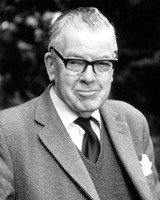
F.F. Bruce 1910-1990
Bruce: Lukes Presentation of the Spirit in Acts.
Link above is the full text. F.F. Bruce’s last written work. Excerpt below.
According to Acts, then, the reception of the Spirit might take place (I) immediately after the exercise of faith in Christ and submission to baptism in his name, (2) with the imposition of apostolic hands, a considerable time after the exercise of faith and submission to baptism, (3) while hearers listened in faith to the preaching of the gospel, before baptism and (apparently) without the imposition of hands, or (4) after baptism in the name of Jesus and the imposition of apostolic hands, in the experience of some who had in a certain measure become disciples of Jesus already. Various elements in the process of Christian initiation are mentioned: faith in Jesus, baptism in his name, imposition of hands, and receiving of the Holy Spirit. Quite evidently, however, no one sequence of these elements is presented as normative rather than any other. One of them, the imposition of hands, is not always included. The onus of proof rests on those who maintain that it must always have taken place, even when it is not mentioned. Those who maintain this generally regard the imposition of hands in the apostolic age as the precedent for the order of confirmation, in which the Spirit is imparted to believers with the laying on of hands of one who stands in the apostolic succession. But this view requires too much reading into the biblical text; moreover, it is difficult to square it with the experience of Paul himself, who received the Spirit when the hands of Ananias, not an apostle, were laid on him (Acts 9:17). (Ananias was certainly the risen Lord’s authorized messenger to Paul, but he was not an apostle in Luke’s use of the term).
 St. John One: One