William Douglas on Church and State


James Ross Kelly's avatarSt. John One: One

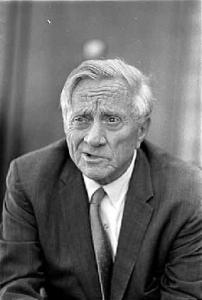
William O. Douglas 1898-1980 William O. Douglas 1898-1980

On April 28, 1952, in the decision of the Supreme Court of   the United States in Zorach v. Clauson, 343 U.S. 306 (1952), in   which school children were allowed to be excused from public   schools for religious observances and education, Justice William   O. Douglas, in writing for the Court stated:

‘The First Amendment, however, does not say that in every and all respects   there shall be a separation of Church and State. Rather, it   studiously defines the manner, the specific ways, in which there   shall be no concern or union or dependency one on the other. That   is the common sense of the matter. Otherwise the State and religion would be aliens to each other – hostile, suspicious, and   even unfriendly. Churches could not be required to pay even   property taxes. Municipalities would not…

View original post 116 more words
RTB Scholars’ Thoughts on Pope Francis and Evolution


http://www.reasons.org/articles/rtb-scholars-thoughts-on-pope-francis-and-evolution

The Story of the Loving Father—William Barclay


James Ross Kelly's avatarSt. John One: One

 Parable of the Prodigal Son

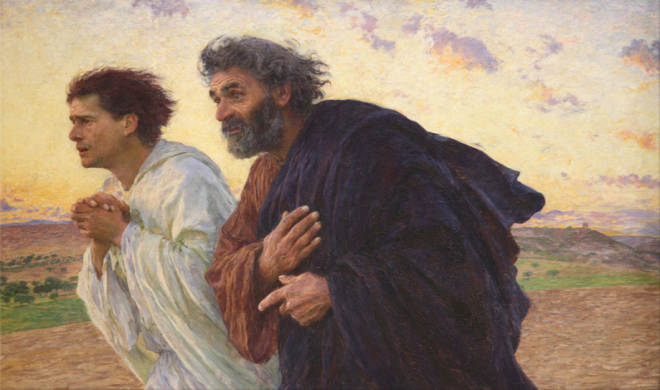
Prodigal Son by Eugene Burnand Prodigal Son by Eugene Burnand

(Luke 15:11-32)
 Jesus said, “There was a man who had two sons. The younger of them said to his father, ‘Father, give me the part of the estate which falls to me.’ So his father divided his living between them. Not many days after, the son realized it all and went away to a far country, and there in wanton recklessness scattered his substance. When he had spent everything a mighty famine arose throughout that country and he began to be in want. He went and attached himself to a citizen of that country, and he sent him into his fields to feed pigs; and he had a great desire to fill himself with the husks the pigs were eating; and no one gave anything to him. When he had come to himself, he said, ‘How many of…

View original post 1,272 more words

Orthodox Perspective on Same Sex Marriage


Watch “Wrestle w/ God – Kris Vallotton, Bethel Church” on YouTube


Wrestle w/ God – Kris Vallotton, Bethel Church:

A Simple Argument for Christian Theology —C.S. Lewis


C.S. Lewis

Almost the whole of Christian theology could perhaps be deduced from the two facts (a) That men make coarse jokes, and (b) That they feel the dead to be uncanny. The course joke proclaims that we have here an animal which finds its own animality either objectionable of funny. Unless there had been a quarrel between the spirit and the organism I do not see how this could be: it is a very mark of the two not being ‘at home’ together. But it is very difficult to imagine such a state of affairs as original—to suppose a creature which from the very first was half shocked and half tickled to death at the mere fact of being the creature it is. I do not perceive that dogs see anything funny about   being dogs: I suspect that angels see nothing funny about being angels. Our feeling about the dead is equally odd. It is idle to say that we dislike corpses because we are afraid of ghosts. You might say with equal truth that we fear ghosts because we dislike corpses—for the ghost owes much of its horror to the associated ideas of pallor, decay, coffins, shrouds, and worms. In reality we hate the division which makes possible the conception of either corpse or ghost. Because the thing ought not to be divided, each of the halves into which it falls by division is detestable. The explanations which Naturalism gives both of bodily shame and of our feeling about the dead are not satisfactory. It refers us to primitive taboos and superstitions—as if these themselves were not obviously results of the thing to be explained. But once accept the Christian doctrine that man was originally a unity and that the present division is unnatural, and all the phenomena fall into place.

from Miracles