Category / Poetry
My father never drank | James Ross Kelly
The Flood of 1964 | James Ross Kelly
Larry vs. Amalgamated Sugar | James Ross Kelly
Ever see a hanging Ernie? | James Ross Kelly
Ever climb Mt. Theilsen Ernie?
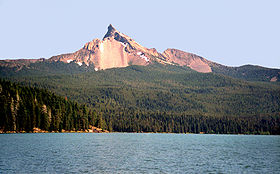 “Six times,” he wheezed,
from an
abrupt old man
kind of
certainty, &
then held up
one hand with fingers extended
w/an upward thumb from the other
to only waist height,
then let them down in
an exhaustion of age,
looking off the precipice
of his front porch,
he said,”Last time I was 79.”
Prayer of Healing
Oh the laying of hands & the softest wind of the Holy spirit, soft & secret, breathe of the Live God upon my life upon the time of my life, just knowing this, is healing, know this temporary lens of a final sight to behold and upon my own sons likewise may they know this breathe, this wind this voice, I pray to bequeath them this same voice and promise for it is for us, for us, & those who mock and scorn do not see the wind blow gently through the aspen, or zephyr-like move across my brow in an empty room, I know the talking of the grass the lovely trumpet of the night-hawk, the doves at my bird feeder,& while those are reminders they themselves are not this wholly Other & while these who nay say and mock and squander the life the Giver-Creator-Father God gave them the same & are only dry rocks rolling off the road bed & we fogive them as the roll past, some of them bouncing off & while the road ahead sure and passable is a direct way to Him who guides us this far, long and hard but sure and good, He is leading those of us who do not see toward sure goodness mercy and love, oh hallowed be His name, sending the healing coming, like His Kingdom coming our way there is a sureness to it, as every day has pain, this will not always be so. On earth as it is in Heaven. In the precious name of Jesus, amen selah
Poetry, Symbolism and Typology—Thomas Merton

Cover via Amazon

Now the writers of the Bible were aware that they shared with other religions the cosmic symbols in which God has revealed Himself to all men. But they were also aware that pagan and idolatrous religions had corrupted this symbolism and perverted its original purity [Merton cites Romans 1:18 and 25] The Gentiles had “detained the truth of God in injustice” and “changed the truth of God into a lie.”
Creation had been given to man as a clean window through which the light of God could shine into men’s souls. Sun and moon, night and day, rain, the sea, the crops, the flowering tree, all these things were transparent. They spoke to man not of themselves only but of Him who made them. Nature was symbolic. But the progressive degradation of man after the fall led the Gentiles further and further from this truth. Nature became opaque. The nations were no longer able to penetrate the meaning of the world they lived in. Instead of seeing the sun a witness to the power of God they thought the sun was god. The whole universe became an enclosed system of myths. The meaning and the worth of creatures invested them with an illusory divinity.
Men still sensed that there was something to be venerated in the reality, in the peculiarity of living and growing things, but they no longer knew what that reality was. They became incapable of seeing that the goodness of the creature is only a vestige of God. Darkness settled upon the translucent universe. Men became afraid. Beings had a meaning which men could no longer understand. They became afraid of trees, of the sun, of the sea. These things had to be approached with superstitious rites. It began to seem that the mystery of their meaning, which had become hidden, was now a power that had to be placated and, if possible controlled with magic incantations.
Thus the beautiful living things which were all about us on this earth and which were the windows of heaven to every man, became infected with original sin. The world fell with man, and longs, with man, for regeneration. The symbolic universe, which had now become a labyrinth of myths and magic rites, the dwelling place of a million hostile spirits, ceased altogether to speak to most men of God and told them only of themselves. The symbols which would have raised man above himself to God now became myths, and as such they were simply projections of man’s own biological drives. His deepest appetites, now full of shame, became his darkest fears.
The corruption of cosmic symbolism can be understood by a simple comparison. It was like what happens to a window when a room ceases to receive light from the outside. As long as it is daylight, we see through our windowpane. When night comes, we can still see through it if there is no light inside our room. When our lights go on, then we see only ourselves and our own room reflected in the pane. Adam in Eden could see through creation as through a window. God shone through the windowpane as bright as the light of the sun. Abraham and the patriarchs and David and the holy men of Israel—the chosen race that preserved intact the testimony of God—could still see through the window as one looks out by night from a darkened room and sees the moon and stars. But the Gentiles had begun to forget the sky, and to light lamps of their own, and presently it seemed to them that the reflection of their own room in the window was the “world beyond.” They began to worship what they themselves were doing. And what they were doing was too often an abomination. Nevertheless, something of the original purity of natural revelation remained in the great religions for the East. It is found in the Upanishads in the Baghavad Gita. But the pessimism of Buddha was a reaction against the degeneration of nature by polytheism. Henceforth for the mysticism of the East, nature would no longer be symbol but illusion. Buddha knew too well that the reflections in the window were only projections of our own existence and our own desires, but did not know that this was a window and that there could be sunlight outside the glass.
from “Poetry, Symbolism, and Typology,” The Literary Essays of Thomas Merton, pp 333-335, New Directions 1985. Originally from Merton’s Bread in the Wilderness, a study of the Psalms of the Old Testament as poetry, New Directions, 1953
After Last Call
The big dog greyhound
just left going south
& the cops picked up
an eighty-five year
old escapee from a rest
home, it’s twelve o’clock
almost a full moon & the
wind whips waves some-
where in the north Atlantic
sea, there’s three nickels
on this bar & my wife,
your smile this night is
worth a sun tan in the Fiji
islands or love after this
barstool is one hour up
turned & the old janitor
sweeps the floor while
most of this town sleeps
and the greyhound whines
twenty inch tires still
four hours from San Francisco
Caught Up in the Air
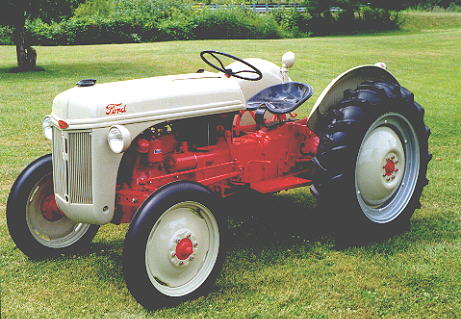
Ford 8 N
A dozen or more three hundred year old black oaks spread
over the top of the south side hill of our farm
a two acre pasture on top &
our house sat on the edge and overlooked a small
twenty acre valley bottom with a creek & across it
was a similar hill of Ponderosa pine and Douglas fir
to complete the farms north edge as a cross section
of a small valley running from our house south/north
One afternoon after school when I was 14
I walked out through the oaks to find my Grandfather
a man in his early eighties, he had turned the
place into a farm in only about four years
It was his son’s farm who owned a business
in town and twenty miles away, my grandfather had
used his own money, to build a lambing shed, then
chicken coops, then a substantial barn, and a half acre
garden down by the creek that was irrigated
by a pump and sprinkler and we all ate
very well and the tractor was an important tool
Every day in his sweat stained straw
cowboy hat he was on his son’s Ford 8N tractor
to the garden, the sheep shed, the creek,
& when I went looking for him my radar
was set for the Ford tractor
The tractor was the 20 team of mules
he used to own when he was
a successful farmer on the Great Plains
& he had started as a cowboy breaking horses for a living
& was at the door of change from horse drawn everything
to tractors, & power from oil
that began to feed the world
shortly before, banks and the great depression
ended all that for him
For our little farm, the tractor plowed, the tractor fertilized, the tractor planted,
the tractor cut hay, the tractor raked hay, and the tractor bailed hay
the tractor hauled hay, the tractor mixed cement,
the tractor toted injured animals,
I found him sitting on a 5 gallon bucket
his hat on his knee & embarrassment on his face
a look I’d never seen before from
the most affable man I’d ever known
“Oh Jimmy,” he sighed, “You have to do something for me,”
He had left the Ford tractor out of gear and did
not set the brake while he got off to do some chore &
the 8N had rolled down the hill…
The hill had about a 70 percent slope
& almost a straight drop got it going at such a high rate of
speed that when it hit the bottom it actually bounced
over a fence at the bottom of the hill and while airborne
hit the pasture & bounded over another small
hill by the apple trees and rolled out but not over
into the fresh green pasture;
beside the still slough where bull frogs were
letting go in their slow & late afternoon jug-a-rums
& I by his narrative, I was now looking down wide eyed overthe hill
& out to where, yes in the green pasture—thered tractor was sitting motionless
“I’d like you to go down there,” he said pointing but looking away, “and if there is nothing
wrong with it, drive the tractor back up here and never-tell-my-son-that-this-ever-happened.”
I went over the top of this steep hill side amazed & imagining again
the trajectory and the perfect angle of descent that kept
the 8N from turning over and fully expected something broken
as his narrative told of a loud noise when it hit
the bottom of the hill, before it leapt the fence
& yes, I was wishing I’d seen it happen, but
when I got to it I could not see anything broken & I touched
the button starter next to the gear shift,
it fired up and I drove it back up the 100 year old
road bed that was at one time the road from Medford
to Prospect, that now let us take a long gentle slope up
and down to our house and farm, &
he was relieved & I never told his son of the driverless 8N’s wild ride
Another afternoon when I was 17, I found him on the
concrete floor of the barn having fallen and broken
his hip while tending an animal, I gently got him
In the carry-all I attached to the back of the tractor
& very slowly got him to the house, before dark where
I called and we waited for an ambulance, to come twenty miles from town
& they operated & pinned his hip
& told him he’d never walk again.
Before he left the hospital he told me that was bullshit
and he’d be walking on a plane to fly to Kansas, as he was determined not
to die in Oregon as he thought they might bury him there,
& he mended, in a hospital bed in our living room, started out on crutches
& progressed to a walker, & then two canes & then to one
That next fall I and a neighbor killed three nice bucks
across the creek where I knew they could be waylaid
& I drove them back draped over the tractor
up the old Prospect road past our house where
my grandfather was standing on the back patio watching
us return & he raised one of his canes
and brandished it in the air, as we drove past.
That next spring I accompanied him to the
airport and saw him walk with one cane up onto a 727
& as he got to the door he turned around
& waved his Stetson hat down at me on the tarmac,
& then slowly turned around in his cowboy boots
& entered the jet to be caught up in the air & I never saw him again.
 St. John One: One